Best Practices for AI Translation in Support
AI translation is transforming customer support by enabling fast, multilingual communication without relying solely on native-speaking agents. This technology helps businesses save costs, improve response times, and provide better service in multiple languages. Here's how to make the most of AI translation in support:
Write for Translation: Use simple sentences, avoid idioms, and stick to consistent terminology to ensure clear, accurate translations.
Set Standards: Develop glossaries, tone guidelines, and regional adaptation rules to maintain consistent quality across languages.
Combine AI with Human Review: Use AI for routine tasks and involve human reviewers for sensitive, technical, or high-stakes content.
Automate Across Channels: Integrate AI translation into email, chat, social media, and phone support for smooth, real-time communication.
Track Quality: Monitor metrics like accuracy, customer satisfaction, and resolution times to identify and fix translation issues.
Ensure Compliance: Follow data privacy laws like GDPR, CCPA, and HIPAA by choosing secure, enterprise-grade AI tools.
AI translation isn't perfect, but when paired with human expertise and strong workflows, it bridges language gaps effectively while staying compliant with regulations.
Auto-Translate with GenAI Chatbots | Seamless Multilingual Customer Support
AI-powered chatbots are at the forefront of seamless multilingual customer support. By leveraging Generative AI (GenAI), these bots can auto-translate interactions in real-time across various channels, providing instant and consistent service to a global customer base.
This functionality not only eliminates language barriers but also optimizes agent workflows, allowing businesses to scale their support operations without a massive investment in native-speaking teams. Watch the video below to see a practical example of how GenAI chatbots enable fluid, real-time multilingual conversations.
Setting Up Standards for Multilingual Content
Planning ahead is key when creating content that works seamlessly across multiple languages. The structure and wording of your support materials play a big role in how effectively they translate. Companies that design their content with translation in mind tend to achieve far better results than those who treat it as an afterthought.
To ensure machine-readable and culturally appropriate content, it's essential to think beyond just the words. Consider how different languages organize ideas, express concepts, and convey tone. These considerations form the foundation for crafting content that translates effectively.
Writing Content That Translates Well
When it comes to translation, simple sentence structures are your best friend. Short, straightforward sentences like "The customer can submit a refund request through the help center" translate more clearly than complex ones like "Customers may initiate the refund process via our help center portal", which might confuse translation tools.
Avoid idioms such as "a piece of cake" or "touch base." These phrases often don't make sense when translated literally. Instead, use direct alternatives like "it's easy" or "we'll contact you."
Stick to the active voice for clarity. For example, "Our team will resolve your issue" translates more naturally than passive constructions. Many languages handle active phrasing better, making your message clearer.
Consistent terminology is crucial. If you refer to user profiles as "accounts", don’t switch between "account", "profile", and "user dashboard" in your materials. Consistency helps translation systems apply the right terms every time.
Using Consistent Style Guidelines
Clear writing is just the start - standardized style guidelines help refine translations even further.
Detailed glossaries ensure uniformity in translations. Include technical terms, product names, feature descriptions, and commonly used phrases. This prevents inconsistencies across your support content.
Tone and voice guidelines help maintain your brand's personality. If your English content is friendly and conversational, your style guide should explain how to preserve that tone in languages that might lean more formal. Specify when to use formal or informal address, how to show empathy, and the appropriate level of directness.
Regional adaptation standards address differences beyond language. For instance, your guide should outline how to handle currency formats, date/time formats, and contact details. It’s also important to account for customer service expectations, which vary by region - some cultures value efficiency, while others prioritize building relationships.
Regular updates to your style guide ensure it stays relevant. Schedule quarterly reviews to add new terminology, refine translations, and incorporate feedback from customer interactions. This keeps your translation process aligned with product updates and evolving language trends.
Version control for multilingual content is essential to avoid confusion. Set clear workflows to manage updates to English content and ensure translated versions stay in sync. Feedback from translators should also be incorporated into your source materials.
Lastly, creating content templates aligned with your writing standards can make it easier for your team to produce consistent, translation-ready materials. These templates should include approved phrasing, standard responses for common issues, and formatting guidelines that translate well across languages.
Adding Human Review to AI Translation Workflows
AI translation offers speed and efficiency, but it can't fully replace the nuance and judgment that human expertise brings to the table. To truly deliver accurate and meaningful communication, the best workflows combine the strengths of AI with the insight of human reviewers.
Human involvement is particularly crucial for sensitive topics, legal language, or critical messaging. While AI might get the words right, it often misses emotional undertones that can make or break a customer interaction. For instance, a billing dispute from a frustrated customer needs a much more thoughtful response than a basic product inquiry. Human reviewers can pick up on these subtleties, ensuring the message is handled appropriately.
The real challenge is determining when to involve humans and when AI can operate independently. Low-risk content - like FAQs or order confirmations - can usually be left to AI. However, high-stakes communications - such as resolving complaints, handling refunds, or troubleshooting technical issues - should always include human oversight. Below are some key strategies for integrating human review into your AI translation workflow.
Setting Up Human Review Protocols
To avoid slowing down your workflow, it's important to create clear criteria for when human review is necessary. A priority-based review system can help streamline this process by assigning different paths for various types of content.
High-risk content: Legal disclaimers, terms of service, privacy policies, and anything related to money or refunds should always go through human review. The risks of mistranslation in these areas far outweigh the small cost of additional oversight.
Emotionally sensitive messages: AI can flag customer interactions with negative sentiment for human review. This ensures that emotionally charged situations are handled delicately and avoid tone-deaf responses that could escalate the issue.
Technical accuracy checks: For product-specific language, human reviewers with subject matter expertise are essential. For example, if your software uses "workspaces" but AI translates it as "work areas", it could lead to customer confusion.
Time-based reviews: Define review timelines to balance speed and quality. For example, urgent issues might require same-day review, while less critical content can be reviewed within 24 to 48 hours.
Expertise matching: Assign reviewers based on their language proficiency and familiarity with the subject matter. For example, a Spanish-speaking reviewer with knowledge of your billing system is better equipped to handle Spanish translations of payment-related issues than a generalist.
Creating Escalation Processes for Translation Problems
Even with solid protocols in place, translation challenges will arise. Having a clear escalation process ensures these issues are resolved quickly and effectively without disrupting overall workflows.
Quality threshold triggers: Set up automatic flags for translations that fall below a certain confidence level or produce inconsistent results. These cases should be escalated to senior reviewers or native speakers for resolution.
Customer complaints: If a customer reports confusion or offense due to a translation, it should prompt a review of similar content. Often, one complaint reveals a larger issue affecting multiple interactions.
Regional expertise: Standard reviewers may catch basic errors but might miss subtleties specific to certain regions. Escalating these cases to native speakers or regional experts can prevent cultural missteps.
Technical issues: When translations involve complex features or troubleshooting steps, product specialists should step in. A poorly translated technical guide can lead to customer errors, creating bigger support headaches.
Documenting cases: Keep records of escalated issues, including what went wrong and how it was resolved. This feedback loop helps improve AI training and prevents repeat mistakes.
Response time commitments: Set clear timelines for resolving escalated cases - such as within four hours during business hours - and communicate transparently with customers about any delays. This helps maintain trust, even when issues arise.
Automating Translation Across Multiple Channels
Customer support today spans a variety of platforms - email, chat, social media, phone calls, and help desk tickets. Managing multilingual communication manually in this environment is nearly impossible, especially when customers expect quick responses. This is where AI-powered automation steps in, offering consistent and accurate translations across all channels.
The secret to effective multichannel translation lies in establishing unified workflows that maintain consistency while adapting to the tone of each platform. For instance, a response on Twitter should be brief and conversational, while an email might require a more formal and detailed approach. AI translation systems must understand these differences and adjust their output accordingly.
Another critical aspect is ensuring that customer context follows them across platforms. Imagine a Spanish-speaking customer starts a conversation via chat and later follows up with an email. The support team should have access to the full conversation history, complete with accurate translations. Consistency in translations and a seamless transfer of context help create a smooth, integrated customer experience. These capabilities lay the groundwork for real-time translation and broader workflow improvements.
Using Real-Time AI Translation
Real-time translation has revolutionized customer interactions by breaking down language barriers instantly. Unlike traditional translation methods that can introduce delays, real-time systems work as the conversation happens - translating text or speech on the fly. This allows customers and agents to communicate naturally, even if they don’t share a common language.
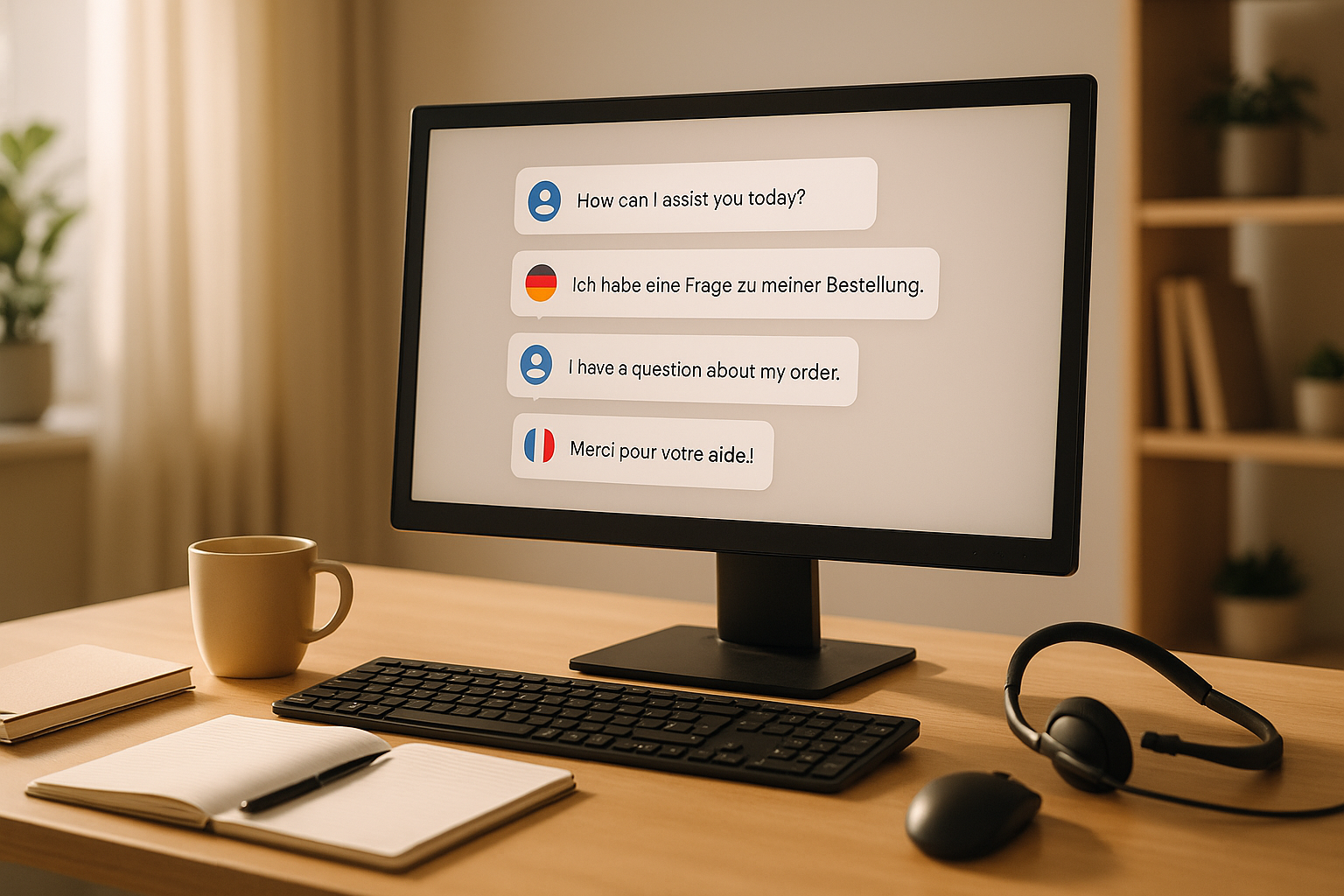
These systems work in both directions. For example, if a German-speaking customer sends a chat message, the agent sees it instantly in English. When the agent replies in English, the customer receives the response in German within seconds. This creates a fluid, natural experience for both parties.
Live chat platforms particularly benefit from real-time translation, as customers expect immediate replies. Even a short delay, such as 30 seconds for translation, can give the impression of being ignored. With real-time translation, agents can manage multiple conversations in different languages without missing a beat.
Phone support, however, presents its own challenges. Modern AI systems are tackling these with tools like voice-to-text transcription and real-time response suggestions, helping bridge language gaps during calls.
While real-time translation may not always capture every cultural nuance, its accuracy has improved significantly. For most customer support situations, the speed and efficiency it offers far outweigh minor imperfections. For more complex or sensitive cases, human reviewers can step in to ensure clarity and accuracy.
Improving Workflows with AI Automation
AI doesn’t just stop at translation - it also optimizes overall customer support workflows. Tools like intelligent routing systems and automated ticket tagging streamline processes by automatically detecting the language of incoming tickets and categorizing them appropriately, ensuring consistent service across all languages.
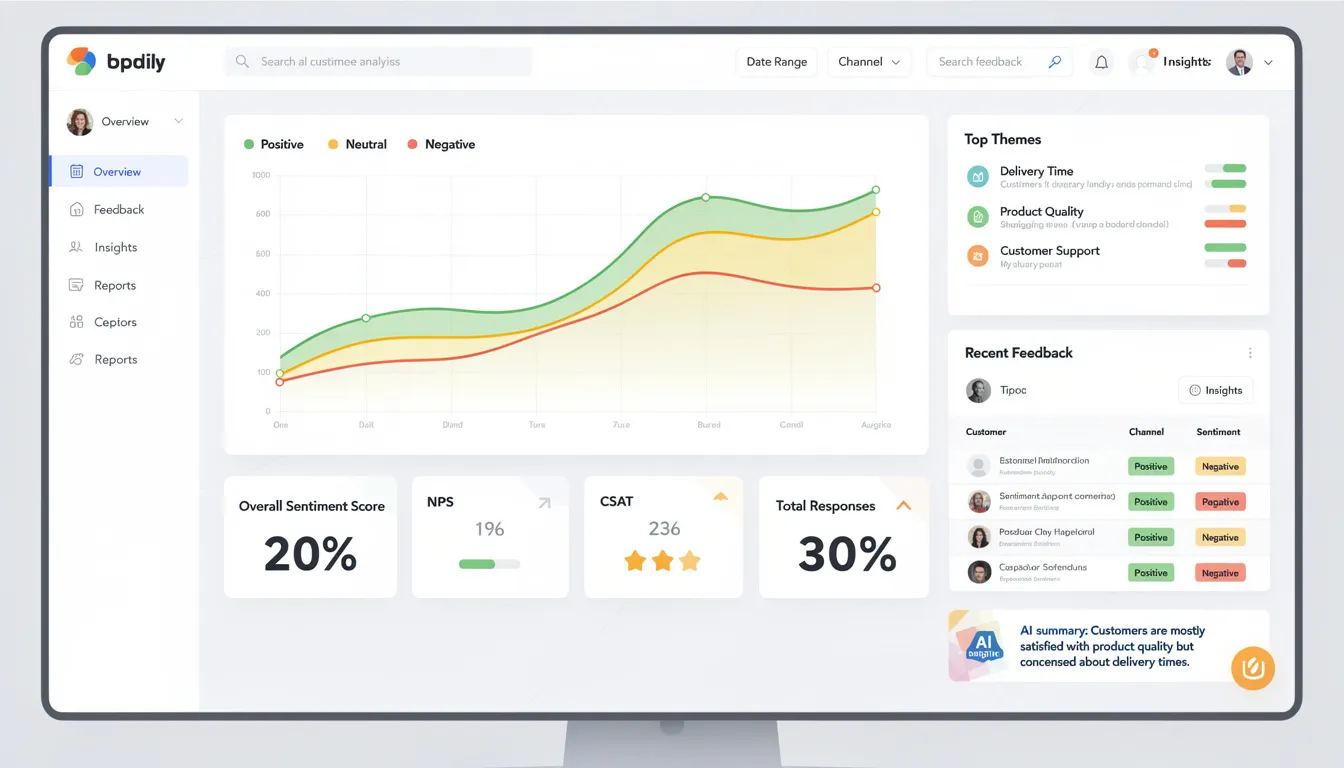
Sentiment analysis is another powerful tool that works across languages. It can identify frustrated or upset customers - whether their complaint is in French, Spanish, or English - and prioritize their tickets for immediate attention. This prevents critical issues from being overlooked simply due to language barriers.
Take IrisAgent as an example. This platform combines automated ticket tagging, routing, and triaging with sentiment analysis and predictive tools. It supports multiple languages, meaning that whether a customer writes in English, German, or Spanish, their ticket is processed through the same smart workflow. This ensures consistent service quality, no matter the language.
Predictive analytics adds another layer of insight. AI can identify patterns in multilingual support data that might otherwise go unnoticed. For instance, if German-speaking customers frequently ask about a specific feature, it could indicate that the German documentation needs improvement. Fixing these gaps proactively can reduce future support tickets.
Automation also extends to response suggestions and knowledge base integration. For example, when an agent receives a translated ticket about a password reset, the AI can instantly surface relevant help articles and suggest pre-written responses, all translated into the customer’s language. This speeds up response times and ensures agents provide accurate information, even when working outside their native language.
Additionally, workflow automation can handle follow-ups seamlessly. If a customer’s issue requires escalation, AI can generate status updates in their preferred language and send them at regular intervals. This keeps customers informed without requiring extra effort from multilingual agents, freeing up time for more complex tasks.
Tracking and Improving Translation Quality
For AI translation to be effective, it's not enough to rely on the technology itself. Continuous monitoring is essential to catch blind spots that might impact customer satisfaction. Even the most advanced tools can develop issues without proper oversight, leading to a poor customer experience. To address this, support teams need measurement systems that do more than just track accuracy - they must capture the entire customer interaction experience.
A good starting point is understanding that accuracy alone doesn't guarantee clarity. A translation might technically be correct but still confuse customers if it lacks proper context or uses unfamiliar terms. This is why many successful support teams prioritize comprehensibility - ensuring both agents and customers clearly understand each other during conversations.
Modern AI systems generate valuable data that can uncover patterns and recurring issues that human reviewers might miss. By analyzing this information, support teams can fine-tune their translation models and address problems before they escalate. Combining automated metrics with human evaluation offers a more complete view of translation quality.
Measuring Translation Accuracy
When measuring translation accuracy, it's important to look at both technical precision and practical outcomes. Metrics like the Translation and Localization Accuracy Rate can help gauge how many segments are error-free. For example, industry benchmarks show that translations involving high-volume language pairs often reach 95% accuracy after human post-editing, but this can drop to 85-90% for highly specialized content.
Another key metric is post-editing effort, which tracks the number of edits, time spent, and mental effort required to correct machine translations. This helps pinpoint areas where translation models need improvement.
Customer satisfaction metrics like CSAT (Customer Satisfaction Score), NPS (Net Promoter Score), and FCR (First Contact Resolution) provide direct insights into how well translations perform. Among these, FCR is particularly telling. If customers can resolve their issues in a single interaction, it shows that translations are clear enough for agents to understand the problem and provide solutions. On the other hand, low FCR rates for specific languages often highlight translation challenges rather than agent performance issues.
Metrics like average resolution time and escalation rates can also signal translation problems. For instance, if certain languages consistently take longer to resolve or require more escalations, it's a sign that the translations may not be as effective as they need to be. Tracking these numbers by language helps pinpoint which models require attention.
When measuring error rates, it's helpful to go beyond simply counting mistakes. Categorizing errors - such as those that affect meaning versus minor grammatical issues - can provide more actionable insights. Teams can also track True Error Detection & Quality Assurance Effectiveness, which compares how many issues AI tools flag versus those caught by human reviewers. This helps refine automated quality control processes.
On the technical side, automated metrics like BLEU (Bilingual Evaluation Understudy) measure how closely machine translations match reference translations. Other tools like METEOR account for synonyms and flexible word order, while COMET uses neural networks to evaluate semantic content based on human judgments. These metrics give development teams benchmarks to improve their translation models.
But technical metrics alone aren't enough. Customer sentiment provides another layer of insight into translation performance.
Using Analytics and Sentiment Data
Beyond accuracy measures, sentiment analysis and predictive analytics can offer deeper insights into translation quality. Sentiment analysis identifies frustrated customers across languages - whether they're writing in English, Spanish, or German. If sentiment scores consistently drop for a specific language, it often signals translation issues causing customer dissatisfaction.
Tools like IrisAgent use integrated analytics to enhance translation outcomes. For instance, combining sentiment analysis with predictive analytics can reveal patterns in multilingual support data. If German-speaking customers often express confusion about a specific feature, it might indicate that the German documentation needs improvement - not necessarily a product flaw.
Predictive analytics takes this a step further by anticipating translation problems before they arise. By analyzing historical data, AI systems can identify which types of content, language pairs, or scenarios are most likely to cause errors. This allows teams to take preventive actions, such as adding extra human reviews for high-risk translations.
Tracking interaction volume by language can also uncover patterns of inefficiency. For example, if certain languages consistently require longer resolution times or generate more follow-up tickets, it may point to translation quality issues. This information helps support managers allocate resources and identify training needs.
In real-time translation scenarios, response time (latency) becomes critical. Even small delays in processing translations can disrupt chat conversations and frustrate customers. Monitoring latency helps teams optimize their translation systems and address performance bottlenecks.
Finally, customer retention data offers a long-term view of translation effectiveness. When customers continue using services over time, it shows that AI-supported interactions are meeting their needs. Analyzing retention rates by language preferences can reveal which translation strategies work well and which need adjustment.
Advanced analytics can also highlight areas for improvement. For instance, if certain types of translated tickets frequently require escalation, teams can create specialized handling procedures or refine their translation models for those scenarios. This proactive approach not only resolves recurring issues but also boosts overall support efficiency.
Meeting Compliance and Sensitivity Requirements
Using AI translation tools in customer support comes with its own set of challenges, especially when navigating strict data protection laws. It’s not just about picking the right technology - it’s about understanding how customer data moves through these systems and ensuring every step complies with regulations. AI translation often involves handling sensitive customer data, which might be stored, reused, or even shared on servers. With GDPR fines totaling €5.88 billion so far - and some individual penalties exceeding €1 billion for failing to meet transparency standards - it’s clear that compliance isn’t optional. Organizations must implement strong data privacy measures and tailor translations to meet the demands of local regulations.
Maintaining Data Privacy and Compliance
The General Data Protection Regulation (GDPR) enforces strict rules on consent, data transfer, and purpose limitation for businesses operating in Europe. GDPR also requires policies to be written in "clear and plain language", which often means multilingual documentation for diverse EU audiences. This creates a dual challenge: ensuring compliance while delivering accurate translations.
In healthcare, the stakes are even higher under the Health Insurance Portability and Accountability Act (HIPAA). AI translation tools that process protected health information (PHI) must meet HIPAA standards. A single mistranslated medical term stored on a non-compliant server could lead to not only HIPAA violations but also serious patient safety risks.
Beyond GDPR and HIPAA, compliance gets even more intricate with laws like the California Consumer Privacy Act (CCPA) and California Privacy Rights Act (CPRA), which emphasize data processing transparency and consumer rights. Meanwhile, state-level privacy laws in the U.S. add another layer of complexity. Globally, regulations like China's Personal Information Protection Law (PIPL) restrict data transfers outside the country, while Brazil's Lei Geral de Proteção de Dados demands clear, user-friendly translations for Portuguese-speaking customers. In Canada, the Official Languages Act requires websites to provide content in both English and French.
Adding to the challenge, the EU AI Act classifies many AI systems used in regulatory or legal contexts as high-risk, requiring strict oversight and transparency. This particularly impacts AI translation tools used in legal settings, where client confidentiality is paramount, and bar associations are beginning to issue specific guidance on AI use.
To navigate these complexities, organizations should opt for enterprise-grade AI translation tools that prioritize privacy, such as solutions that avoid storing or using customer data for training purposes. For sensitive environments, on-premise or offline translation tools can help keep data processing entirely within the organization’s infrastructure.
Technical safeguards are equally critical. End-to-end encryption for data in transit and at rest, alongside secure protocols like HTTPS and TLS, provides essential protection. Removing or anonymizing personally identifiable information (PII) before translation can further reduce risks of data breaches.
Vendor relationships also demand scrutiny. Carefully reviewing terms of service and data policies ensures that providers don’t reserve excessive rights over user data. Legal teams should prioritize tools with features like no-retention policies, secure processing modes, anonymization options, and temporary session URLs. With these measures in place, organizations can confidently adapt translations to meet local compliance standards.
Adapting to Regional Differences
Beyond legal requirements, effective AI translation must account for cultural and regional nuances that can shape customer experiences. Regulatory bodies increasingly treat language barriers as failures in transparency, making accurate translations essential even when not explicitly required by law.
It’s not enough to translate content word-for-word. Translations must resonate with local audiences, particularly when dealing with sensitive topics, financial information, or legal disclaimers where misunderstandings could have serious consequences. Regional terminology and evolving language trends also require attention. What’s considered professional in one region might come across as overly formal - or even offensive - in another. Regular updates to AI translation models are necessary to reflect these changes, especially for customer-facing content.
Training is another key piece of the puzzle. Teams managing multilingual support need clear guidelines on when AI tools are appropriate and when human oversight is required. For example, sensitive translations often benefit from human review to ensure cultural accuracy and avoid potential missteps.
Platforms like IrisAgent can simplify this process by offering compliance-integrated translation features. With tools like sentiment analysis and predictive analytics, IrisAgent can flag potential cultural misunderstandings before they escalate. Automated features, such as ticket tagging, ensure that sensitive content is routed for human review when necessary.
Organizations should also establish clear protocols for handling region-specific needs. This includes maintaining documentation from vendors about data practices and ensuring translation workflows can meet multiple privacy requirements simultaneously. For instance, a single customer inquiry might need to comply with GDPR for European data, CCPA for California residents, and HIPAA for healthcare-related information - all within the same workflow.
Building flexible translation systems from the start can save organizations the hassle of retrofitting for compliance later. This proactive approach not only minimizes legal risks but also strengthens customer trust and satisfaction across all languages and regions.
Conclusion: Key Points for AI Translation Success
Using AI translation in customer support requires a careful mix of automation and human oversight. The most effective workflows combine technology for routine tasks with human expertise for handling complex, sensitive, or culturally specific content. This balance ensures both efficiency and quality.
Maintaining high-quality translations starts with clear style guidelines and well-trained teams. By crafting content that's easy to translate and setting up thorough review processes, organizations can ensure consistency and accuracy in their multilingual support efforts.
From the start, compliance needs to be a priority. Choose tools designed for enterprise use, with strong encryption and defined processes for meeting regional data protection laws. This approach safeguards customer information and aligns with legal requirements.
Seamless integration is another critical factor. AI translation should work smoothly with existing systems like CRM platforms, ticketing tools, and communication channels. Solutions such as IrisAgent make this possible by offering features like automated tagging, sentiment analysis, and predictive insights. These tools also help identify when human input is necessary, ensuring a smooth support experience for both agents and customers.
Lastly, continuous improvement is key to long-term success. Track translation accuracy, evaluate customer satisfaction across languages, and analyze sentiment data to identify potential issues. This feedback-driven strategy allows teams to fine-tune their AI models and optimize workflows over time.
FAQs
How can businesses ensure AI translations match the original tone and style across languages?
To make sure AI translations capture the original tone and style, businesses should develop detailed style guides tailored to each target language. These guides should specify elements like tone, level of formality, and preferred terminology to ensure consistency and relevance across different audiences.Leveraging AI models trained on data that aligns with the cultural norms of the target audience, combined with regular reviews by native-speaking professionals, can significantly improve translation accuracy. For customer support, tools such as IrisAgent can simplify this process by automating responses that are sensitive to tone and providing real-time adjustments. This ensures a smooth and consistent experience for users, no matter the language.
What should I consider when choosing between AI translation and human review for customer support content?
When choosing between AI translation and human review for customer support, it's important to weigh factors like complexity, sensitivity, and quality expectations of the content. AI translation shines when handling large volumes of routine tasks due to its speed and affordability. But for content that’s technical, nuanced, or sensitive, human review becomes essential to guarantee accuracy, appropriate tone, and cultural relevance.A hybrid approach often works best. Start with AI for quick initial translations, then have human reviewers fine-tune the results. This combination offers a practical way to achieve both speed and precision, ensuring your customer support materials maintain high standards of quality and reliability.
How can AI translation tools ensure compliance with data privacy laws like GDPR and HIPAA, and what steps should companies take to stay compliant?
AI translation tools help businesses comply with data privacy laws like GDPR and HIPAA by employing strong security measures, including encryption, data anonymization, and access controls. These features ensure sensitive information is handled securely and in line with strict privacy requirements.To maintain compliance, companies should focus on a few key areas:
Choose reliable providers: Work with AI translation services that clearly demonstrate compliance with GDPR, HIPAA, or other relevant regulations.
Be transparent: Clearly explain how customer data is collected, processed, and stored.
Adopt security measures: Use tools that offer built-in protections such as encryption and role-based access to reduce potential risks.
By taking these steps, businesses can confidently use AI translation tools while safeguarding data privacy and meeting regulatory requirements.