

Chatbot Call Center: The Role of Chatbots in Enhancing Operations
In today’s fast-paced digital landscape, businesses are constantly seeking innovative ways to streamline operations and enhance customer experiences. One such technological advancement that has gained significant traction in recent years is the integration of chatbots within call center operations and customer service processes. These intelligent bots are revolutionizing the traditional customer service model, offering a myriad of benefits for both businesses and consumers alike.
Modern chatbot solutions can be set up and deployed with just a few clicks, requiring no technical skills, making them accessible to all businesses.
Gone are the days of lengthy wait times and frustrating automated menus. With chatbots at the helm, call centers are operating on steroids, providing customers with instant access to assistance and support. Whether it’s resolving inquiries, processing transactions, or providing personalized recommendations, chatbots are reshaping the way businesses interact with their clientele. AI-powered chatbots can reduce call center costs by automating a significant volume of customer interactions, leading to lower staffing needs.
Today, businesses are increasingly treating chatbots as autonomous AI agents capable of orchestrating complex workflows. In fact, conversational AI deployments in contact centers are predicted to lower agent labor costs by $80 billion globally by 2026.
So, how exactly do chatbots enhance call center operations? Let’s delve into some key aspects.
What Are Chatbot Services?
Chatbots provide a platform for seamless communication, enabling users to accomplish tasks quickly and efficiently. Chatbots are especially effective at handling routine inquiries such as order status, account management, and FAQs, freeing up human agents for more complex tasks. Many chatbots offer a visual editor for easy customization without requiring coding skills.
By automating routine activities, they free up human agents to focus on more complex and strategic tasks that require human skills and expertise. Integrating chatbots with existing tools and call center systems is necessary for smooth operations and to avoid workflow disruptions. Building a solid knowledge base is crucial for a chatbot to provide accurate responses to customer inquiries.
What Is a Chatbot in Call Center?
An AI customer service chatbot used in a call center is an advanced virtual assistant that leverages natural language processing and automation to understand and respond to user inquiries without the need for human intervention. Many customer service chatbots use natural language processing to accurately interpret and address customer questions. From basic inquiries to account management tasks, these ai customer service chatbots can handle a wide range of interactions, providing customers with instant support and assistance. When an ai customer service chatbot escalates an issue to a human agent, it should transfer the entire chat history and customer details to ensure a seamless handoff.
What is an IVR Call Center Chatbot?
IVR (Interactive Voice Response) chatbots, also known as voice response systems, automate the process of routing calls and using customer details by gathering information through automated prompts. By leveraging speech recognition technology, these bots streamline the call-routing process, ensuring callers are directed to the appropriate department or customer service teams. IVR chatbots with multilingual support can serve a diverse, global customer base, and advanced chatbots are capable of communicating in over 130 languages for text and 70 for voice. Many chatbots also utilize sentiment analysis to detect frustration or urgency, and clear triggers for human handoff (such as detecting negative sentiment) should be designed to ensure seamless escalation to human agents.
In conclusion, chatbots are transforming the landscape of call center operations, offering a cost-effective and efficient solution for handling customer inquiries and support requests. By harnessing the power of artificial intelligence and natural language processing to provide customer service, businesses can elevate the whole customer care experience while optimizing their internal processes. As technology continues to evolve, the role of chatbots in call centers will only become more prominent, ushering in a new era of customer service excellence.
Common Use Cases for Chatbots in Call Centers
Chatbots serve as the primary interface for engaging with customers, offering round-the-clock assistance and automated customer support throughout. From answering frequently asked questions to guiding users through complex processes, these bots are adept at handling a wide range of inquiries, thereby reducing the burden on human agents.Chatbots have become integral components of modern call center operations, offering a versatile solution for handling a wide range of customer inquiries and support requests. Here are some common use cases where chatbots excel within call centers:
FAQ Resolution: Chatbots are adept at answering FAQs and providing instant answers to routine inquiries, such as questions about product features, pricing, or troubleshooting steps. By providing instant responses and comprehensive solutions to common customer queries, chatbots help reduce wait times and alleviate the workload on human agents.
Order Tracking and Status Updates: Customers often reach out to call centers to inquire about the status of their orders or shipments. Chatbots can seamlessly retrieve this information from the company website backend systems and provide real-time updates to customers, ensuring transparency and peace of mind.
Appointment Scheduling: In industries such as healthcare or service-based businesses, scheduling appointments is a common task for call center agents. Chatbots can facilitate this process by allowing contact center customers to book appointments, reschedule, or cancel them through a conversational interface, without the need for a human agent or intervention.
Product Recommendations: Leveraging machine learning algorithms, chatbots can analyze customer preferences and purchase history to offer personalized product recommendations. By understanding the unique needs and preferences of each customer, chatbots enhance the shopping experience and drive sales.
Technical Support: For technology companies or service providers, technical support inquiries constitute a significant portion of call center interactions. Chatbots equipped with troubleshooting guides and knowledge bases can guide customers through common technical issues, working alongside the support team to improve agent productivity by handling routine inquiries and allowing human agents to focus on complex issues. They can escalate complex problems to human support teams or agents when necessary.
Account Management: Chatbots enable customers to perform basic account management tasks, such as updating contact information, resetting passwords, or checking account balances. By providing self-service options, chatbots empower customers to manage their accounts conveniently without the need for human assistance.
Feedback Collection: Gathering feedback from customers is essential for improving products and services. Chatbots can solicit feedback through interactive surveys or polls at the end of customer interactions, capturing valuable insights to drive continuous improvement initiatives throughout customer journey.
Global Support: Chatbots can provide global support by serving customers across multiple languages and regions, ensuring consistent and efficient service for international audiences.
82% of consumers prefer using a chatbot over waiting for a human agent due to instant responses.In essence, chatbots serve as virtual assistants within call centers, augmenting the capabilities of human support agents and enhancing the overall customer experience. By automating routine tasks and providing instant support, chatbots contribute to operational efficiency and customer satisfaction, making them indispensable assets in today’s dynamic business environment. Chatbots also drive customer engagement, provide valuable data insights, and offer scalability for volume spikes. Additionally, chatbots can reduce customer service costs by 25% to 30%.
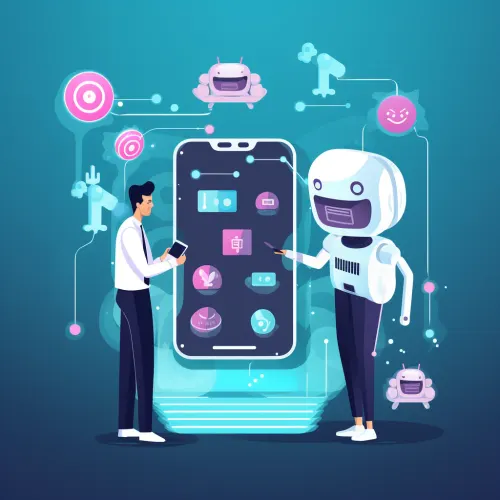
Essential Features of Chatbots for Call Centers
To maximize the effectiveness and performance of chatbots within call center operations, it’s crucial to ensure that they possess certain key characteristics. These essential features enable call center chatbots to deliver seamless and personalized interactions while meeting the diverse needs of customers. Here are the fundamental attributes that chatbots for call centers should possess:
Natural Language Processing (NLP): Chatbots equipped with advanced natural language processing capabilities can understand and mine human speech and interpret user inquiries in real-time. By analyzing the context and semantics of conversations, NLP-powered chatbots can recognize customer intent and provide accurate answers, enhancing the conversational experience for customers.
AI Automation: Advanced chatbots leverage AI automation to handle customer queries across multiple channels, enabling seamless, 24/7, and context-aware customer interactions that reduce the need for human intervention and improve efficiency.
Personalization: Personalized interactions are essential for delivering tailored solutions and recommendations to customers. Chatbots should be able to leverage customer data and preferences to customize responses and recommendations, creating a more engaging and satisfying experience for users.
Seamless Integration: Integration with existing systems and databases is essential for chatbots to access relevant customer information, and perform tasks efficiently. Whether it’s retrieving order status from an e-commerce platform or accessing account details from a CRM system, chatbots should seamlessly and integrate seamlessly with backend systems to provide accurate and up-to-date information to customers. Agent-facing bots can also provide live agents with instant access to knowledge bases and interaction history during calls, improving agent performance.
Predictive Analytics: Incorporating predictive analytics allows chatbots and call centers to forecast call volume, identify potential issues, and optimize staffing, leading to improved efficiency and customer experience.
Scalability: As call center volumes fluctuate throughout the day, chatbots must be able to handle varying levels of demand without compromising performance. Scalable chatbot service architectures enable seamless expansion and contraction of resources based on workload, ensuring consistent service levels during peak hours.
Security and Compliance: Protecting customer data and ensuring compliance with data privacy regulations are paramount for call centers. Chatbots should adhere to industry standards and best practices for data security, encryption, and access control to safeguard sensitive information and maintain customer trust in contact centers.
By incorporating these essential features into chatbot implementations, call centers can enhance operational efficiency, improve customer satisfaction, and drive business growth. Establishing KPIs such as containment rate, First Contact Resolution, and Customer Satisfaction is crucial for evaluating chatbot success. It is also important to test the chatbot in various scenarios before deployment to identify and resolve potential issues. Whether it’s streamlining customer interactions, automating routine tasks, or delivering personalized experiences, chatbots play a pivotal role in modernizing call center operations and meeting the evolving needs of today’s digital consumers.
How do chatbots enhance call center operations?
In today’s fast-paced business landscape, call centers face the challenge of meeting growing customer demands while maintaining operational efficiency. Chatbots have emerged as a transformative technology, offering service and sales teams numerous benefits that enhance call center operations in several key ways:
24/7 Availability: Unlike human agents and support teams who are limited by working hours, chatbots provide round-the-clock support to customers. This ensures that inquiries and issues can be addressed promptly, regardless of the time of day, leading to faster responses and improved customer satisfaction and loyalty.
Instant Response Times: Chatbots offer instantaneous responses to customer requests and inquiries, eliminating the need for customers to wait in queue or navigate through lengthy automated menus. By providing immediate assistance to customer queries, chatbots reduce wait times and enhance the overall customer experience.
Scalability: Call centers often experience fluctuations in call volumes throughout the day. Chatbots are highly scalable and can handle large volumes of inquiries simultaneously, ensuring consistent customer service operations and levels during peak hours without the need to hire additional staff.
Cost Savings: By less customer visits and automating routine tasks and inquiries, chatbots help reduce operational costs associated with staffing and training call center agents. This enables businesses to allocate resources more efficiently while maximizing productivity and profitability. AI-powered virtual assistants automate routine tasks, support human agents, and handle multiple communication channels, further improving efficiency.
Improved Efficiency: Chatbots streamline call center workflows by automating repetitive tasks such as data entry, appointment scheduling, and FAQ resolution. This frees up human agents to focus on more complex inquiries and value-added tasks, leading to increased productivity and efficiency in contact centers. Integrating chatbots with CRM and support software enables personalized responses and streamlined ticket management by leveraging customer history from platforms like Salesforce, Pipedrive, and Zendesk.
Enhanced Personalization: Through advanced algorithms and machine learning, chatbots can analyze customer data and preferences to deliver personalized interactions. By tailoring responses and recommendations to individual users, chatbots create more engaging and meaningful experiences that drive customer satisfaction and loyalty. Analyzing customer behavior allows chatbots to personalize interactions, predict needs, and proactively engage customers for a better experience.
Multichannel Support: In addition to traditional phone calls, chatbots can also interact with customers across multiple channels, including web chat, social media, and messaging and mobile apps. This omnichannel support enables businesses to meet customers where they are and provide consistent service across multiple channels and all touchpoints.
Data Insights: Chatbots capture valuable data and insights from customer interactions, collecting data including frequently asked questions during customer visits, common issues, and customer feedback. This data can be analyzed to identify trends, improve processes, and enhance the overall customer experience over time. Chatbots also provide AI powered insights that help optimize agent performance, streamline operations, and improve customer satisfaction through data-driven decision-making. Regularly feeding bots new data from live interactions enhances their accuracy and understanding.
In summary, chatbots play a pivotal role in enhancing call center operations by providing 24/7 availability, instant response times, scalability, cost savings, improved efficiency, enhanced personalization, multichannel support, and valuable data insights. By leveraging this technology effectively, businesses can elevate the quality of customer service, drive operational excellence, and gain a competitive edge in today’s dynamic marketplace.
Best Practices for Implementation: To implement chatbots effectively, businesses should define clear objectives and start with common, repetitive queries. Starting small with chatbot implementation allows for better management of the integration process. Launching a pilot program with a small subset of traffic can help identify issues before a full rollout.
Trends in AI Chatbot Software
You must always stay updated on customer service software trends for the best possible results. The software landscape is advancing rapidly for software applications using machine learning languages. The best customer service chatbots are selected based on their functionality, integration capabilities, and 24/7 availability, ensuring they meet the evolving needs of support teams. Here are several new trends you want customer service teams and support staff to learn about.
The adoption of chatbots by e-commerce businesses, especially those operating on platforms like Shopify, is rapidly increasing as they streamline customer support and enhance the online shopping experience.
Natural Language Understanding (NLU) Advancements: NLU technology is rapidly advancing, enabling chatbots to better understand and interpret human language. With improvements in machine learning algorithms and deep learning techniques, chatbots can accurately comprehend user intent, context, and nuances of support conversations, leading to more natural human like conversations and conversational interactions.
Conversational AI Interfaces: Chatbots are evolving beyond text-based interactions to support richer conversational experiences. Voice-enabled chatbots powered by natural language processing (NLP) are becoming increasingly prevalent, allowing users to engage with bots through spoken language via virtual assistants like Amazon Alexa or Google Assistant.
Multi-Modal Capabilities: Modern chatbots are equipped with multi-modal capabilities, enabling interactions through various communication channels such as text, voice, images, and gestures. This versatility allows users to engage with chatbots in the most convenient and intuitive way across different devices and social messaging platforms. Chatbots can operate across multiple platforms, ensuring customers reach support through their preferred channels.
Personalization and Contextualization: AI chatbots are becoming more adept at delivering personalized and contextually relevant experiences to users. By leveraging data analytics and user profiling, chatbots can tailor responses and recommendations based on individual preferences, past interactions, and real-time context, enhancing user engagement and satisfaction. There is a growing trend toward human-like interactions, which improve customer engagement by making conversations more natural and relatable.
Integration with Business Systems: Chatbots are increasingly integrated with backend business systems such as customer relationship management (CRM) platforms, e-commerce platforms, and enterprise resource planning (ERP) systems. Integrating chatbots with CRM and support software enables personalized responses and streamlined ticket management. Enterprise plans offer advanced features such as custom AI model training, unlimited interactions, and priority support, making them ideal for large support teams.
Self-Learning and Continuous Improvement: AI chatbots are capable of self-learning and continuous improvement through feedback loops and iterative training processes. By analyzing user interactions and feedback, chatbots can identify areas for enhancement, refine their responses, and adapt to evolving user needs and preferences over time.
Ethical AI and Responsible Deployment: With the growing importance of ethical AI practices, there is a focus on ensuring responsible deployment of chatbot technology. This includes considerations customer issues such as transparency, fairness, accountability, and privacy to mitigate risks associated with bias, discrimination, and unintended consequences.
Hybrid Models and Human-in-the-Loop: Hybrid models combining AI-driven automation with a human agent for oversight are gaining traction in chatbot development. By incorporating human-in-the-loop mechanisms into chat widget, organizations can ensure quality control, handle complex scenarios, and provide seamless escalation to human agents when needed, striking a balance between efficiency and human touch.
Offering a free plan is important for small businesses to test chatbot solutions before committing to a paid service, making advanced customer support tools more accessible.
In conclusion, the future of AI chatbot software is characterized by advancements in natural language understanding, conversational interfaces, multi-modal capabilities, personalization, integration with business systems, self-learning, ethical considerations, and hybrid models. By staying abreast of these trends and leveraging cutting-edge technology, organizations can harness the full potential of chatbots to deliver exceptional customer experiences and drive business success.
Deep Dive into Comprehensive Chatbot Analytics

Analytics play a crucial role in the optimization and refinement of chatbot performance within call center operations. By leveraging comprehensive analytics tools, businesses can identify objectives, monitor key metrics in real-time, and gain valuable insights to enhance the effectiveness of call center chatbot interactions. Analytics also enable organizations to track agent productivity and agent performance, ensuring that both human agents and AI systems are working efficiently and effectively. Here’s a closer look at how organizations can harness chatbot analytics to optimize conversations:
Identify Objectives
Before diving into analytics, it's essential to establish clear objectives for chatbot interactions. These objectives may vary depending on the organization's goals, such as improving customer satisfaction, increasing sales conversions, reducing support costs, or enhancing operational efficiency. By defining specific objectives, businesses can align analytics efforts with strategic priorities and measure the success of chatbot initiatives effectively.
Monitor in Real-Time
Interactive dashboards provide real-time visibility into chatbot performance, allowing organizations to track key metrics and KPIs (Key Performance Indicators) as conversations unfold. Metrics such as response times, completion rates, customer satisfaction scores, and escalation rates can be monitored dynamically, enabling timely intervention and optimization of chatbot interactions.
View Performance Information
Comprehensive analytics platforms offer detailed performance information on chatbot interactions, including quantitative metrics and qualitative insights. Organizations can view metrics such as total interactions, engagement levels, conversation paths, and sentiment analysis to assess the overall effectiveness of chatbot conversations. This granular data helps identify areas of improvement and inform optimization strategies.
Analyze Results of Conversations
In-depth analysis of chatbot conversations provides valuable insights into user behavior, preferences, pain points, and frequently asked questions. By analyzing conversational data, organizations can identify patterns, trends, and common issues encountered by users, enabling them to refine chatbot responses, update knowledge bases, and address recurring challenges proactively.
Understand How to Optimize Conversations
Armed with insights from chatbot analytics, organizations can develop strategies to optimize conversations and improve overall performance. This may involve refining conversational flows, enhancing natural language understanding, updating response templates, integrating with additional backend systems, or providing targeted training to chatbot agents. Continuous iteration and experimentation are key to driving ongoing improvements in chatbot effectiveness.
In conclusion, comprehensive chatbot analytics empower organizations to identify objectives, monitor performance in real-time, view detailed performance information, analyze results of conversations, and optimize interactions effectively. By leveraging analytics-driven insights, businesses can enhance the quality of chatbot interactions, drive customer satisfaction, and achieve their strategic objectives within call center operations.
Real-World Examples of Call Center Chatbots
Across industries, call center chatbots are transforming the way businesses handle customer inquiries and deliver exceptional customer experience. For instance, a major e-commerce retailer has deployed an AI powered chatbot to manage high volumes of customer interactions related to order status, shipping updates, and returns. By integrating the chatbot with their CRM system, the company ensures that customers receive personalized support based on their purchase history and preferences. This not only streamlines the resolution process but also reduces the reliance on human agents for routine questions, allowing them to focus on more complex issues.
In the healthcare sector, organizations are leveraging chatbots to assist patients with appointment scheduling, answer common medical questions, and provide medication reminders. These AI powered chatbots are available 24/7, ensuring that patients can access support at any time without waiting for human agents. As a result, operational costs are reduced, response times are improved, and patients enjoy a more convenient and responsive service.
These real-world applications highlight how call center chatbots can enhance customer experience, deliver personalized support, and optimize operational efficiency by handling multiple customer interactions simultaneously.
Call Center Chatbot Security
Ensuring the security of call center chatbots is paramount to protecting sensitive customer data and maintaining trust. A call center chatbot must be designed with robust security protocols, including end-to-end encryption, secure authentication methods, and strict access controls to prevent unauthorized access. Regular updates and security patches are essential to address emerging vulnerabilities and safeguard against cyber threats.
Additionally, secure data storage practices should be implemented to protect customer information from breaches or leaks. By prioritizing security at every stage of chatbot development and deployment, businesses can provide a safe and reliable experience for customers, reinforcing the integrity of their call center chatbot operations and minimizing the risk of reputational damage.
Call Center Chatbot Personalization
Personalization is a cornerstone of effective call center chatbot interactions. By leveraging customer data, previous interactions, and customer feedback, chatbots can deliver tailored recommendations, solutions, and support that resonate with each individual. For example, a call center chatbot can analyze a customer’s purchase history to suggest relevant products or services, or use advanced natural language processing to adapt its responses based on the customer’s communication style and preferences.
Integrating chatbots with CRM systems and other data sources enables them to access real-time customer context, ensuring that every interaction feels personal and relevant. This level of personalization not only boosts customer satisfaction but also fosters loyalty and engagement, as customers feel understood and valued throughout their journey.
Call Center Chatbot Integration
Seamless integration is essential for maximizing the value of a call center chatbot. By connecting chatbots with CRM, ERP, and helpdesk platforms, businesses can provide agents and bots with a unified view of customer interactions and access to comprehensive customer data. This enables chatbots to deliver personalized support, answer customer queries accurately, and resolve issues efficiently.
Moreover, integrating chatbots with popular messaging channels such as Facebook Messenger, WhatsApp, and other messaging apps allows customers to reach support through their preferred platforms. This omnichannel approach ensures consistent support and a smooth customer experience across all touchpoints, making it easier for customers to engage with the business whenever and wherever they need assistance.
Call Center Chatbot Maintenance
Ongoing maintenance is vital to ensure that a call center chatbot continues to deliver accurate and helpful responses to customer inquiries. Regularly updating chatbot scripts, intents, and knowledge bases helps improve response accuracy and keeps the chatbot aligned with evolving customer needs. Monitoring key performance metrics (such as response times, resolution rates, and customer satisfaction) enables businesses to identify areas for improvement and optimize chatbot performance.
Routine testing and quality assurance checks are also important to detect and resolve technical issues or vulnerabilities promptly. By prioritizing maintenance, organizations can ensure their call center chatbot remains reliable, secure, and effective, consistently supporting customer satisfaction and the company’s broader customer service objectives.
Challenges in Chatbot Implementation for Call Centers
While the benefits of chatbots for customer service are undeniable, their successful implementation poses certain challenges. These may include technical complexities, integration issues, training requirements, customer expectations, and ensuring compliance with data privacy regulations. Overcoming these hurdles requires careful planning and collaboration between service teams and various stakeholders.
Free trial of IrisGPT
Leveraging the power of IrisGPT, recognized as one of the best customer service chatbots for call center operations, offers a transformative solution to enhance customer experiences, streamline operations, and drive business success. IrisGPT provides a free plan for small businesses to test its capabilities, making it accessible for teams looking for affordable customer service tools. With its advanced natural language processing capabilities, seamless integration with existing systems, and scalability, IrisGPT enables organizations to deliver personalized, efficient, and round-the-clock support to customers. Setting up and deploying IrisGPT requires no technical skills and can be done with just a few clicks.
To experience the benefits of IrisGPT firsthand, we invite you to start a 14-day free trial today. During the trial period, you’ll have the opportunity to explore IrisGPT’s key features, assess its performance, and evaluate its impact on your call center operations. Additionally, you can view pricing options, request a demo, or take a product tour to learn more about how IrisGPT can meet your contact center’s specific needs and objectives.
By taking advantage of the free trial, you can gain valuable insights into the ROI (Return on Investment) of implementing the IrisGPT chatbot within your call center. Whether it’s reducing support costs, increasing efficiency, improving customer satisfaction, or driving sales conversions, IrisGPT has the potential to deliver tangible value and ROI for your organization.
Don’t miss out on the opportunity to revolutionize your call center operations with IrisGPT. Start your free trial today and discover the difference it can make for your business.


Loading the form. Prefer email? Reach us at info@irisagent.comor call +1 617 249 3312.