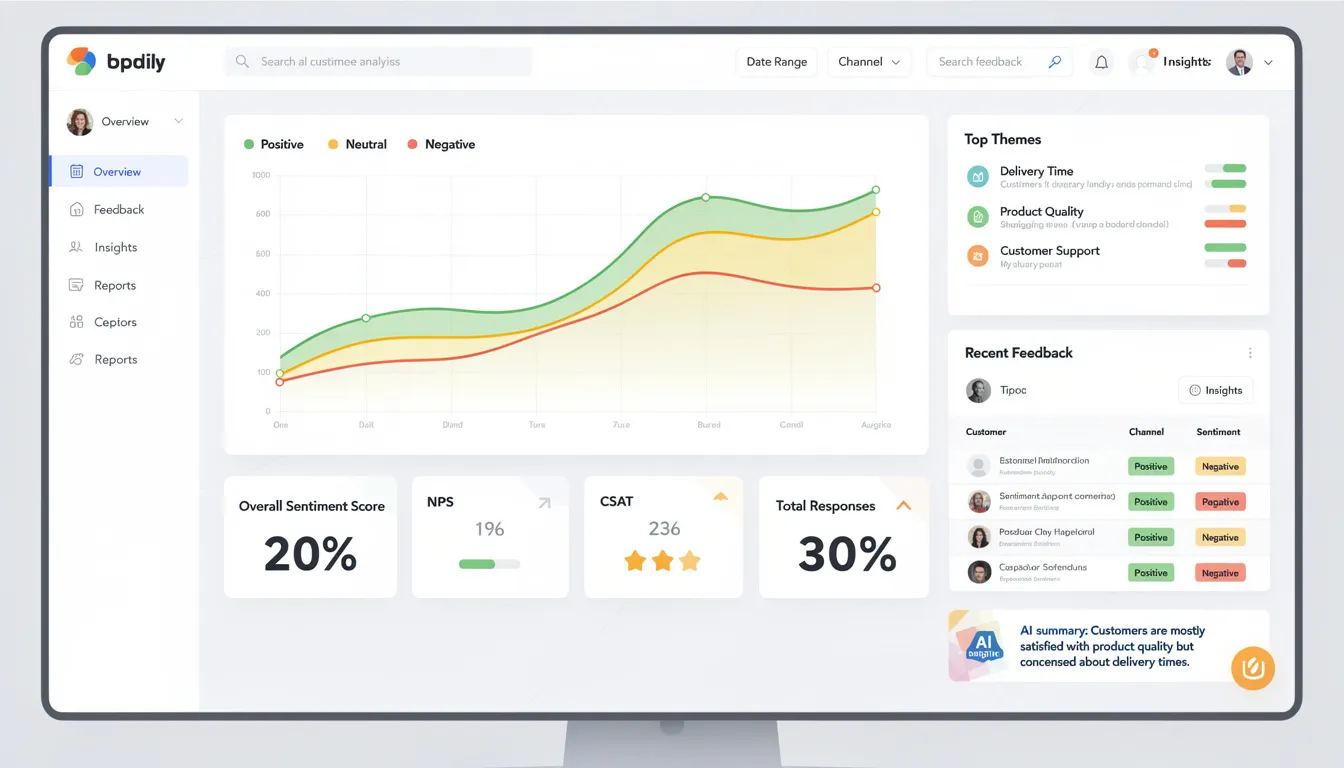
AI Proactive Customer Service: Transform Support with Predictive Intelligence
Key Takeaways
AI proactive customer service uses predictive analytics and machine learning to anticipate customer needs and resolve issues before they arise, reducing support tickets by up to 40%
Advanced technologies like sentiment analysis, behavioral prediction, and automated communication enable businesses to deliver personalized, timely support across all touchpoints
Companies implementing AI proactive support see 25-30% improvement in customer satisfaction scores and significant reductions in operational costs
Real-world success stories include Amazon’s delivery prediction system and Netflix’s content recommendation engine driving 80% of viewing decisions
Effective implementation requires strategic planning, data integration, team training, and continuous optimization of AI models
The customer service landscape is undergoing a fundamental transformation. What if your business could solve customer problems before they even occur? This isn’t science fiction—it’s the reality of ai proactive customer service, where artificial intelligence and predictive analytics work together to anticipate customer needs and address issues before they escalate into support tickets.
Traditional reactive support models wait for customers to reach out when problems arise. But in today’s competitive marketplace, where customer expectations continue to rise, businesses need a more sophisticated approach. Proactive customer service powered by AI technologies represents a paradigm shift that’s revolutionizing how companies interact with their customers.
This comprehensive guide explores how AI-driven proactive support can transform your customer service operations, reduce costs, and dramatically improve customer satisfaction while giving your business a significant competitive edge.
What is AI Proactive Customer Service?
AI proactive customer service combines artificial intelligence with predictive analytics to identify and address customer needs before issues escalate. This revolutionary approach fundamentally changes the traditional support model by using data patterns and behavioral analysis to predict when customers might need assistance.
Unlike traditional reactive support that responds after problems occur, proactive service leverages machine learning algorithms, natural language processing, and predictive modeling to anticipate customer requirements. The system analyzes vast amounts of customer data to detect early warning signs and automatically triggers appropriate interventions within various customer service functions, such as chatbots, virtual agents, and CRM integrations, to enhance support, streamline processes, and personalize interactions.

Consider Amazon’s delivery prediction system, which exemplifies this approach perfectly. When their AI detects potential delivery delays due to weather conditions or logistics issues, the system automatically notifies customers 2 hours before the expected impact. This proactive communication prevents frustrated customers from contacting support and demonstrates the company’s commitment to transparency.
Similarly, Spotify’s AI-powered recommendation engine automatically creates personalized playlists based on listening habits, musical preferences, and even the time of day. This proactive approach to content delivery ensures customers discover new music without having to search actively, enhancing their overall experience. AI can also assist customers by proactively offering help or recommendations based on their behavior, further improving satisfaction and engagement.
The technology stack supporting ai proactive customer service includes several key components:
Machine learning algorithms that analyze historical customer data and interaction patterns
Natural language processing for understanding customer communications across multiple channels
Predictive modeling that forecasts future customer behavior and potential issues
Automated communication systems that deliver timely, personalized messages
Real-time data processing engines that trigger instant responses to specific conditions
Interactive voice response (IVR) is another AI-powered tool that guides callers to the right support channels, provides update announcements, and integrates with other support systems for a seamless customer experience.
Natural language processing enables AI to analyze a customer's message, detecting sentiment and intent to provide more personalized and effective responses.
This integrated approach transforms customer support from a cost center focused on problem resolution into a strategic advantage that drives customer loyalty and business growth.
How AI Enables Proactive Customer Support
Machine learning algorithms serve as the foundation for effective proactive support by analyzing historical customer data, purchase patterns, and interaction history to predict future needs and potential issues. These sophisticated models can process millions of data points in real-time, identifying subtle patterns that human agents might miss.
Natural language processing interprets customer communications across email, chat, and social media to detect early warning signs of dissatisfaction. The technology analyzes not just what customers say, but how they say it, detecting changes in tone, urgency levels, and emotional sentiment that indicate potential problems. AI also analyzes customer sentiment across communication channels, allowing businesses to identify potential issues early and respond proactively.

Predictive analytics models represent the strategic brain of the operation, forecasting customer behavior and identifying at-risk accounts with remarkable accuracy. These models analyze factors like usage patterns, payment history, support interaction frequency, and engagement metrics to determine optimal intervention timing.
Real-time data processing enables instant response triggers when specific conditions are met. For example, when a customer’s payment fails, the system immediately initiates a series of automated actions: sending a friendly payment reminder, updating the account status, and flagging the customer for proactive outreach from the support team. In these scenarios, proactive alerts are sent to customers to provide immediate, actionable solutions and prevent issues from escalating.
Integration with CRM systems and customer databases provides a comprehensive 360-degree customer view that enables truly personalized proactive outreach. This unified data foundation ensures that every interaction is informed by complete customer history, preferences, and current context. Proactive notifications keep customers informed about order status, payment issues, or service disruptions before they even ask, helping manage expectations and reduce inbound inquiries.
The sophistication of modern AI systems allows them to understand customer behavior patterns at an unprecedented level. They can predict when customers are likely to need help during onboarding, anticipate questions about specific features, and even forecast when someone might be considering canceling their service.
Support teams benefit enormously from these AI-powered insights. Instead of waiting for problems to arise, human agents receive alerts about customers who might need assistance, complete with context about the potential issue and suggested resolution approaches. Delivering a timely message at the right moment helps re-engage or inform customers, ensuring proactive support that addresses needs before they become frustrations. This enables more meaningful, consultative interactions that address customer needs before they become frustrations.
Key Benefits of AI Proactive Customer Service
Reduced Support Volume and Faster Resolution
AI proactive interventions dramatically reduce incoming support tickets by 35-45% by addressing issues before customers experience problems. When systems automatically detect and resolve common issues—like failed payment retries or shipping delay notifications—customers never need to contact support at all.
Automated alerts for shipping delays, payment failures, or service outages prevent frustrated customers from flooding support channels with repetitive inquiries. This deflection of routine issues allows support teams to focus their expertise on complex customer issues that truly require human intervention.
Self-service resources powered by AI recommendations resolve 60% of customer queries without human involvement. The system learns which customers prefer self-service options and proactively surfaces relevant help articles, video tutorials, or step-by-step guides based on their current context and past behavior.
FedEx provides an excellent real world example of this benefit in action. Their AI system continuously monitors shipment data and external factors like weather conditions, traffic patterns, and facility capacity. When potential delivery issues are detected, the system automatically reroutes packages and notifies customers about changes, reducing delivery complaints by 50% while improving overall customer satisfaction.
Enhanced Customer Satisfaction and Loyalty
Proactive communication builds trust and demonstrates genuine customer care, leading to 20-25% higher satisfaction scores compared to purely reactive support models. When customers receive timely updates about their orders, helpful tips for using products, or early warnings about potential issues, they feel valued and understood.
Personalized recommendations and timely updates create positive customer experiences that drive long-term loyalty. AI systems learn individual preferences and communication styles, ensuring that proactive outreach feels helpful rather than intrusive. This personalization extends to timing, channel selection, and message content. By enabling faster resolutions and more personalized engagement, proactive AI support leads to increased customer loyalty.
Early problem resolution prevents customer frustration from building and maintains brand reputation during challenging situations. When issues are addressed proactively, customers often view them as minor inconveniences rather than major problems, preserving their overall perception of the brand.
Verizon’s AI churn prediction model demonstrates the loyalty impact of proactive service. The system identifies at-risk customers based on usage patterns, payment history, and engagement metrics, then triggers personalized retention campaigns. This proactive approach has improved customer lifetime value by 18% while reducing voluntary churn rates significantly.
Cost Reduction and Operational Efficiency
Automation of routine communications and issue resolution reduces operational costs by 30-40% while maintaining or improving service quality. ai tools handle repetitive tasks like order confirmations, appointment reminders, and status updates, freeing human agents to focus on complex problem-solving.
Support agents can concentrate on high-value interactions rather than repetitive inquiries, improving job satisfaction and enabling them to deliver more meaningful assistance to customers with complex needs. This strategic reallocation of human resources maximizes the impact of skilled support staff.
Reduced call center volume decreases staffing requirements and infrastructure costs without sacrificing service quality. Many organizations find they can handle increased customer bases with smaller support teams when AI handles the predictable, routine interactions.
AI-driven insights optimize resource allocation and improve agent productivity by 25%. Predictive models help managers forecast support volume, identify peak periods, and allocate staff accordingly. Agents receive better preparation for customer interactions through AI-generated context and suggested solutions.
Churn Prevention and Revenue Protection
Early identification of customer dissatisfaction enables timely intervention to prevent churn. AI systems detect behavioral patterns that indicate potential cancellations 30-60 days in advance, providing ample opportunity for retention efforts.
Machine learning models analyze factors like decreased usage, reduced engagement, negative sentiment in communications, and changes in payment patterns to create churn risk scores. These insights enable targeted interventions that address specific customer concerns before they decide to leave.
Proactive retention campaigns targeting at-risk customers improve retention rates by 15-20% through personalized offers, enhanced support, or product education. The key is reaching customers while they’re still engaged enough to consider staying rather than waiting until they’ve already mentally checked out.
Revenue protection extends beyond churn prevention to include early payment failure detection and automated retry systems. When payment issues are detected and resolved proactively, businesses avoid service interruptions and the associated recovery costs while maintaining positive customer relationships.
Core AI Technologies for Proactive Service
Predictive Analytics and Behavioral Modeling
Machine learning algorithms analyze customer data to predict future needs, preferences, and potential issues with remarkable accuracy. These models process transaction histories, usage patterns, demographic information, and interaction data to identify customers likely to need specific types of assistance.
Behavioral scoring models create dynamic risk assessments that help prioritize proactive outreach efforts. Customers receive scores for various risk factors—churn probability, support need likelihood, upgrade potential—enabling targeted interventions that maximize impact while minimizing unnecessary contact.
Predictive models continuously evolve as they process new data, improving their accuracy over time. The most sophisticated systems can forecast customer behavior patterns months in advance, enabling strategic planning for support resources and proactive campaign development.
Netflix exemplifies advanced predictive analytics in action. Their collaborative filtering and content-based algorithms analyze viewing history, search patterns, time-of-day preferences, and device usage to predict viewing preferences with 80% accuracy. This proactive content recommendation drives the majority of viewing decisions and significantly enhances user satisfaction.
Real-Time Sentiment Analysis and Emotion Detection
Natural language processing monitors customer communications across all channels for sentiment changes, providing early warning systems for potential dissatisfaction. Advanced systems analyze email tone, chat message emotions, social media posts, and even voice patterns during phone calls.
Real-time emotion detection in customer interactions triggers immediate escalation protocols when negative sentiment reaches critical thresholds. This ensures that frustrated customers receive immediate attention from experienced agents before their emotions escalate further.
Sentiment trend analysis identifies emerging issues before they become widespread problems. When multiple customers express similar frustrations about a particular feature or service aspect, the system alerts management to address the root cause proactively. Analyzing customer feedback further helps identify pain points and improve AI-driven support by collecting and evaluating opinions, reviews, and input to enhance the overall customer experience.
Integration with customer journey mapping helps businesses understand emotional touchpoints and friction areas throughout the entire customer experience. This holistic view enables strategic improvements that prevent negative emotions from developing in the first place.
Intelligent Automation and Communication
Robotic Process Automation handles routine communications like order updates, payment reminders, and appointment notifications with perfect consistency and timing. These automated workflows ensure customers receive important information when they need it most.
Smart chatbots provide 24/7 proactive assistance with context-aware responses that feel natural and helpful. Modern ai customer service bots can initiate conversations at strategic moments, offer relevant assistance, and seamlessly escalate complex issues to human agents when needed.
Automated workflow triggers respond to customer behavior patterns—cart abandonment, feature usage changes, or service interruptions—with appropriate interventions. These triggers can initiate everything from helpful tips to personalized offers designed to address specific customer needs.
Multi-channel communication orchestration ensures consistent messaging across email, SMS, push notifications, and in-app alerts. The AI system selects optimal communication channels based on customer preferences, urgency levels, and message content to maximize engagement and effectiveness.
AI Powered Self Service
AI-powered self-service is rapidly becoming a cornerstone of proactive customer service, empowering proactive customers to resolve their own issues quickly and efficiently—often without ever needing to interact with human agents. By leveraging advanced AI tools, businesses can deliver instant, personalized support through intuitive self-service channels such as chatbots, virtual assistants, and dynamic knowledge bases. These AI-powered self-service solutions are designed to anticipate customer needs, providing relevant answers and guidance based on previous interactions and real-time context.
Seamless integration with existing systems ensures that customers receive consistent and accurate information, whether they’re troubleshooting a product, checking an order status, or seeking advice on new features. This not only streamlines the customer experience but also reduces the volume of support requests, allowing support teams to focus on more complex customer issues that require a human touch.
The impact on customer satisfaction is significant: studies show that 70% of customers prefer self service options to resolve their inquiries, highlighting the growing expectation for immediate, on-demand support. By meeting these customer expectations with AI powered self service, businesses can enhance the overall customer experience, boost loyalty, and drive higher customer satisfaction—all while optimizing operational efficiency.
Integrating AI with Existing Tools
For businesses aiming to unlock the full potential of proactive customer service, integrating AI with existing tools and platforms is essential. By connecting AI-driven insights with customer relationship management (CRM) systems, companies can track customer behavior more effectively and gain a holistic view of each proactive customer’s journey. This integration enables support teams to deliver more personalized and timely assistance, tailored to individual preferences and past interactions.
AI can also be embedded within helpdesk software and contact center platforms, automating repetitive tasks such as ticket categorization, smart routing, and initial troubleshooting. This not only streamlines support processes but also frees up human agents to focus on more complex customer issues that require empathy, creativity, and critical thinking.
The result is a more efficient and responsive support operation, where AI handles routine inquiries and provides actionable insights, while human agents step in for nuanced or sensitive cases. By leveraging AI to automate the mundane and augment the complex, businesses can deliver a proactive customer service experience that exceeds customer expectations and drives long-term loyalty.
Automated Alerts and Notifications
Automated alerts and notifications are a powerful feature of proactive customer service, enabling businesses to keep proactive customers informed and engaged at every stage of their journey. With AI powered tools, companies can set up automated alerts that deliver timely updates about service disruptions, product changes, or important account information—often before customers even realize there’s an issue.
For example, a software company might use automated alerts to notify users about upcoming maintenance windows, new feature releases, or potential service interruptions. These proactive messages help manage customer expectations, reduce uncertainty, and prevent a surge in support requests during critical periods.
Beyond crisis communication, automated notifications can also be used for proactive outreach—reminding customers about upcoming appointments, payment deadlines, or expiring subscriptions. By anticipating customer needs and delivering relevant information at the right moment, businesses can improve customer satisfaction, foster trust, and demonstrate a commitment to exceptional service.
Implementation Strategies for AI Proactive Support
Strategic implementation begins with comprehensive customer journey mapping to identify high-impact intervention points and common pain points that generate frequent support requests. This foundational step reveals where proactive service can deliver the greatest value for both customers and the business.
Organizations should start by analyzing existing support data to understand customer behavior patterns, common issues, and resolution pathways. This analysis identifies the most promising opportunities for proactive intervention and helps prioritize implementation efforts based on potential impact.
Data integration represents a critical early step, connecting CRM systems, support platforms, analytics tools, and customer touchpoints to create a unified customer view. Without consolidated data, AI systems cannot develop accurate predictions or deliver personalized experiences.

Deployment should follow a gradual approach, beginning with predictive analytics for high-volume use cases like order tracking, payment processing, and basic account management. Starting with these foundational applications builds confidence and demonstrates value before expanding to more complex scenarios.
Establishing trigger-based workflows requires careful definition of when and how proactive outreach occurs. Teams must balance being helpful with avoiding customer fatigue, setting appropriate thresholds for intervention based on customer preferences and risk levels.
Training support teams on AI tool usage, escalation protocols, and interpretation of AI-generated insights ensures smooth integration between automated systems and human expertise. Staff must understand how to leverage AI recommendations while maintaining the empathy and problem-solving skills that customers value.
Creating feedback loops for continuous improvement involves monitoring customer responses to proactive outreach and using this data to refine AI models. Successful implementations treat AI as a learning system that becomes more effective over time through careful optimization.
Real-World Applications and Use Cases
E-commerce leaders like Amazon demonstrate the transformative power of ai proactive customer service through their sophisticated delivery prediction systems. When AI algorithms detect potential shipping delays due to weather, logistics issues, or high demand, the system automatically offers compensation, alternative delivery options, or expedited shipping. This proactive approach has reduced customer complaints by 60% while maintaining high satisfaction levels even during challenging delivery periods.
Financial services companies leverage predictive analytics to detect and prevent payment failures before they impact customer experiences. Stripe’s machine learning algorithms analyze transaction patterns, bank responses, and historical data to identify payments likely to fail, then automatically retry transactions using optimized routing and timing. This proactive approach improves payment success rates by 23% while reducing customer frustration from declined transactions.
Software companies utilize AI to predict customer churn and trigger personalized engagement campaigns that address specific user concerns. Salesforce’s Einstein AI platform identifies customers at risk of churning based on usage patterns, support interactions, and engagement metrics, then automatically initiates targeted retention campaigns featuring relevant content, training resources, or account manager outreach. This proactive strategy has improved customer retention by 27% across their customer base.
Telecommunications providers use predictive analytics to anticipate network issues and communicate proactively with affected customers. T-Mobile’s AI systems monitor network performance, predict service disruptions, and automatically notify customers about potential issues along with estimated resolution times. This transparent communication reduces support calls during outages and maintains customer trust during technical difficulties.
Healthcare technology companies implement AI-powered scheduling systems that predict appointment no-shows and automatically trigger reminder campaigns. Teladoc’s machine learning models analyze patient history, appointment timing, and external factors to identify high-risk appointments, then deploy personalized reminder sequences via text, email, and phone calls. This proactive approach has reduced missed appointments by 35% while improving overall patient engagement.
Proactive Customer Service Examples
Real-world examples of proactive customer service showcase how businesses can anticipate and address customer needs before they escalate into major issues. For instance, companies are increasingly using predictive analytics to identify customers at risk of churning and proactively reaching out with personalized support, incentives, or tailored solutions to retain their business.
Sentiment analysis is another powerful tool, allowing organizations to monitor customer emotions across various channels. When negative sentiment is detected—such as frustration in a customer’s message—AI-powered systems can trigger proactive support, connecting the customer with a human agent or offering immediate assistance to resolve the issue and improve the overall experience.
AI powered chatbots also play a key role in proactive customer service. These intelligent assistants can initiate conversations with customers, offer personalized product recommendations, or guide users through troubleshooting steps before a problem becomes critical. By leveraging predictive analytics, sentiment analysis, and personalized support, businesses can deliver proactive support that not only addresses customer needs but also delights customers and builds lasting loyalty.
Best Practices for AI Proactive Customer Service
Transparency remains paramount when implementing ai proactive customer service systems. Customers should clearly understand when AI is involved in their interactions and have easy access to human support when needed. This transparency builds trust and ensures customers feel comfortable with automated assistance while knowing they can escalate to human agents for complex issues.
Data quality serves as the foundation for effective AI predictions and customer interactions. Organizations must regularly audit customer data sources, eliminate duplicates, and ensure accuracy across all integrated systems. Poor data quality leads to irrelevant or mistimed proactive outreach that can damage customer relationships rather than enhance them.

Gradual rollout strategies minimize risk while maximizing learning opportunities. Testing AI proactive features with small customer segments allows organizations to refine their approaches, identify potential issues, and optimize performance before full deployment. This methodical approach prevents widespread problems and builds internal confidence in the system.
Balancing automation with human involvement ensures that customers receive appropriate assistance for their specific situations. While AI excels at handling routine communications and predictable issues, complex or emotionally charged situations still require human empathy and problem-solving capabilities. Clear escalation pathways prevent customer frustration when automated solutions aren’t sufficient.
Continuous monitoring of AI performance using metrics like prediction accuracy, customer satisfaction scores, and false positive rates enables ongoing optimization. Organizations should establish regular review cycles to assess model performance, identify areas for improvement, and update algorithms based on new data and changing customer behaviors.
Privacy compliance must be built into every aspect of AI proactive service, following regulations like GDPR and CCPA when collecting and using customer data for predictions. Clear consent mechanisms, data minimization practices, and customer control over their information ensure compliance while maintaining the trust necessary for effective proactive service.
Escalation pathways should be clearly defined and easily accessible, allowing customers to reach human agents quickly when AI solutions don’t meet their needs. The best systems make this transition seamless, providing agents with complete context about the customer’s situation and the AI’s attempted resolution approaches.
Measuring Success and ROI
Tracking support ticket reduction provides a clear metric for measuring the immediate impact of proactive interventions. Organizations typically see 30-45% decreases in reactive support requests after implementing comprehensive AI proactive service programs. This reduction directly translates to cost savings and improved resource allocation.
Customer satisfaction scores serve as crucial indicators of proactive service effectiveness. Post-interaction surveys and Net Promoter Score improvements reveal whether customers value proactive outreach and find it helpful rather than intrusive. Leading implementations achieve 25-40% improvements in key satisfaction metrics.
Cost savings calculations should include multiple factors: reduced agent time on routine inquiries, decreased infrastructure requirements, improved resolution efficiency, and prevented revenue loss from retained customers. Most organizations see ROI within 12-18 months of implementation, with ongoing benefits continuing to grow as AI systems mature.
Churn reduction measurements compare customer retention rates before and after AI proactive service implementation. The most effective programs achieve 15-25% improvements in retention among high-risk customer segments through early intervention and personalized assistance.
Revenue impact analysis examines increased customer lifetime value, prevented revenue loss from churn reduction, and improved upsell/cross-sell success rates. Proactive service often reveals opportunities for account expansion while strengthening existing customer relationships.
AI model performance evaluation requires technical metrics including prediction accuracy, precision, recall, and false positive/negative rates. These metrics ensure that AI systems continue to improve over time and maintain the accuracy necessary for effective customer interactions.
Industry benchmarking against similar organizations provides context for performance evaluation and goal setting. While specific results vary by industry and implementation approach, successful AI proactive service initiatives typically achieve 25-40% improvements across key operational and customer satisfaction metrics.
The most sophisticated measurement approaches track customer behavior changes over time, examining how proactive service influences customer engagement, product adoption, and overall relationship development. These insights inform strategic decisions about service expansion and refinement.
The Future of Customer Support
The future of customer support is set to be defined by the continued evolution of AI and the widespread adoption of proactive customer service strategies. As customer expectations for fast, personalized, and seamless support continue to rise, businesses will increasingly rely on AI powered tools to anticipate and address customer needs with unprecedented accuracy and speed.
Emerging technologies such as generative AI, advanced natural language processing, and sophisticated machine learning models will enable support systems to understand and respond to complex customer inquiries, provide highly personalized recommendations, and even predict future needs based on past data and behavior. AI powered self service will become more intuitive and effective, allowing customers to resolve issues independently while still having the option to escalate to human agents for more nuanced or sensitive matters.
The integration of AI with human agents will create a hybrid support model, where routine and repetitive tasks are handled by AI, and more complex or emotionally charged issues are addressed by skilled support professionals. This proactive, customer-centric approach will not only streamline support operations but also foster deeper customer loyalty, higher satisfaction, and sustainable business growth. As businesses continue to innovate and invest in AI-driven solutions, proactive customer service will become the new standard for delivering exceptional customer experiences.
FAQ
What is the difference between AI proactive and reactive customer service?
AI proactive customer service uses predictive analytics and machine learning to anticipate customer needs and resolve issues before they arise, while reactive service responds after customers report problems. The proactive approach leverages data patterns to prevent issues entirely, while reactive service addresses existing complaints after they occur. Organizations implementing proactive strategies typically reduce support volume by 30-45% and see significant improvements in customer satisfaction because problems are solved before customers experience frustration.
How much does implementing AI proactive customer service cost?
Implementation costs vary widely depending on business size and complexity, ranging from $50,000 for basic chatbot solutions to $500,000+ for enterprise-wide predictive analytics platforms. Small to medium businesses can start with cloud-based AI platforms at $1,000-5,000 monthly, while larger organizations often require custom integrations and dedicated infrastructure. Most businesses see positive ROI within 12-18 months through reduced support costs, improved customer retention, and operational efficiency gains that typically exceed initial investment costs.
Which AI technologies are most effective for proactive customer service?
Predictive analytics for identifying at-risk customers and forecasting needs shows the highest ROI, with organizations achieving 25-40% improvements in key metrics like customer retention and satisfaction. Natural language processing for sentiment analysis enables early detection of customer dissatisfaction across communication channels, while machine learning-powered chatbots provide 24/7 proactive assistance and handle 60-70% of routine inquiries automatically. Behavioral analytics help predict customer actions and trigger appropriate proactive interventions with remarkable accuracy.
How long does it take to see results from AI proactive customer service?
Initial improvements in response times and routine task automation typically appear within 30-60 days of implementation, providing immediate operational benefits. Significant customer satisfaction improvements usually emerge after 3-6 months as AI models learn customer patterns and refine their prediction accuracy. Full ROI and advanced predictive capabilities generally mature after 12-18 months of continuous optimization, data collection, and model refinement. The timeline depends on data quality, system complexity, and organizational change management effectiveness.
What are the main challenges in implementing AI proactive customer service?
Data quality and integration issues represent the most common implementation challenges, requiring significant upfront investment in data cleansing and system integration to ensure accurate AI predictions. Staff resistance and training needs require comprehensive change management programs and education on AI tool usage to maximize adoption and effectiveness. Over-automation risks can alienate customers who prefer human interaction for complex or sensitive issues, making it essential to maintain appropriate escalation pathways. Privacy and compliance concerns require careful handling of customer data according to regulations like GDPR, adding complexity to implementation but ensuring customer trust and legal compliance.