
Artificial Intelligence Tickets: Guide on AI-Powered Automation
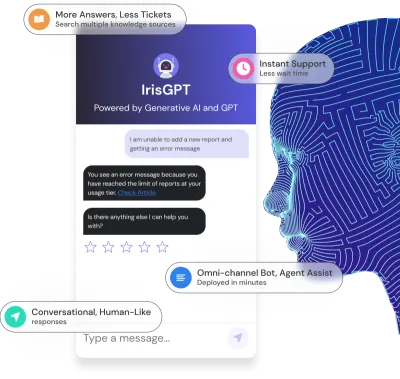
Artificial intelligence tickets are support tickets that an AI system reads, classifies, routes, and in most cases resolves without a human agent touching them. IrisAgent automates 60%+ of ticket volume this way, at validated accuracy above 95%, deployed inside 24 hours. AI-Powered Ticket Automation changes how organizations handle customer service requests and support tickets. It is an AI ticketing system that leverages artificial intelligence to streamline ticket management, improve efficiency, and enhance customer satisfaction. Modern AI ticketing systems leverage AI for customer support such as intelligent routing, sentiment analysis, and automation to deliver high quality customer service. Understanding that just one bad experience can significantly impact customer loyalty, AI ticket automation aims to mitigate this by enhancing customer support interactions. In this comprehensive guide on AI and ticketing automation system, we’ll explore the concept of automated ticketing system, its advantages over traditional methods, how it works, the benefits it offers, and how IrisAgent can assist in implementing this innovative solution.
Introduction to AI Ticketing
AI ticketing systems are transforming the landscape of customer support by automating and streamlining the ticketing process. By leveraging artificial intelligence, machine learning, and natural language processing, these advanced ticketing systems can efficiently manage and resolve support requests with minimal manual intervention. AI ticketing systems work by integrating seamlessly with existing systems, analyzing customer queries in real time, and intelligently classifying and routing tickets to the appropriate support teams. This automation not only accelerates response times but also ensures greater accuracy and consistency in handling customer support tickets. As a result, customer support teams can focus their efforts on more complex and high-priority issues, leading to improved customer satisfaction and reduced operational costs. By optimizing the ticketing process, AI ticketing empowers organizations to deliver high-quality customer support while maximizing the efficiency of their support operations.
What Are Artificial Intelligence Tickets and AI Ticket Automation?
AI Ticket automation refers to automating the handling and resolving of support tickets and service requests. It involves categorizing, prioritizing, assigning, and resolving tickets with minimal manual human intervention throughout. Traditional ticketing systems often rely on predefined rules and workflows, whereas automated ticketing systems utilize advanced algorithms and machine learning to make intelligent decisions. However, manual triage and manual processes in traditional systems often lead to inefficiencies and delays. The limited scalability of traditional ticketing systems makes it difficult to handle increasing ticket volumes effectively.
An AI based ticketing system is a software solution that leverages artificial intelligence (AI) technologies to streamline and automate the process of ticket creation, management, and resolution. As a comprehensive ai system, it is designed to enhance the efficiency and effectiveness of customer support, IT service management, helpdesk operations, and other robust ticketing system-based workflows.
This system employs various AI techniques, such as natural language processing (NLP), machine learning (ML), and predictive analytics, to automate repetitive tasks, analyze incoming tickets, and create and provide intelligent recommendations for ticket routing, prioritization, and resolution. AI agents play a crucial role by automating ticket categorization, routing, and responses, supporting support teams to increase efficiency and reduce workload. By harnessing the power of AI, these ticketing systems can understand and interpret the content of incoming tickets, classify them based on their nature or severity, and route them to the appropriate teams or individuals for resolution.
Additionally, AI-powered ticketing systems often feature chatbots or virtual assistants that can interact with users, gather relevant information timely support them, and provide immediate assistance, assistance, or resolutions to common issues. These intelligent bots can handle routine inquiries, answer frequently asked questions, call support leads, and guide users through troubleshooting steps, reducing the workload on human agents and improving response times.
AI ticketing automation can be implemented within ticketing software and desk ticketing system platforms, enhancing efficiency, speed, and customer satisfaction by automating the management and routing of support tickets.
Overall, an AI-powered ticketing system transforms the ticketing process from a manual and reactive task into a proactive, intelligent, and data-driven workflow. Intelligence tickets are automatically created, classified, and prioritized using advanced AI technologies, further streamlining support operations. By automating repetitive tasks, improving ticket categorization and message routing, and enabling instant responses and faster resolution times, these systems help organizations deliver faster, more efficient, and more personalized support to their customers and internal users alike.
Many teams start with free open source ticketing software before layering AI automation on top.
Disadvantages of Traditional Ticketing Systems
Before the advent of Artificial Intelligence, businesses had to grapple with various complications from the traditional ticketing process. Traditional ticketing systems, unlike automated ticketing system, have limitations, such as being rule-based and less adaptable to changing contexts. Traditional systems are often inflexible and lack advanced analytics, making it difficult to scale and optimize support operations. Traditional ticket management system may struggle with complex or unstructured data and require frequent manual updates to maintain accuracy. This can lead to slower response times, increased workload for support agents, and potentially lower customer and employee satisfaction.
The inability of employees to prioritize tickets, delays in response time to customer requests, and a lack of automation and organization led to inefficiencies and customer dissatisfaction. Traditional ticketing systems often result in poor customer experience due to delays and errors. Additionally, traditional ticketing systems often lack the capability to analyze trends in customer issues or agent performance effectively. As ticket volumes rise, these systems often result in higher operational costs due to the need for larger support teams.
Why Use AI-Powered Ticket Automation?
AI-powered ticket automation offers several compelling advantages. It can more accurately analyze and categorize tickets, identify trends and anomalies, and suggest optimal solutions. Learning from historical data continually improves its performance, leading to faster response times, reduced manual effort, and increased customer satisfaction. AI ticketing automation enhances service operations by streamlining workflows and enabling proactive support. AI ticketing systems can operate 24/7, providing consistent, always-available customer service, which is particularly valuable for global companies. It also enables organizations to scale their support operations efficiently.
Here are some key benefits of automated ticket systems:
1. Efficiency and Speed
AI can rapidly process and categorize incoming tickets, leading to faster response times. It can also automate routine tasks like data entry, allowing support agents to focus on more complex issues. Automated workflows powered by AI help streamline support processes, reducing manual effort and speeding up ticket resolution.
2. Consistency
AI systems provide a consistent level of service regardless of the volume of customer requests or the time of day. Customers receive uniform assistance, leading to enhanced productivity and improved satisfaction. AI ticketing systems enable customer service teams to deliver uniform assistance and efficiently handle high volumes of inquiries.
3. Cost Savings
Organizations can reduce labor costs for handling support tickets by automating routine tasks. AI ticketing automation helps service teams manage high ticket volumes without the need for large manual support staff. Fewer support agents may be needed, for instance, resulting in significant savings over time.
4. 24/7 Availability
AI-Powered ticketing systems operates round the clock, ensuring customers receive assistance anytime, even outside regular business hours.
5. Data-Driven Insights
AI can analyze ticket data and provide valuable insights into customer issues, common problems, customer expectations, and emerging trends. By analyzing historical ticket data, AI ticketing systems can identify patterns and predict future trends, helping teams allocate resources effectively. This data can inform decision-making and lead to improvements in products or services.
How AI Ticket Automation Works?
AI ticketing automation utilizes natural language processing (NLP) and machine learning algorithms to understand and categorize incoming tickets. These AI systems enhance customer interaction by automating and streamlining communication with users, leading to faster and more accurate responses. It can extract relevant information, prioritize tickets based on urgency, and even provide automated responses or route them to the appropriate human agent. AI algorithms adapt and improve over time, making the system more efficient and effective.
Here’s how automated ticketing system works:
1. Data Collection and Integration
The process begins with integrating AI ticket automation software into your existing ticketing system or customer support platform.
Data from various sources, such as emails, chat logs, web forms, social media, and customer reports, is consolidated.
2. Data Preprocessing
The collected data undergoes preprocessing, which involves cleaning, structuring, and preparing it for analysis.
During this phase, irrelevant information may be filtered out, and relevant data is extracted.
3. Natural Language Processing (NLP)
NLP is a critical component of automated ticketing system. It enables the system to understand and process written and spoken human language.
NLP algorithms analyze the content of tickets, identifying keywords, sentiment, and the intent behind customer inquiries. Sentiment analysis is used to gauge customer emotions and prioritize tickets accordingly.
4. Ticket Categorization
Based on the analysis, the system categorizes tickets into predefined or learned categories. Common categories include technical issues, billing inquiries, and general questions.
This categorization helps in routing tickets to the appropriate support agents or automated processes. The AI system can also automatically update ticket status as issues are resolved, ensuring efficient management of support requests.
5. Automated Responses or Actions
AI can generate automated responses or take predefined actions for routine or repetitive queries, such as password resets or order tracking.
This reduces the workload on human agents for straightforward tasks.
6. Agent Assistance
AI provides support agents with relevant information for more complex issues, including previous interactions, customer history, and potential solutions. AI tools also give customer service agents better insights and recommendations, streamlining their workflows.
It can suggest responses or actions, empowering agents to provide faster and more accurate assistance.
7. Learning and Improvement
AI ticketing systems continuously learn and adapt to new data. They refine their understanding of language, ticket categorization, and problem-solving based on historical interactions. Machine learning models analyze large volumes of historical data to improve ticket classification and routing accuracy.
Over time, the system becomes more effective at handling tickets and can adapt to changing customer needs.
None of this requires replacing your help desk. Tagging, routing, and priority scoring run inside the tool your agents already have open, so teams on Freshworks can automate Freshdesk ticket tagging and routing without migrating a single ticket.
Benefits of AI-Powered Ticket Automation
The benefits of automated ticketing systems are manifold. It accelerates response times, reduces human error, ensures consistent service quality, enhances customer experiences, and allows support teams to focus on more complex tasks. Additionally, it provides valuable insights into customer issues and trends, aiding in continuous service improvement and business success.
Implementing AI for ticket automation can drastically reduce response times, improve customer satisfaction rates, and streamline operations. AI-powered ticket systems generate data-driven insights to optimize customer service strategies. As a result, businesses can save costs while customers can experience a smoother, hassle-free ticketing process. The future of ticketing lies in AI automation tools, bringing a new level of efficiency to the industry. Implementing AI ticketing systems can optimize customer support efficiency and scalability, especially when integrated with workforce management software.
What ticket automation actually returns, measured
Most guides to ticket automation stop at "it saves time." Here is what the numbers look like in production, from IrisAgent deployments running on live support queues.
Dropbox runs IrisAgent across its highest-volume support queues. The measured result was 160,000 agent minutes saved and average handle time cut by two minutes per ticket. Two minutes reads small until it is multiplied by a queue: at 10,000 tickets a month, that is 333 agent hours returned every month from handle time alone, before counting the tickets that never reach an agent.
Across the platform, IrisAgent handles more than 1 million tickets a month for teams including Dropbox, Zuora, and Teachmint, and automates 60%+ of ticket volume end to end. Automation here means the ticket closes without human involvement, not that the customer was shown a help article.
The accuracy question is the one that decides whether any of this is usable. Ungrounded language models hallucinate on 15 to 30% of customer service responses. IrisAgent's Hallucination Removal Engine validates every response against the source it cites before sending, which holds validated accuracy above 95% and the hallucination rate under 5%. An automation rate is only worth what its accuracy rate allows you to ship.
Here are some ways AI can significantly enhance ticketing and benefit customers and businesses.

Here are some ways AI can significantly enhance ticketing and benefit customers and businesses.
1. Boosts Efficiency
AI ticket automation accelerates ticket resolution by more complex queries and automating responses to common queries.
2. 24/7 Support
With AI ticket automation, customer self-service is available round the clock without additional staffing.
3. Increases Productivity
It frees human agents to focus on more complex tasks requiring critical thinking skills.
4. Error Reduction
AI ticket systems minimize the likelihood of errors that can occur with manual ticket handling.
5. Cost Effective
AI ticket automation helps to reduce operational costs by streamlining the customer support process.
6. Scalability
AI-powered ticket systems can effortlessly handle a significant increase in ticket volume during high demand.
7. Proactive Support
AI ticket systems can mine historical data to predict issues and initiate actions to resolve or solve them even before a ticket is raised.
Components of an AI-Powered Ticketing System
An AI-powered ticketing system incorporates various components and technologies to optimize the ticketing process and improve overall efficiency. This section explores the key components that make up an AI-powered ticketing system and their roles involved in enhancing a robust ticketing system for creation, management, and resolution.
Natural Language Processing (NLP)
Natural Language Processing (NLP) is a core component of AI-powered ticketing systems that enables machines to understand and interpret human language. NLP algorithms analyze the text content of incoming tickets, extracting relevant information such as user queries, issues, or requests. By understanding the context, intent, and sentiment behind user messages, NLP enables the system to categorize tickets accurately, identify key issues, and determine the appropriate course of action for resolution.
Machine Learning Algorithms
Machine Learning (ML) algorithms are instrumental in AI-powered ticketing systems for automating decision-making processes and improving system performance over time. ML algorithms analyze historical ticket data, user interactions, and customer feedback to identify patterns, trends, and anomalies. By learning from past experiences, ML algorithms can predict ticket outcomes, recommend optimal solutions, and optimize ticket routing and escalation workflows. Through continuous learning and adaptation, ML algorithms enable AI-powered ticketing systems to become more accurate, efficient, and effective in addressing user needs.
Chatbots and Virtual Assistants
Chatbots and virtual assistants are intelligent conversational interfaces that interact with users in natural language to provide assistance, answer questions, and resolve issues. Integrated within AI-powered ticketing systems, chatbots and virtual assistants serve as the first point of contact for users seeking support or information. These AI-powered agents can handle routine inquiries, gather relevant information from users, and guide them through troubleshooting steps. By automating frontline support tasks, chatbots and virtual assistants enhance response times, reduce workload on human agents, and improve overall customer satisfaction.
Automated Routing and Escalation
Automated routing and escalation mechanisms are essential components of AI-powered ticketing systems that optimize the distribution and management of incoming tickets. These mechanisms leverage AI algorithms to analyze ticket content, user profiles, and predefined rules to determine the most suitable destination for each ticket. By automatically routing tickets to the appropriate teams or individuals based on their nature, priority, or complexity, automated routing and escalation workflows ensure timely and efficient resolution of user issues. Additionally, AI-powered ticketing systems can automate ticket escalation processes based on predefined criteria, such as service level agreements (SLAs) or unresolved issues, to ensure prompt attention and resolution.
Knowledge Base Integration
Knowledge base integration is a key feature of AI-powered ticketing systems that enables access to relevant information and resources during the ticket resolution process. Integrated knowledge bases contain articles, documentation, troubleshooting guides, and solutions to common issues that can assist the support team and agents in resolving tickets more efficiently. AI-powered ticketing systems leverage knowledge base integration to provide agents with contextually relevant information and recommendations directly within the ticketing interface. By empowering agents with access to a centralized repository of knowledge, AI-powered ticketing systems enable faster problem resolution, reduce reliance on manual research, and improve overall service quality.
In summary, the components of an AI-powered ticketing system work synergistically to automate ticket management processes, enhance user interactions and tailored support, and improve overall customer experience and support efficiency. By leveraging NLP, ML algorithms, chatbots, automated routing and escalation, and knowledge base integration, AI-powered ticketing systems enable organizations to deliver faster, more personalized, and more effective support to their customers and internal users.
Improving Customer Experience
AI ticketing systems play a pivotal role in elevating the customer experience by delivering high-quality, consistent service across every interaction. Utilizing natural language processing (NLP), these systems can interpret customer emotions and sentiment, allowing support agents to respond with empathy and precision. Automated responses and self-service options enable customers to quickly resolve common issues without waiting for human intervention, significantly reducing response times. Furthermore, AI-powered ticketing systems analyze historical ticket data to uncover patterns and recurring problems, enabling support teams to proactively address issues before they escalate. This proactive approach not only streamlines the support process but also fosters trust and loyalty by ensuring that customers receive timely, relevant, and personalized assistance. By harnessing the power of AI and NLP, organizations can deliver a seamless and satisfying customer experience that sets them apart from the competition.
Implementing AI Ticketing
Successfully implementing an AI ticketing system involves a strategic approach tailored to your organization’s unique needs. Start by evaluating your current ticketing process and identifying areas where automation can add the most value, such as handling high ticket volumes or repetitive support requests. Next, select an AI-powered ticketing system that integrates smoothly with your existing systems and aligns with your business objectives. Training AI models on historical ticket data is essential to ensure accurate ticket categorization, routing, and resolution. Establish clear metrics (such as customer satisfaction scores, average resolution times, and cost savings) to measure the effectiveness of your AI ticketing implementation. By carefully planning each step and continuously monitoring performance, businesses can maximize the benefits of AI ticketing, streamline their support operations, and deliver superior customer service.
Best Practices for AI Ticketing
To fully realize the potential of your AI ticketing system, it’s important to follow best practices that ensure ongoing success. Continuously monitor and refine your AI models to adapt to changing customer needs and support trends. Provide regular training and resources for support agents, empowering them to handle complex issues that require human judgment and empathy. Seamless integration with existing systems is crucial for maintaining efficient workflows and minimizing disruptions. Striking the right balance between automation and human intervention allows your support agents to focus on high-value tasks while AI handles routine inquiries. Regularly analyze ticket data and gather customer feedback to identify opportunities for improvement and optimize your AI ticketing system for better performance. By adhering to these best practices, organizations can enhance their ticketing systems, improve support agent productivity, and deliver exceptional customer experiences.
Future of AI Ticketing
The future of AI ticketing is bright, with rapid advancements in machine learning, natural language processing, and predictive analytics poised to further revolutionize ticket management. As AI-powered ticketing systems become more sophisticated, businesses can expect even greater automation, accuracy, and efficiency in handling support tickets. The integration of AI ticketing with technologies like chatbots and virtual assistants will enable seamless, omnichannel support experiences, meeting customers wherever they are. Beyond customer support, AI ticketing systems will find applications in IT service management, HR operations, and other areas where efficient issue resolution is essential. As organizations continue to adopt and refine AI ticketing solutions, they will benefit from increased customer satisfaction, significant cost savings, and enhanced operational efficiency, cementing AI ticketing as a cornerstone of modern service management.
Faster automation also compresses resolution time. Learn how teams cut mean time to resolution with AI.
Automated answers are only as good as the knowledge base those answers are grounded in, so structure and maintain it before you scale automation on top of it.
Automation resolves the tickets you receive. Deflection stops some of them from being filed at all. See how AI-powered ticket deflection works and how to measure it without counting deferrals as wins.
How IrisAgent Helps in AI Ticket Automation?
IrisAgent is a leading AI-driven ticket automation platform that seamlessly integrates into your existing ticketing system. It harnesses the power of AI to categorize, prioritize, and route tickets intelligently. IrisAgent's self-learning algorithms adapt to your business needs, delivering faster resolutions, reducing operational costs, and improving overall support efficiency.
IrisAgent uses artificial intelligence mechanisms to automate almost every aspect of ticket management. The AI evaluates incoming tickets, breaks them into categories according to urgency, type, and complexity, and then intelligently routes them to the appropriate department or agent. This ensures a more efficient resolution of each issue and a significantly improved customer experience.
Conclusion
AI-Powered Ticket Automation is the future of efficient and customer-centric support operations. By harnessing the capabilities of artificial intelligence, organizations can provide faster, more accurate, and more consistent support while freeing up their support teams for higher-value tasks. IrisAgent is at the forefront of this innovation, making AI ticket automation accessible and effective.
AI Ticket Automation: Frequently Asked Questions
Is AI-powered ticket automation suitable for all types of businesses?
AI-powered support requests and ticket automation can benefit businesses and companies of all sizes and industries, provided they receive and address a significant volume of support requests or tickets.
Does AI ticket automation replace human agents entirely?
No, AI-powered ticket automation augments the employee productivity of human agents by handling routine tasks, allowing agents to focus on complex issues that require a full deal of human touch.
How long does it take to implement AI ticket automation with IrisAgent?
IrisAgent goes live in about 24 hours. It connects to your helpdesk, learns from your existing ticket history and knowledge base, and starts classifying and resolving tickets the same day. No coding is required, and setup does not depend on a minimum ticket volume before the system can be trained.
Is AI ticket automation secure, and how does it handle sensitive customer data?
IrisAgent's AI ticket automation platform prioritizes data security and complies with relevant privacy regulations. It has robust encryption and access control measures to protect sensitive data. Check out more details on our security.
What is an automated ticketing system?
An automated ticketing system uses AI to handle the parts of ticket handling that follow a fixed path: reading the request, classifying intent, setting priority, routing to the right queue or agent, and resolving the request outright when the answer is knowable from your knowledge base or backend systems. The distinction that matters is resolution versus routing. A system that only routes still leaves every ticket for a human.
Can AI auto-resolve tickets from employees as well as customers?
Yes. Internal IT and HR queues follow the same pattern as customer support, and they are usually more automatable because the request types are narrower. Password resets, access requests, VPN issues, and equipment questions are all resolvable end to end when the AI can read account state and take action. IrisAgent connects to internal systems the same way it connects to a customer-facing helpdesk.
Frequently Asked Questions
Is AI-powered ticket automation suitable for all types of businesses?
AI-powered support requests and ticket automation can benefit businesses and companies of all sizes and industries, provided they receive and address a significant volume of support requests or tickets.
Does AI ticket automation replace human agents entirely?
No, AI-powered ticket automation augments the employee productivity of human agents by handling routine tasks, allowing agents to focus on complex issues that require a full deal of human touch.
How long does it take to implement AI ticket automation with IrisAgent?
IrisAgent goes live in about 24 hours. It connects to your helpdesk, learns from your existing ticket history and knowledge base, and starts classifying and resolving tickets the same day. No coding is required, and setup does not depend on a minimum ticket volume before the system can be trained.
Is AI ticket automation secure, and how does it handle sensitive customer data?
IrisAgent's AI ticket automation platform prioritizes data security and complies with relevant privacy regulations. It has robust encryption and access control measures to protect sensitive data. Check out more details on our security.
What is an automated ticketing system?
An automated ticketing system uses AI to handle the parts of ticket handling that follow a fixed path: reading the request, classifying intent, setting priority, routing to the right queue or agent, and resolving the request outright when the answer is knowable from your knowledge base or backend systems. The distinction that matters is resolution versus routing. A system that only routes still leaves every ticket for a human.
Can AI auto-resolve tickets from employees as well as customers?
Yes. Internal IT and HR queues follow the same pattern as customer support, and they are usually more automatable because the request types are narrower. Password resets, access requests, VPN issues, and equipment questions are all resolvable end to end when the AI can read account state and take action. IrisAgent connects to internal systems the same way it connects to a customer-facing helpdesk.