

Engineering Escalations From Support: A Playbook | IrisAgent
There wouldn’t be any customer service team that likes escalating cases to engineering. Escalations mean longer custom wait times, playing ping pong to find the right issue owner, and, the worst part, going back and forth with the customer to get more context.
Unresolved support issues can disrupt business operations, making it crucial to escalate problems promptly to minimize operational disruptions and keep workflows running smoothly.
But engineering escalations are part of life. Products change, sometimes they have bugs, documentation may not be proper, and customer support teams may be unable to solve the issue and need to escalate to engineering. We share the best practices we observed in world-class service organizations in engineering escalation management. Hope it can save you valuable time and resources.
What is escalation management?
Escalation management in customer support refers to the process of systematically raising the level of attention and responsibility for a support issue that cannot be effectively resolved at its current level. It involves transferring the issue to higher levels of authority, expertise, or management to ensure a timely and appropriate resolution. Escalation management is essential for handling complex, urgent, or high-impact customer issues that require specialized attention or quick intervention to prevent customer dissatisfaction or business impact.Here’s how escalation management typically works:
Tiered Support Levels: Customer service teams are often organized into tiers based on skill and expertise. When a lower-level customer service representative cannot resolve an issue, it’s escalated to a higher-level customer service agent or support team.
Severity and Urgency: The issue’s severity and urgency determine the escalation level. Critical issues, such as system outages or security breaches, are escalated quickly to higher management or specialized teams.
Defined Criteria: Companies establish criteria for when an issue should be escalated. This could be based on the complexity of the problem, the customer’s priority, or predefined SLAs (Service Level Agreements) to manage customer expectations.
Escalation Paths: Clear escalation paths indicate who should handle the issue at each level. An escalation matrix serves as a structured guide or flowchart for routing issues based on severity, urgency, and response time, ensuring the right prioritization and escalation process. The path could involve moving from front-line support to senior customer service agents, supervisors, managers, and even executives.
Communication: Effective communication is crucial during a ticket escalation. The customer must know the escalation process and the expected resolution timeline.
Monitoring and Reporting: Escalations are often monitored and tracked to ensure timely progress. Collecting and analyzing escalation data helps identify patterns, trends, and recurring issues, enabling improvements in escalation management and overall support efficiency.
Resolution and Feedback: Once the issue is resolved, feedback from both customers and the support team is valuable for evaluating the effectiveness of the ticket escalation process and making necessary adjustments.
Escalation management ensures that challenging customer issues receive the attention they require, maintaining CSAT and minimizing potential negative impacts on the business. It helps organizations identify systemic problems, enhance support procedures, and refine training to prevent future escalations. Engineering escalation lives at the hand-off point between support and product. See how support operations automation can catch, tag, and route these tickets before they sit in a queue waiting for manual triage.
What is an engineering escalation in support?
In the fast-paced world of technology, it is common for customers to encounter issues or seek assistance with products and services they use. Engineering escalations are typically triggered by unresolved customer issues or specific customer requests that require technical expertise beyond the scope of the support team. As a result, support teams play a crucial role in resolving customer queries and providing timely assistance. However, there are instances when an issue requires the engineering team’s expertise, leading to escalations. Managing engineering escalations effectively ensures swift resolution and improves agent performance. This article will explore practical strategies for handling engineering escalations from support tools, be it Salesforce, Zendesk, or others, facilitating seamless collaboration and efficient issue resolution.
Having a clear support ticket escalation process is essential to ensure that customer issues and requests are addressed efficiently, enabling support and engineering teams to work together for prompt resolution and customer satisfaction. The cleanest escalation processes start with clean ticket triage: if you can't classify and prioritize tickets correctly at intake, everything downstream breaks down.
Escalation Criteria and Process
A well-structured escalation process is the backbone of effective escalation management and is essential for delivering exceptional customer service. The process begins with the frontline support team, who are trained to resolve the majority of customer issues. However, when a customer’s issue exceeds the expertise or authority of the initial support team (due to its complexity, urgency, or the customer’s expectations), it becomes necessary to escalate the ticket to specialized teams or higher management.Clear escalation criteria are vital for ensuring consistency and efficiency. These criteria typically include the technical complexity of the issue, the potential business impact, the urgency dictated by service level agreements, and the customer’s priority or status. When these thresholds are met, the support team should promptly document the issue, including all relevant details and previous troubleshooting steps, to ensure a smooth handoff.The escalation process involves several key steps:
Identification: Recognize when an issue meets the escalation criteria.
Documentation: Record all pertinent information, including customer interactions and attempted solutions.
Escalation: Route the ticket through the appropriate channels, following the established escalation path or matrix.
Communication: Keep the customer informed about the escalation, outlining what to expect next.
Collaboration: Work closely with the specialized teams to provide context and support as needed.
Resolution: Ensure the issue is resolved efficiently, and communicate the outcome to the customer.
By adhering to a well-defined escalation process, organizations can address customer issues in a timely and effective manner, leading to higher customer satisfaction scores and reinforcing their reputation for exceptional customer service.
Playbook to manage engineering escalations
Use an effective tool to manage support escalations
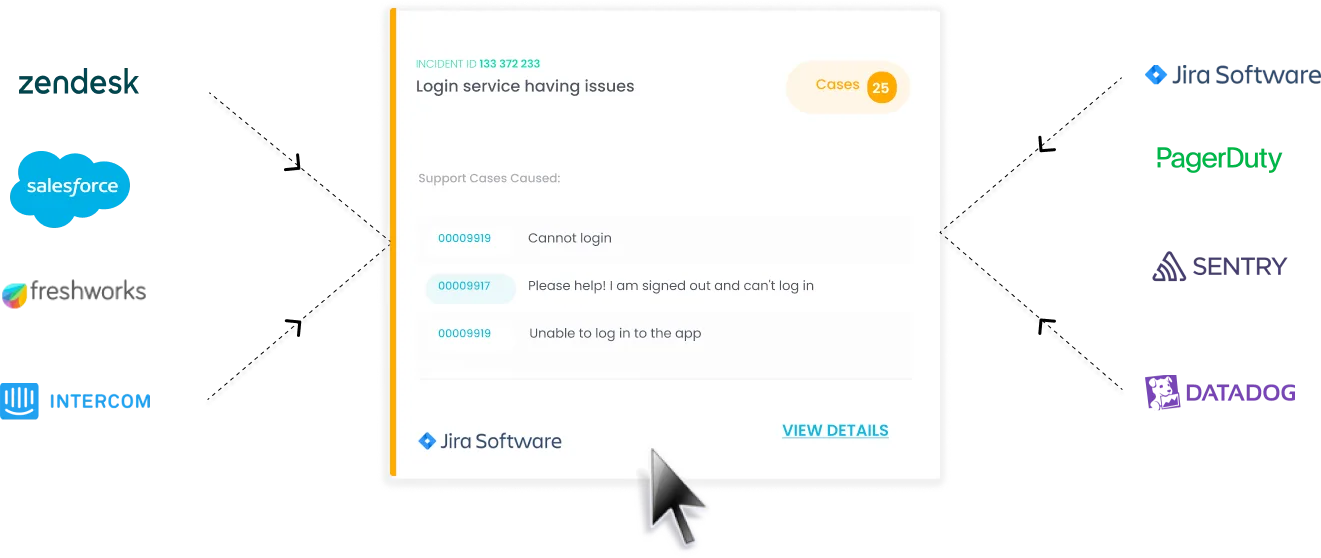
A robust support system is essential for managing escalations between support and engineering teams. Jira is the most popular tool for managing support ticket escalations from support to engineering. The key thing in customer escalation management is to integrate deeply into support and engineering workflows. Centralizing customer conversations within your chosen tool helps facilitate team collaboration and ensures efficient issue handling. Your support team should be able to create a new Jira issue or link to an existing Jira issue from within the case page of your support platform. Likewise, your engineering team should be able to see the associated support cases within Jira. Don’t make your support and engineering teams use platforms they are not familiar with.
Review which engineering bugs caused the most support cases
Once you have the right setup, the next step in customer escalation management is to investigate and analyze. Recurring bugs can result in a high volume of escalated tickets, making proactive analysis essential to prevent these issues from overwhelming your support team. We have seen long-standing bugs in many companies that end up causing tens or even hundreds of support tickets over several days. Learn from the mistakes, act proactively, and don’t have the same bug impact more customers and hurt business.
Find out problematic product areas
Once you have the right processes, tools, and dashboards, you can easily find out which product areas get the most escalations. Some product areas may require functional escalation to specialized teams when issues exceed the expertise of frontline agents, such as transferring technical problems to IT support. And how the problematic areas are changing with new releases. It’s essential to know them so you can improve the system. You should also know why there was an escalation. Was it because of a product bug, poor documentation, a customer mistake, missing functionality, or something else? With the right information, you can take corrective action and give feedback to the stakeholders.
TALK to your product and engineering teams
Sync up with your product and engineering teams at least every week. Make sure to assign the appropriate team member to participate in escalation meetings and feedback sessions, ensuring clear accountability and effective resolution of issues. They often would be looking for such valuable feedback that you discovered through the ticket escalation processes and analytics dashboard. Hold them accountable for improving the problematic areas and documentation. It goes both ways - ask them what information they want to communicate with the users. A healthy collaboration can go a long way in improving customer happiness.
Measure the business impact of support escalations
It’s all about numbers. How much did the customer wait times change because of an escalation? What about the Net Promoter Score? How much was the revenue lost because of escalations? It’s hard to improve something that is not measured. Tracking priority escalation cases separately is important to assess their impact on key business metrics and ensure urgent issues are addressed promptly.
Effectively managing support escalations from support is crucial for resolving technical issues efficiently. Organizations can streamline the ticket escalation process by establishing clear escalation processes and procedures, fostering effective communication, sharing relevant context, setting clear expectations, promoting collaboration, and fostering a learning culture. These strategies enable efficient issue resolution and strengthen the relationship between support and engineering teams, ultimately leading to improved customer experiences.
IrisAgent can help you navigate the collaboration and escalation process with engineering. With our deep integrations into support and engineering platforms and real-time dashboards, you can measure, iterate, and improve your escalation process. Contact us to learn more. Teams on Intercom can turn this on today: IrisAgent for Intercom integrates directly into the inbox and routes engineering-bound tickets to Jira or Linear without manual copy-paste.
Managing Critical and Complex Issues
Critical and complex issues demand a heightened level of attention within the ticket escalation process. These are the situations where the standard support workflow is insufficient, and immediate escalation is necessary to prevent customer frustration and potential business impact. The support team must be adept at quickly identifying such issues, whether it’s a system outage, a security breach, or a highly technical problem that requires specialized expertise.
Once a critical issue is recognized, the escalation process should prioritize rapid notification and assignment. The ticket should be flagged as high-priority, ensuring it receives immediate attention from the appropriate specialized teams. Allocating additional resources, such as senior engineers or cross-functional experts, can significantly reduce the average resolution time and improve the chances of a swift resolution.
Throughout the process, transparent and frequent communication with the customer is essential. The support team should provide regular updates on the status of the escalated ticket, set clear expectations for resolution timelines, and offer reassurance that their issue is being handled with the utmost urgency. This approach not only helps manage customer expectations but also demonstrates a commitment to customer satisfaction.
Effectively managing critical and complex issues within the escalation process is key to minimizing customer frustration, maintaining service quality, and ensuring that even the most challenging problems are resolved in a timely manner.
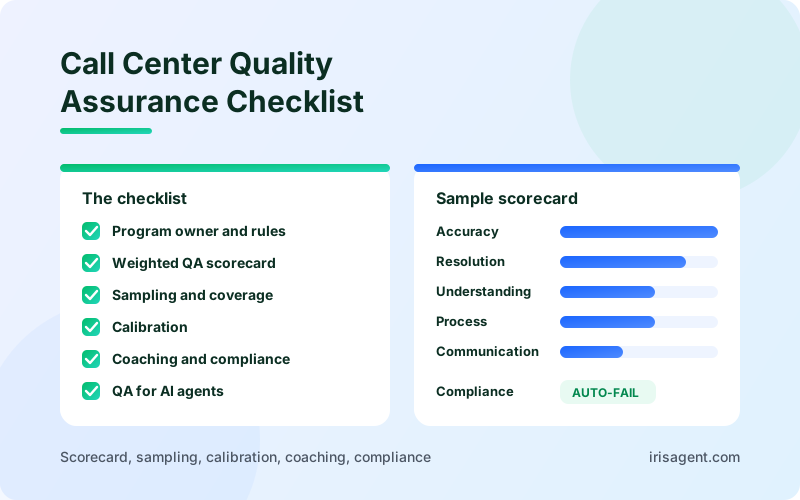
Post-escalation review is hard to sustain by hand, because somebody has to assemble the numbers every time. Teams that keep it up usually automate the assembly with workflow reporting tools that track escalation volume and cycle time on their own.
Continuous Improvement in Engineering Escalation Management
Implementing a robust system for continuous improvement is vital for refining the efficiency and effectiveness of support escalation processes. Involving team members from both support and engineering in the continuous improvement process ensures diverse perspectives and fosters collaboration. This involves a multi-faceted approach that integrates post-escalation analysis, team feedback, and iterative refinement based on data-driven insights.
Analyzing post-escalation reports for insights and improvements
After an escalation has been resolved, detailed post-escalation reports play a crucial role. These reports should go beyond summarizing the incident, delving into the root causes and resolutions. Post-escalation reports should also include analysis of hierarchical escalation cases to identify opportunities for process improvement. By dissecting each escalation, teams can extract valuable insights into recurring issues, patterns, and areas for enhancement. This analysis lays the foundation for strategic improvements in the overall escalation management process.
Gathering feedback from both support and engineering teams
Open communication channels between support and engineering teams are instrumental in collecting firsthand insights. Seeking feedback from both sides of the escalation process provides a holistic perspective. Customer support teams can offer insights into customer interactions and the initial stages of issue identification, while engineering teams contribute their perspectives on technical complexities and resolutions. This collaborative feedback loop helps identify bottlenecks and foster a culture of shared responsibility.
Iteratively refining the escalation management process based on data-driven insights
Data-driven decision-making is pivotal for continuous improvement. By leveraging insights gathered from post-escalation reports and team feedback, organizations can iteratively refine their escalation management processes. Using these data-driven insights helps reduce unnecessary escalations and improve overall efficiency. This may involve updating protocols, enhancing communication channels, or implementing new tools and technologies. Regularly revisiting and adapting the escalation management strategy ensures that it remains aligned with the evolving needs of the business and consistently delivers optimal outcomes.
Setting Expectations with Customers
One of the critical aspects of managing engineering escalations from support is transparently setting expectations with customers. It is essential to keep clients informed at every stage of the escalation, providing updates on issue status, steps taken, and expected timelines to build trust and satisfaction. Clear communication during the escalation process helps manage customer perceptions, build trust, and ensure a positive overall experience.
A. Transparent Communication
Informing Customers About Escalation Procedures:
Communication Protocol: Establish a clear protocol for informing customers when an issue is escalated to the engineering team.
Customer Notification: Communicate the escalation process in a customer-friendly manner, assuring them that their concerns are being addressed at a higher level.
Providing Timely Updates on Resolutions:
Regular Updates: Commit to providing regular updates on the progress of the escalated issue, specifically keeping customers informed about the status of their customer requests throughout the escalation process.
Expected Timeframes: Clearly communicate the expected timeframes for issue resolution, keeping customers informed about any potential delays.
B. Managing Customer Expectations
Setting Realistic Timelines for Issue Resolution:
Accurate Assessment: Ensure that support teams provide realistic timelines for issue resolution based on the complexity of the problem.
Communicate Response and Resolution Deadlines: Clearly communicate response and resolution deadlines to customers, so they know when to expect updates and final resolution.
Underpromise, Overdeliver: It’s better to exceed customer expectations by resolving issues sooner than promised.
Offering Alternatives or Workarounds During Escalations:
Temporary Solutions: If applicable, provide customers with temporary solutions or workarounds while the engineering team is working on a permanent fix.
Empowerment: Empower support agents to suggest alternative approaches to minimize the impact of the issue on the customer.
C. Proactive Communication During Escalations
Tailored Messages: Craft personalized messages for customers, addressing their specific concerns and expressing empathy for the inconvenience caused. Provide updates that directly relate to the customer's issue, ensuring they feel heard and informed about the progress.
Dedicated Communication Channels: Consider using dedicated communication channels for escalated issues to prioritize and streamline communication.
Clear Channels for Customer Queries:
Established Channels: Provide customers with clear channels (e.g., direct contacts, support portals) for raising queries and seeking additional information during escalations.
Responsive Support: Ensure that the support team remains responsive and accessible to customer inquiries throughout the escalation process.
D. Feedback Collection and Acknowledgment
Soliciting Customer Feedback:
Post-Escalation Surveys: Implement post-escalation surveys to gather feedback on the customer’s experience with the support and engineering teams.
Acting on Feedback: Demonstrate a commitment to improvement by actively addressing and acting on the feedback received. Use this feedback to ensure the delivery of exceptional support and continuously enhance the customer experience.
Transparent and proactive communication with customers during engineering escalations is fundamental to building and maintaining trust. By setting clear expectations, providing regular updates, and soliciting feedback, businesses can navigate escalations effectively while preserving customer satisfaction and loyalty.
Customer Emotions and Satisfaction
Customer emotions play a pivotal role in the ticket escalation process, directly influencing overall customer satisfaction and loyalty. When customers encounter issues (especially those requiring escalation), they may experience frustration, anxiety, or disappointment. How the support team responds during these moments can make all the difference in delivering exceptional customer service.
Empathy is at the heart of effective customer escalation management. Support teams should actively listen to customer concerns, acknowledge their emotions, and communicate with clarity and compassion. Providing realistic timelines for resolution and keeping customers informed at every stage of the escalation process helps manage customer expectations and reduces uncertainty.
A customer-centric approach means not only resolving the technical issue but also ensuring the customer feels heard and valued throughout the journey. By prioritizing clear communication, timely updates, and personalized support, organizations can turn potentially negative experiences into opportunities to build trust and loyalty.
Ultimately, focusing on customer emotions and satisfaction during the escalation process leads to improved customer satisfaction scores, reduces the risk of customer dissatisfaction, and strengthens the company’s reputation for delivering exceptional customer service. Effective escalation management is not just about solving problems. It’s about creating positive, lasting relationships with customers.
Leveraging IrisAgent for Enhanced Support Excellence
With its advanced capabilities and intuitive design, IrisAgent offers a multitude of benefits that redefine the support landscape. By enabling organizations to provide exceptional support through automation and collaboration, IrisAgent ensures high-quality customer experiences.
A. Efficiency and Accuracy
Automated Ticket Prioritization: IrisAgent’s AI-driven ticket prioritization leverages technical knowledge to ensure that critical issues are accurately identified and receive immediate attention, enhancing efficiency and reducing resolution times.
Real-time Sentiment Analysis: By seamlessly integrating sentiment analysis, IrisAgent empowers support teams to understand and respond to customer emotions swiftly, fostering a more personalized and empathetic support experience.
B. Proactive Customer Engagement
Predictive Customer Behavior Analysis: IrisAgent’s predictive analytics models, powered by specialized technical knowledge, anticipate customer needs, enabling proactive engagement and preemptive issue resolution.
Automated Response Personalization: The tool tailors responses based on sentiment insights, ensuring that customers receive personalized and contextually relevant support.
C. Cross-Functional Collaboration
Integration with Existing Systems: IrisAgent seamlessly integrates with CRM systems such as Zendesk, Salesforce, Intercom, and many others, fostering cross-functional collaboration between support and other business units.
Collaborative Troubleshooting: With collaborative troubleshooting features, IrisAgent facilitates joint problem-solving sessions between support and engineering teams, streamlining issue resolution.
In essence, IrisAgent serves as a catalyst for support excellence, offering a harmonious blend of automation, intelligence, and collaboration. By leveraging IrisAgent, businesses can not only meet but exceed customer expectations, fostering enduring customer satisfaction and loyalty.
Frequently Asked Questions
What is an engineering escalation management in the context of customer support, and why do they occur?
In customer support, an engineering escalation refers to a process where complex or critical customer issues are transferred from frontline support agents to the engineering or technical teams for resolution. These escalations typically occur when the frontline support team encounters challenges beyond their scope, such as intricate technical problems, software bugs, or issues requiring in-depth product knowledge. Engineering escalations are essential to ensure that customers receive specialized assistance and that complex issues are addressed effectively. They occur to uphold customer experience, resolve challenging problems efficiently, and bridge the gap between customer service teams and engineering teams to provide the best possible customer experience.
What are the potential consequences of mishandling engineering escalations from support?
Mishandling engineering escalations from support can have several detrimental consequences. Firstly, it can lead to prolonged resolution times, causing customer frustration and dissatisfaction. Unresolved or inadequately addressed issues can result in customer churn and damage a company's reputation. Internally, it can strain the relationship between support and engineering teams, hindering collaboration and problem-solving. Mishandling escalations can also increase operational costs as problems persist and require more resources. Ultimately, the potential consequences of mishandling these escalations extend beyond customer dissatisfaction, impacting customer relationships and support operations' overall efficiency.
What are the key steps involved in effective engineering escalation management?
Effective engineering escalation management involves a series of key steps. It begins with clear identification and documentation of the issue, followed by assessing its impact on the customer. The next crucial step is communication: prompt and thorough relay of information between support and engineering teams is vital. Prioritization ensures that critical issues are addressed first. Once the engineering team is engaged, a structured approach to troubleshooting, root cause analysis, and resolution planning is essential. Throughout the process, documentation and knowledge sharing help maintain clarity and continuity. Finally, timely updates to the customer on progress and resolution contribute to a positive customer experience. When executed efficiently, these steps ensure that engineering escalations are managed with precision and customer satisfaction in mind.
Loading the form. Prefer email? Reach us at info@irisagent.comor call +1 617 249 3312.