
AI Virtual Assistant for Customer Support: 2026 Guide
Introduction
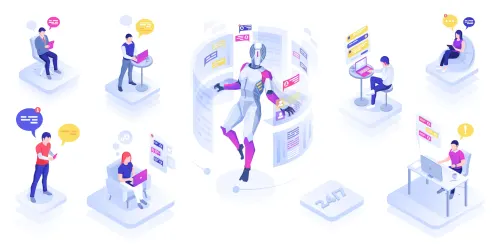
An AI virtual assistant is software that uses large language models, natural language processing, and machine learning to understand customer questions and resolve them in plain language, without a human agent. In customer support, a modern AI virtual assistant does more than answer FAQs: it reads the full context of a request, retrieves the right answer from your knowledge base and past tickets, and resolves the issue end to end or hands it to an agent with a source-cited summary.
In 2026, the bar has moved from "chatbot that deflects FAQs" to "agentic AI virtual assistant that completes multi-step workflows." This guide explains what an AI virtual assistant is, how it works, where it delivers ROI in customer support, and how to deploy one on the helpdesk you already use. For the full platform view, see our guide to AI for customer support.
Definition of AI Assistant
AI assistant is an intelligent software program that utilizes machine learning algorithms, natural language processing (NLP), and other AI technologies to understand and respond to user inputs in a human-like manner. It refers to smart devices that are capable of performing tasks ranging from simple commands, such as setting reminders or checking the weather, and performing simple tasks like scheduling meetings or answering routine inquiries, to more complex functions like managing schedules, conducting research, and even engaging in meaningful conversations.
Importance of AI Assistant in Modern Society
The adoption of AI voice assistant has significantly transformed the way individuals interact with technology and access information. AI Virtual Assistant has become indispensable tools in both personal and professional settings, and are also valuable for small business operations by providing cost-effective solutions for scheduling, billing, and CRM management. In today’s fast-paced world, AI-powered virtual assistant empowers users to accomplish tasks more efficiently, stay organized, and make informed decisions in real time.
This article aims to delve deeper into the realm of AI assistant, exploring their various forms and functionalities, as well as their potential impact on society. We will examine three distinct categories of AI assistant: AI virtual assistant, interactive and intelligent virtual human assistant, and personal assistant AI. Each section will provide insights into the characteristics, applications, and future prospects of these AI-driven entities, shedding light on the evolving landscape of human-computer interaction and productivity enhancement.
At the end of the article, we will present key takeaways summarizing the main points discussed.
AI Virtual Assistant
AI Virtual Assistant for Customer Service: Definition and Characteristics
An AI virtual assistant for customer service is the customer-support-specific case of this technology, built to work against your knowledge base and ticket history rather than general knowledge. AI virtual assistants are sophisticated software programs that leverage artificial intelligence, natural language processing (NLP), and machine learning algorithms to interact with users and perform complex tasks autonomously. These virtual assistants simulate human-like conversations, understand context, and execute commands to assist users in various activities. The terms intelligent virtual assistants (IVAs) and intelligent virtual agents are often used interchangeably to describe these advanced solutions, which are designed to enhance efficiency and benefit both customers and businesses.
Intelligent virtual assistants are more sophisticated than traditional chatbots, as they can engage in context-related conversations, providing a higher level of customer service and operational efficiency.
Evolution from Basic Task Automation to Intelligent Conversational Agents
Initially, AI virtual assistants were primarily focused on basic task automation, such as administrative tasks such as setting alarms or sending text messages. Traditional rule-based chatbots, in contrast, depend on explicitly mapped-out questions and static responses, making them limited in flexibility and unable to understand variations in user queries or perform complex tasks.
However, advancements in AI technology and the rise of AI automation have led to the development of intelligent conversational agents capable of understanding and responding to natural language without being explicitly programmed to do so. Unlike chatbots, which are limited by a given script, IVAs can provide personalized responses by integrating with an organization's backend systems, offering a more dynamic and tailored customer experience.
Examples of Popular AI Virtual Assistants
Some of the most well-known consumer AI virtual assistants include Siri (Apple), Alexa (Amazon), and Google Assistant (Google). Consumer AI virtual assistants like Siri and Alexa are designed for general knowledge retrieval and smart home control. These virtual assistants are integrated into smartphones, smart speakers, and other IoT devices, enabling users to access information, control smart home devices, and perform various tasks through voice commands or text inputs.
Applications in Various Domains
AI virtual assistants find applications across diverse domains, including:
Smart Home Devices: Controlling lights, thermostats, and other connected devices.
Customer Service: Virtual agents and AI virtual assistants are used in contact centers and across digital channels to provide self service, answer FAQs, handle order tracking, and automate ticket tagging and routing. They deliver automated support and assistance through chatbots on websites and messaging platforms.
AI virtual assistants can deflect inquiries from customer service teams by providing instant answers, reducing the workload of human agents, and allowing them to focus on more complex issues. They can also provide 24/7 support, enabling businesses to scale support without hiring additional staff.
Productivity Tools: Scheduling appointments, setting reminders, and managing to-do lists.
Entertainment: Recommending movies, music, and other forms of entertainment based on user preferences.
AI virtual assistants can integrate with other software like CRMs, calendars, and project management systems to complete complex workflows.
Advantages and Challenges of AI Virtual Assistants
Advantages:
Convenience: Users can access information and perform tasks hands-free using voice commands.
Efficiency: AI virtual assistants automate repetitive tasks, saving time and effort.
Reduce costs: Automated virtual assistants help reduce costs associated with hiring, training, and managing human agents, allowing businesses to operate with fewer resources.
Scalability: IVAs can handle high volumes of repetitive inquiries and operate 24/7, providing instant answers and constant support without the need for hiring additional staff.
Improved customer satisfaction: By providing quick and accurate responses, IVAs can lead to higher customer satisfaction scores.
Personalization: Virtual assistants can tailor responses and recommendations based on user preferences, prior interactions, and integrated backend data, delivering more context-aware and personalized support.
Challenges:
Accuracy: Understanding natural language and context accurately can be challenging for AI virtual assistants, leading to misunderstandings or incorrect responses.
Human intervention: While IVAs can handle many tasks independently, human intervention is still required for complex or sensitive cases.
Privacy Concerns: Users may have concerns about data privacy and security when interacting with AI virtual assistants, especially regarding the collection and use of personal information.
Integration Complexity: Integrating virtual assistants into existing systems and platforms may require technical expertise and resources, posing challenges for some organizations.
In customer service applications, AI virtual assistants provide round-the-clock support, take phone calls, answer frequently asked questions, and assist users in resolving issues efficiently, thereby enhancing customer satisfaction and reducing support costs for businesses. IVAs enhance scalability by managing high inquiry volumes, operate 24/7, and deliver instant answers, allowing human agents to focus on more complex issues.
AI Virtual Assistant vs Chatbot vs Agentic AI Agent
A rule-based chatbot follows decision trees and only handles predefined questions. An AI virtual assistant uses generative AI to understand intent and answer in natural language across many topics. An agentic AI agent goes one step further and takes actions (looking up an order, processing a refund, updating an account) to resolve the request end to end. The 2026 trend is the move from chatbots to agentic AI virtual assistants. See how this plays out across the journey in our guide to AI for customer experience.
Interactive Virtual Assistant
Explanation of Interactive Virtual Assistants and Their Capabilities
Interactive virtual assistants represent a new frontier in AI technology, offering enhanced engagement, voice interaction, and interactivity beyond traditional AI virtual assistants. These assistants are designed to interact with users in a more dynamic and immersive manner, leveraging advanced technologies such as augmented reality (AR), virtual reality (VR), and natural language understanding to create compelling user experiences.
In healthcare, AI bots are increasingly used as automated virtual assistants to automate patient screening, triage, and staff support, improving clinical workflows and patient outcomes, especially during health crises like COVID-19.
Comparison with Traditional AI Virtual Assistants
While traditional AI virtual assistants primarily focus on task automation and information retrieval, interactive virtual assistants take user interaction to the next level. They engage users through conversational interfaces, personalized recommendations, and interactive experiences, fostering deeper connections and driving higher levels of engagement. Larger organizations use interactive virtual assistants to manage complex workflows and support distributed teams, streamlining processes across hybrid work environments.
Other Places AI Virtual Assistants Show Up
Beyond customer support, AI virtual assistants show up in a few adjacent categories. In gaming and education, they act as in-game companions or virtual tutors that adapt to a player's or student's pace. Emerging interactive assistants add voice, gesture, and AR/VR interaction on top of the same underlying technology. On the personal-productivity side, assistants like Google Assistant and Siri sync with calendars, email, and task managers to handle scheduling and reminders. In the smart-home category, assistants control IoT devices such as lighting, thermostats, and security systems. These are real categories, but they are a different product than the AI virtual assistant a support team deploys on its own knowledge base and ticket history, which is the focus of this guide.
Potential Impact on User Engagement and Immersion
Interactive virtual assistants have the potential to revolutionize user engagement and immersion across various domains. By providing personalized, interactive experiences that adapt to user preferences and behaviors, these assistants can foster deeper connections between users and digital experiences, driving increased engagement, satisfaction, and loyalty. The impact of interactive virtual assistants also depends on how well they are tailored to the unique business needs of each organization, ensuring solutions align with specific requirements and objectives. As interactive virtual assistant technology continues to evolve, it holds promise for transforming the way we interact with technology, learn, entertain ourselves, and engage with the world around us.
Personal Assistant AI
Concept of Personal Assistant AI and Its Role in Personal Productivity
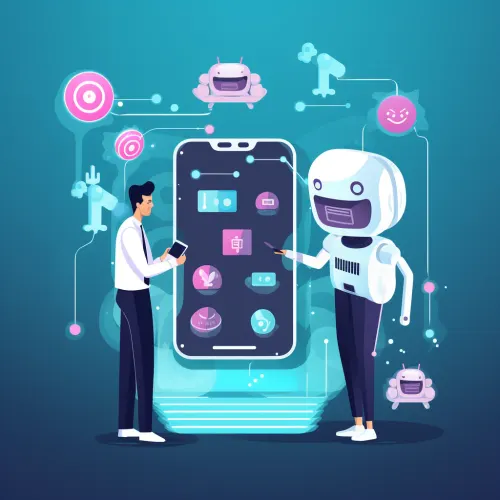
Personal Assistant AI refers to intelligent software designed to assist individuals with various tasks, organization, project management, and information management in their personal lives. These AI-driven personal assistants aim to enhance personal productivity by automating routine tasks such as interview scheduling, providing timely reminders, and offering personalized recommendations to users.
Features and Functionalities of Personal Assistant AI
Personal Assistant AI typically offers a range of features and functionalities, including:
Task Management: Creating, organizing, and prioritizing tasks and to-do lists.
Calendar Integration: Scheduling appointments, setting reminders, and managing events.
Managing Follow Ups and Reminders: Automating follow-ups and reminders for ongoing tasks or communications to streamline interactions and maintain ongoing engagement.
Email Management: Sorting, categorizing, and responding to emails.
Information Retrieval: Providing answers to questions, accessing relevant information, and conducting web searches.
Smart Recommendations: Offering personalized suggestions for activities, events, and purchases based on user preferences and past behavior.
Customization Options and Adaptability to User Preferences
Personal Assistant AI offers customization options to adapt to individual user preferences and workflows. By leveraging data analysis, personal assistant AI can adapt its recommendations and interactions based on user behavior and preferences.Users can personalize settings such as:
Preferred Communication Channels: Choosing between voice commands, text inputs, or both for interacting with the assistant.
Notification Preferences: Adjusting the frequency and format of notifications for reminders, updates, and recommendations.
Language and Tone: Selecting the language, tone, and style of interactions with the assistant to suit personal preferences.
Benefits for Time Management, Organization, and Efficiency
Personal Assistant AI provides several benefits for time management, organization, and efficiency in all your tasks, text and speech recognition including:
Streamlined Workflow: Automating routine tasks and centralizing information management to reduce cognitive load and improve focus.
Improved Productivity: Assisting users in prioritizing tasks, managing schedules, and staying organized to accomplish goals more effectively.
Enhanced Decision-Making: Providing timely reminders, relevant information, and personalized recommendations to support informed decision-making.
Time Savings: Automating manual processes and eliminating time-consuming tasks by providing quick access to information, which saves time and increases overall efficiency in daily activities and tasks.
Overall, Personal Assistant AI serves as a valuable tool for individuals seeking to optimize personal productivity, manage information overload, do personal tasks, and achieve a better work-life balance in today’s fast-paced digital world.
Collaboration works only when the AI side holds context the way a colleague would. That is the bar human-like virtual agents are measured against in production.
Human Agent and AI Agent Collaboration
The Importance of Collaboration Between Human and AI Agents
In today’s fast-paced business environment, the collaboration between human agents and AI virtual assistants is essential for delivering outstanding customer experiences. By leveraging the strengths of both, organizations can streamline operations and improve customer service. AI virtual assistants excel at handling routine tasks (such as answering FAQs, scheduling meetings, and sending automated reminders) allowing human agents to dedicate their expertise to more complex queries that require empathy and nuanced human interaction. This division of labor not only reduces manual effort but also ensures that customers receive quick answers to their questions, while more challenging issues are addressed with the care and attention they deserve. As a result, businesses can enhance efficiency, reduce manual effort, and create more satisfying customer experiences.
Enhancing Efficiency and Customer Satisfaction Through Teamwork
The synergy between human agents and AI virtual assistants goes beyond simple task delegation. AI virtual assistants can analyze customer interactions in real time, identify recurring patterns, and provide actionable insights to human agents. This empowers support teams to deliver highly personalized service tailored to individual customer needs. Human agents, in turn, can review and refine AI-generated responses, ensuring that communications are accurate, empathetic, and aligned with the company’s standards. This collaborative approach enables organizations to offer 24/7 support, reduce response times, and achieve higher first contact resolution rates. Ultimately, the teamwork between AI agents and human agents leads to more meaningful customer interactions and a significant boost in overall customer satisfaction.
Real-World Examples of Successful Collaboration
Many organizations across different industries have realized substantial benefits by integrating human and AI agent collaboration into their customer support operations. For instance, a leading insurance provider implemented AI virtual assistants to manage routine inquiries, such as policy details and claim status updates, while reserving complex cases (like policy cancellations and dispute resolutions) for human agents. This approach led to a 30% reduction in response times, a 25% increase in customer satisfaction, and a 20% decrease in operational costs. Similarly, a major retail company deployed AI-powered chatbots to deliver instant answers to common customer questions, while human agents handled more intricate issues like returns and exchanges. This strategy resulted in a 15% improvement in customer satisfaction and a 10% reduction in support costs. These examples demonstrate how the collaboration between virtual assistants and human agents can transform routine inquiries into opportunities for efficiency and exceptional service.
Data Security in AI-Powered Systems
Key Security Challenges in AI Virtual Assistants
As organizations increasingly rely on AI-powered virtual assistants to manage customer interactions, data security has become a top priority. AI virtual assistants often process sensitive data, including personal information, payment details, and confidential business records. This creates potential risks such as unauthorized access, data breaches, and exposure of sensitive data. To address these challenges, businesses must implement robust security measures at every stage of the AI lifecycle. This includes encrypting data both in transit and at rest, enforcing strict access controls, and conducting regular security audits to identify and mitigate vulnerabilities.
AI virtual assistants powered by machine learning and natural language understanding must also be equipped to detect and prevent potential security threats in real time. Advanced AI tools can monitor for suspicious activity, flag anomalies, and adapt to emerging risks, ensuring that customer data remains protected. Furthermore, compliance with data protection regulations (such as GDPR and SOC2) is essential for maintaining customer trust and safeguarding user privacy. By prioritizing data security and integrating best practices into their AI virtual assistant deployments, organizations can deliver secure, reliable customer support while protecting sensitive data and upholding their reputation in the marketplace.
The risk with any AI virtual assistant is hallucination: a confident but wrong answer. IrisAgent's Hallucination Removal Engine validates every response against your own knowledge base and ticket history before it reaches a customer, and hands off to a human when confidence is low. Combined with SOC-2 Type II security and no training on customer data, that is what makes an AI virtual assistant safe for regulated and high-stakes support.
The Future of AI Assistants
Current Trends Shaping the Future of AI Assistants
AI assistants are poised for significant advancements in the coming years, driven by several key trends. AI automation is a key trend shaping the future of AI assistants, enabling them to streamline processes, handle routine tasks, and enhance operational efficiency:
Conversational AI: AI assistants will become even more adept at natural language understanding and generation, enabling more human-like interactions and personalized experiences.
Multi-Modal Interfaces: AI assistants will support multiple modes of interaction, including voice, text, gestures, and touch, to accommodate diverse user preferences and scenarios.
Contextual Awareness: AI assistants will leverage contextual information, user history, and environmental cues to provide more relevant and timely assistance.
Integration with Ecosystems: AI assistants will seamlessly integrate with IoT devices, smart home environments, and digital ecosystems to deliver connected and cohesive experiences across devices and platforms.
Advancements in Natural Language Processing (NLP) and Machine Learning (ML)

Advancements in NLP and ML technologies will drive significant improvements in AI assistant capabilities:
Language Understanding: NLP algorithms will better understand nuances in language, context, and intent, enabling more accurate and contextually relevant responses.
Personalization: ML models will leverage user data to personalize interactions, recommendations, and responses, enhancing user satisfaction and engagement.
Continuous Learning: AI assistants will employ lifelong learning techniques to adapt and improve over time, refining their capabilities based on user feedback and evolving user needs.
When selecting AI assistant technologies, key factors to consider include features, compatibility, security, usability, cost, and support.
Potential Impact on Workforce Productivity and Job Roles
The widespread adoption of AI assistants will have profound implications for workforce productivity and job roles:
Automation of Routine Tasks: AI assistants will automate repetitive tasks and answer questions, freeing up human workers to focus on higher-value activities that require creativity, critical thinking, and emotional intelligence.
Augmented Intelligence: AI assistants will augment human capabilities, providing real-time insights, recommendations, and support to enhance decision-making and problem-solving across various industries and job roles.
Reskilling and Adaptation: As AI assistants become more prevalent, workers may need to acquire new skills and adapt to changing roles and responsibilities to effectively collaborate with AI systems and leverage their capabilities.
Ethical Considerations and Concerns Regarding AI Assistant Development
The development and deployment of AI assistants raise important ethical considerations and concerns:
Privacy and Data Security: AI assistants collect and process vast amounts of personal data, raising concerns about privacy, data security, and the responsible use of user information.
Bias and Fairness: AI assistants may exhibit biases in their recommendations and decisions, reflecting underlying biases in training data or algorithmic biases, which could perpetuate inequality and discrimination.
Transparency and Accountability: AI assistants should be transparent about their capabilities, limitations, and decision-making processes to ensure users understand and trust the technology. Additionally, mechanisms for accountability and recourse should be in place to address errors, biases, and misuse of AI assistants.
As AI assistants continue to evolve and become increasingly integrated into our lives and workplaces, it is essential to consider these ethical considerations and engage in ongoing dialogue and collaboration to ensure that AI technologies serve the best interests of society as a whole.
Conclusion
In conclusion, AI assistants represent a transformative force in the digital landscape, offering unparalleled convenience, efficiency, and personalized assistance across various domains. Throughout this article, we have explored the diverse categories of AI assistants, including AI virtual assistants, interactive virtual assistants, AI-powered virtual assistants, assistant apps personal assistant AI, and AI tools, each with unique capabilities and applications. Automated virtual assistants also assist with marketing tasks such as segmenting customer groups and analyzing campaign results. Additionally, automated virtual assistants collect and analyze customer data for better decision-making.
We have discussed how AI virtual assistants streamline tasks, interactive virtual assistants elevate engagement, and personal assistant AI enhances personal productivity. These AI-driven technologies are continually evolving, fueled by advancements in natural language processing capabilities, machine learning, and integration with IoT devices and smart environments. AI virtual assistants are increasingly relied upon across various industries to drive efficiency and improve service delivery. They can be integrated into industries like healthcare, insurance, and utilities to enhance operational efficiency.
As we look to the future, the potential of AI and AI virtual assistants designed assistants to revolutionize human-computer interaction and reshape industries is undeniable. However, with this transformative power comes a responsibility to embrace AI and digital assistant technology responsibly. It is crucial to address ethical considerations surrounding privacy, bias, transparency, and accountability to ensure that AI and digital assistants serve the best interests of users and society.
In closing, the future of AI assistants is bright and full of exciting prospects. By harnessing the capabilities of AI technology and embracing responsible innovation, we can unlock new opportunities for productivity, creativity, and collaboration, ultimately enhancing the quality of life for individuals and communities worldwide. Let us embrace the journey ahead with optimism and a commitment to shaping a future where AI assistants enrich our lives in meaningful and empowering ways.
The shift in 2026 is clear: support teams are moving from FAQ chatbots to agentic AI virtual assistants that resolve interactions end to end. To see how a grounded AI virtual assistant works across chat, email, and voice on your existing helpdesk, read the full AI for customer support guide or book a demo.
Frequently Asked Questions
What is an AI virtual assistant?
An AI virtual assistant is software that uses large language models (LLMs), natural language processing (NLP), and machine learning to understand and resolve customer requests in natural language. In customer support, a modern AI virtual assistant deflects routine questions, drafts agent replies, and can complete multi-step workflows end to end, such as looking up an order, processing a refund, and confirming the resolution.
What is the difference between an AI virtual assistant and a chatbot?
A rule-based chatbot follows fixed decision trees and only handles predefined questions. An AI virtual assistant understands intent, generates natural-language answers grounded in your own content, and learns over time. The result is a much higher resolution rate (60%+ for a grounded AI virtual assistant vs 10% to 20% for a rule-based bot), plus the ability to handle complex, multi-turn conversations.
How does an AI virtual assistant avoid wrong answers?
Grounded AI virtual assistants retrieve answers from your knowledge base and past tickets (retrieval-augmented generation) and validate each response before it reaches a customer. IrisAgent's Hallucination Removal Engine checks every answer against your source content and hands off to a human when confidence is low, so the assistant resolves issues without making things up.
How much can an AI virtual assistant save a support team?
Teams typically see a 30% to 60% reduction in support costs after deploying an AI virtual assistant, by automating 40% to 60% of interactions and cutting average handle time roughly in half. IrisAgent customers like Dropbox saved 160,000 agent minutes in a single half-year, and Zuora reached 10x faster resolution.
How do I deploy an AI virtual assistant for customer support?
With IrisAgent, you install the AI virtual assistant from your helpdesk marketplace (Zendesk, Salesforce, Intercom, or Freshdesk), connect your knowledge base and ticket history, and go live in about 24 hours. Pricing is flexible, with both usage-based and resolution-based plans, and most teams see measurable deflection within the first two weeks.



Loading the form. Prefer email? Reach us at info@irisagent.comor call +1 617 249 3312.