The AI CX Platform for Customer Experience that Resolves 60% of Interactions
Join Dropbox, Zuora, and 1,000+ teams using AI in customer experience with IrisAgent to resolve interactions instantly, catch churn risk early, and lift CSAT, all grounded in your own content so the AI never makes things up.
By Palak Dalal Bhatia, CEO & Co-founder, IrisAgent · Updated June 15, 2026
30-min demo · No credit card · SOC-2 Type II compliant
IrisAgent
Live
1423
892
532
Unified Support Platform
Chat
1423
today
Email
892
today
Voice
532
today
One AI. Every channel. Every query.
2,847
Resolved
52%
Automation
95%
Tag Accuracy
Omnichannel
Intelligence
Trusted by Fortune 500 companies and serving 1M+ tickets a month
Transform your CX operations
60%+
auto-resolved
10x
faster responses
$2.4M+
customer savings
95%
accuracy rate
What Is AI for Customer Experience?
AI for customer experience (also called AI CX or customer experience AI) is the use of artificial intelligence to understand, automate, and improve every interaction a customer has with a brand. Where AI customer service focuses on resolving support requests, AI in customer experience spans the whole journey: pre-sales questions, onboarding, support, retention, and proactive outreach. Modern platforms like IrisAgent resolve 60% or more of interactions without a human, detect sentiment in real time, and ground every answer in your own content so the experience is fast, consistent, and accurate. The link between AI and customer experience is now direct: every automated interaction either builds or erodes loyalty, which is why grounding and accuracy matter as much as speed.
What you can do with AI in customer experience:
Resolve interactions: an AI customer experience agent answers and resolves routine chats, emails, and calls end to end.
Read sentiment and intent: detect frustration, urgency, and churn risk in real time and act before issues grow.
Be proactive: predict and prevent problems from product signals and ticket trends before customers report them.
Personalize at scale: tailor answers to each customer's history, plan, and value without manual segmentation.
Resolve 60%+ of CX Interactions with Grounded AI Agents
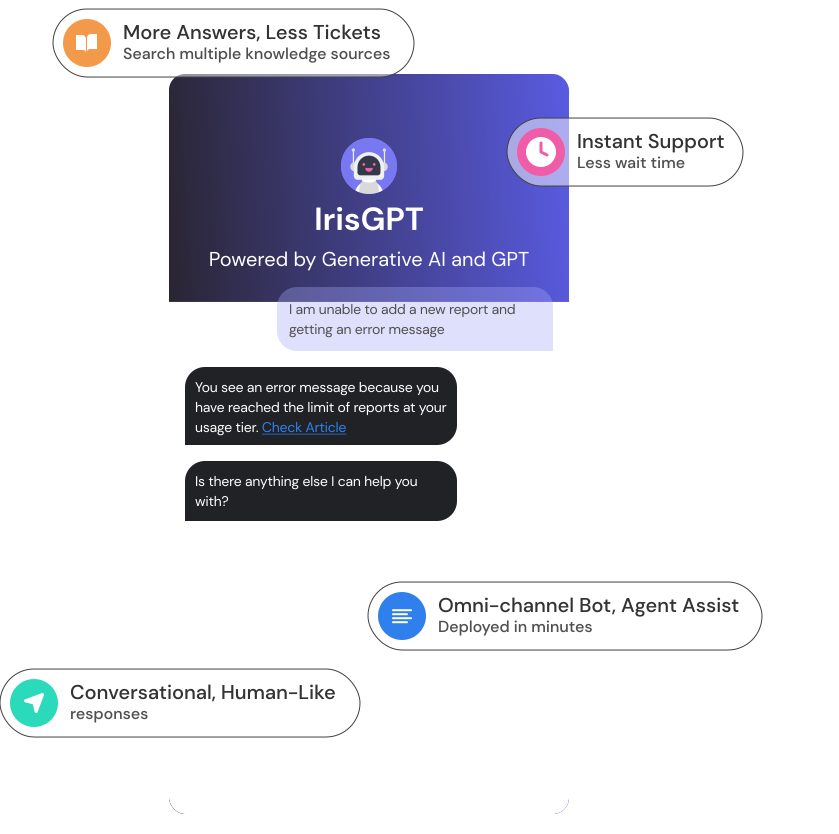
IrisAgent's AI customer experience agent answers customer questions with human-like accuracy, using your knowledge base and historical interactions, and validates every reply with a Hallucination Removal Engine so it never makes things up. Customers typically see 60%+ resolution within weeks.
Workflow Automation
Processing
📩
Ticket Received
Processing in 0.3s...
ACTIVE
🔍
AI Analysis
Processing in 0.3s...
🏷️
Auto-Tagged
Processing in 0.3s...
👤
Routed to Agent
Processing in 0.3s...
✅
Resolved
Processing in 0.3s...
0.8s
Avg Time
99.2%
Accuracy
2,847
Today
Catch Churn Risk and Frustration in Real Time
IrisAgent reads sentiment and intent on every interaction, flags at-risk and high-value customers, and routes them to the right human with full context. CX teams act on emerging issues before they turn into escalations or cancellations.
Enterprise-Grade Security and 24-Hour Deployment
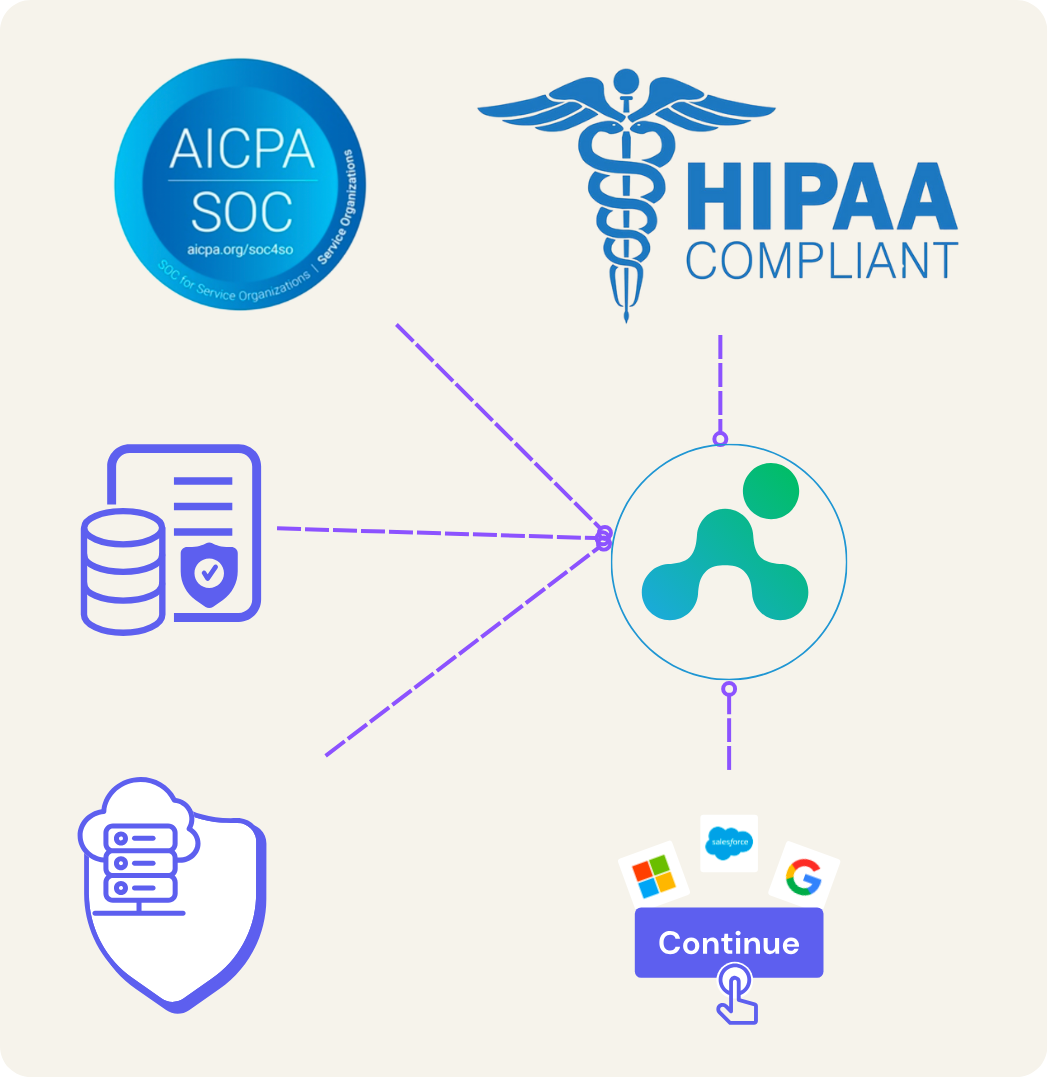
SOC-2 Type II compliant, HIPAA-ready, and never trains on your data. Layers onto Zendesk, Salesforce, Intercom, and Freshdesk in days, not months, with flexible usage-based or resolution-based pricing, so CX leaders can adopt AI without a rip-and-replace bet.
How to Use AI to Improve Customer Experience in Four Steps
The teams that get the most from AI in customer experience do not try to automate everything at once. They layer AI onto the journey they already have, starting with the highest-volume interactions and building toward proactive, personalized CX. Before you automate anything, be clear about the standard you are automating: your customer support philosophy is what tells the AI, and your agents, which tradeoff to make when two good outcomes conflict.
Unify your customer and conversation data. Connect your helpdesk (Zendesk, Salesforce, Intercom, Freshdesk), knowledge base, and product systems so the AI sees the full context of every interaction. With IrisAgent this connection inherits your existing queues, tags, and customer data.
Resolve interactions with grounded AI. Turn on an AI customer experience agent that resolves routine interactions end to end, grounded in your own content. Because every answer is validated against your knowledge base, the experience stays accurate instead of generic.
Act on real-time sentiment and intent. Use AI sentiment analysis to detect frustration, urgency, and churn risk as it happens, and route high-value or at-risk customers to the right human with a full summary attached.
Measure and feed back CX outcomes. Track CSAT, NPS, resolution rate, and customer effort across AI and human interactions, and feed those signals back so the AI improves the next experience automatically.
AI-Powered CX vs Traditional Customer Experience
Traditional CX scales by adding people and rules. AI in customer experience scales by reading every interaction the way a senior agent would and improving from each one. The difference shows up in speed, consistency, and the ability to be proactive.
Dimension
Traditional CX
AI-powered CX
Response time
Minutes to hours, business hours only
Instant, 24/7 across channels
Consistency
Varies by agent and shift
Same grounded answer every time
Sentiment awareness
Caught after the fact, if at all
Detected in real time on every interaction
Proactivity
Reactive, waits for the customer
Predicts and prevents issues early
What Is a CX Platform? CXM Software vs an AI CX Platform
A CX platform is software that manages and improves customer experience across every channel a customer touches. The category splits into two generations that are often sold under the same label, and the difference decides what you actually get.
CXM software (customer experience management software) is the older generation: survey and feedback collection, journey mapping, voice-of-customer dashboards, and reporting. It tells you what happened. Someone on your team still has to act on it.
An AI CX platform acts. It reads every interaction as it arrives, resolves the ones it can end to end, detects sentiment and churn risk in real time, and escalates the rest to a human with full context. The measurement still happens, but it is a byproduct of doing the work rather than the whole product.
Most CX companies demo well. These five questions separate the platforms that survive production from the ones that do not.
Grounding. Does every answer get validated against your own knowledge base and ticket history before it reaches a customer, or can the model invent a policy that does not exist? This is the single biggest predictor of whether an AI CX platform is safe to put in front of customers.
Deployment model. Does it layer onto the helpdesk you already run, or does it require a re-platforming project? A platform-agnostic tool ships this quarter. A greenfield build does not.
Depth of automation. Deflection is not resolution. Confirm the platform can look up an account, take an action in a backend system, and close the interaction, rather than surfacing a help article and hoping.
Channel coverage. Chat only, or chat, email, and voice? CX spans the journey, so a chat-only tool leaves most of the experience untouched.
Pricing model. Check how cost behaves as the automation succeeds, and whether the vendor lets you choose a structure that matches your ticket profile rather than one fixed model.
IrisAgent is an AI CX platform built for all five: grounded through a Hallucination Removal Engine, helpdesk-agnostic, resolving end to end across chat, email, and voice, live in 24 hours, on flexible pricing with usage-based and resolution-based plans.
What to Expect: CX Benchmarks with AI
AI in customer experience pays back in three ways: interactions your team never has to touch, faster handling of the ones they do, and churn caught before it happens. These are the benchmarks IrisAgent customers see in production.
60%+ resolution of interactions without human intervention, typically within the first few weeks.
40% to 60% lower average handle time on the interactions that still reach an agent.
Higher CSAT and NPS from instant, accurate, and consistent answers across the journey.
24 hours to deploy. Dropbox saved 160,000 agent minutes in a single half-year, and Zuora reached 10x faster resolution, both on IrisAgent.
Industry Research: AI in Customer Experience
Gartner predicts that by 2029, agentic AI will autonomously resolve 80% of common customer service issues without human intervention, leading to a 30% reduction in operational costs.
AI for customer experience is the category. These are the specific capabilities that make it work, plus the broader AI customer support platform they belong to.
"Working with IrisAgent feels like a true partnership. Their team listens and adapts with us every step of the way. The IrisAgent partnership continues to be a key enabler in our journey to modernize and scale customer support at Dropbox—with AI at the core. Our focus is clear: empower our support agents to do their best work and ensure our customers get the help they need—quickly, accurately, and at scale."
A CX platform is software that manages and improves customer experience across every channel a customer touches. The category splits into two generations. Legacy CXM software collects surveys, maps journeys, and reports on what happened. An AI CX platform acts on every interaction as it arrives: resolving the routine ones end to end, detecting sentiment and churn risk in real time, and escalating the rest to a human with full context. IrisAgent is the second kind, and it layers onto the helpdesk you already run rather than replacing it.
CXM software (customer experience management software) is the older generation of CX tooling: survey and feedback collection, journey mapping, voice-of-customer dashboards, and reporting. Its job is measurement, so it tells you what happened and leaves a human to act on it. Its signal comes from surveys, which means a sampled minority of customers, and implementation typically runs a quarter or more.
CXM software measures experience; an AI CX platform changes it. CXM samples a minority of customers through surveys and produces dashboards. An AI CX platform reads 100% of interactions, resolves what it can without a human, and flags churn risk in real time. CXM takes a quarter to implement as a separate suite; a helpdesk-agnostic AI CX platform like IrisAgent deploys in 24 hours on top of Zendesk, Salesforce, Intercom, or Freshdesk. The tradeoff is that an AI CX platform touches customers directly, so grounding and answer validation matter in a way they never did for a reporting tool.
Score every vendor on five criteria: grounding (are answers validated against your own content before they reach a customer), deployment model (does it layer onto your existing helpdesk or require re-platforming), depth of automation (can it take an action and close the interaction, or only deflect to a help article), channel coverage (chat only, or chat plus email plus voice), and pricing model (does cost rise as the automation succeeds). Most CX companies demo well, so evaluate on these rather than on a feature checklist.
Pricing splits by model rather than by vendor size. Legacy CXM suites are typically seat-based or tiered annual contracts with a separate implementation fee. AI CX platforms bill per seat, per resolution, or on a usage-based plan, and the right model depends on your ticket profile. IrisAgent offers flexible pricing with both usage-based and resolution-based plans, so you can model cost against your own volume and automation rate, plus an outcome-based managed resolution option for teams that want to pay for results.
AI for customer experience (AI CX) is the use of artificial intelligence, including large language models, natural language processing, and machine learning, to understand, automate, and improve every interaction a customer has with a brand. It spans AI agents that resolve support interactions end to end, real-time sentiment analysis, proactive outreach that prevents issues, and personalization across the journey. IrisAgent applies AI in customer experience to resolve 60%+ of interactions while grounding every answer in your own knowledge base, so the experience is fast and accurate.
AI in customer experience shows up in five main ways: (1) AI agents and chatbots that resolve routine interactions instantly, (2) agent assist that gives human teams real-time, source-cited answers, (3) sentiment and intent detection that flags frustration and churn risk, (4) proactive support that predicts and prevents issues before customers report them, and (5) measurement that scores every interaction for quality. The goal is a faster, more consistent, more personalized experience without adding headcount.
AI customer service usually refers to resolving support requests (tickets, chats, and calls) with AI. AI customer experience is broader: it covers the entire journey a customer has with a brand, from pre-sales questions and onboarding to support, retention, and proactive outreach. In practice the two overlap heavily, and a platform like IrisAgent covers both with the same grounded, hallucination-free AI layered onto the helpdesk you already use.
AI improves customer experience when its answers are grounded and accurate, and hurts it when the AI hallucinates or traps customers in a bot loop. The deciding factor is grounding. IrisAgent validates every answer against your knowledge base and ticket history with a Hallucination Removal Engine, and hands off to a human with full context when the AI is not confident. That combination raises CSAT and resolution rate instead of frustrating customers.
A customer experience AI agent reads an incoming interaction (chat, email, or voice), understands intent and sentiment, retrieves relevant answers from your knowledge base and past conversations using retrieval-augmented generation, and either resolves the interaction directly or hands an agent a suggested, source-cited response. Agentic versions complete multi-step journeys, such as looking up an order, processing a refund, and confirming resolution, without a human handoff at each step.
The core metrics are resolution rate (share of interactions resolved without a human), CSAT and NPS, customer effort score, average handle time, and churn or retention impact. Because AI touches the whole journey, also track deflection rate, first response time, and the percentage of at-risk customers caught early by sentiment alerts. IrisAgent customers like Dropbox saved 160,000 agent minutes in a single half-year, and Zuora reached 10x faster resolution.
Yes. IrisAgent is SOC-2 Type II certified, encrypts data in transit and at rest, supports HIPAA for healthcare customers, and never trains models on your customer data. It layers onto your existing helpdesk (Zendesk, Salesforce, Intercom, Freshdesk) in days, not months, so enterprise CX teams can adopt AI without a rip-and-replace project.
Most teams deploy in 24 hours and see measurable impact within the first two weeks. IrisAgent installs from your helpdesk marketplace, ingests your knowledge base and historical interactions, and starts improving the customer experience immediately, with flexible pricing you choose: usage-based or resolution-based.
See AI for Customer Experience Live in 30 Minutes
Book a personalized demo with an AI customer experience specialist. We'll walk through your journey, share a custom ROI projection, and answer every question. No credit card. No sales pressure.