
AI for Telecom Billing and Plan-Change Support
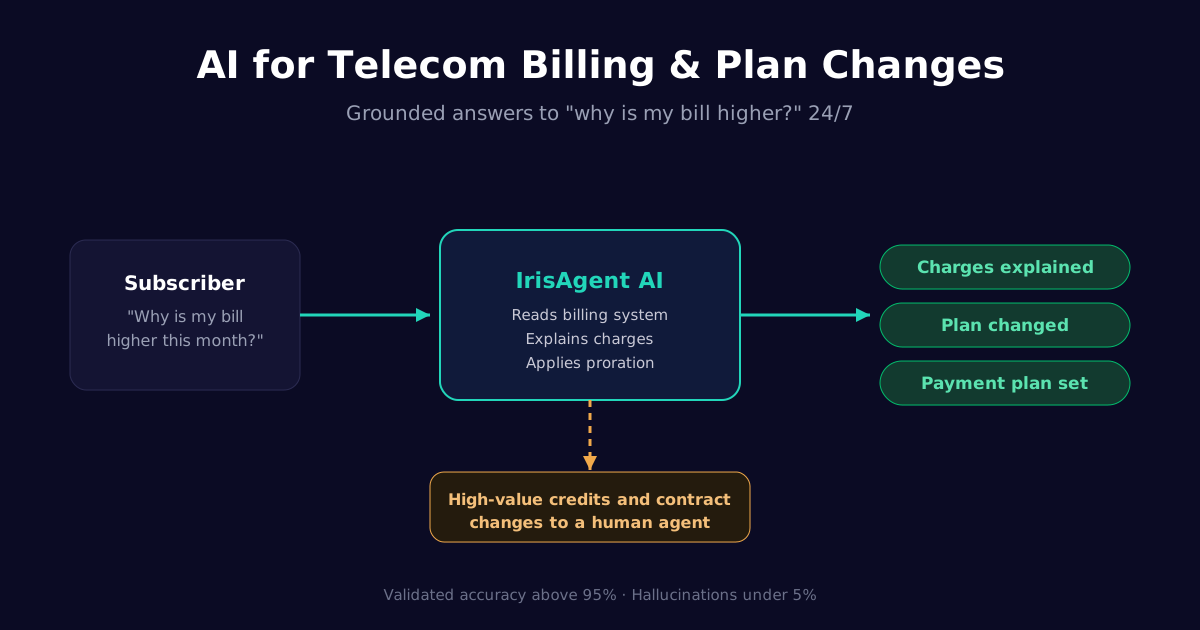
AI for telecom billing and plan-change support is conversational, agentic AI that explains charges, applies proration, processes plan and package changes, and resolves routine billing disputes, all grounded in the customer's real account data. It sits on top of your billing platform and help desk, answers in seconds, and escalates only the cases that need human judgment. IrisAgent resolves 55%+ of routine telecom tickets automatically and keeps hallucinations under 5%, versus 15 to 30 percent for ungrounded chatbots.
Billing is the single largest driver of telecom support volume, and it spikes every cycle. A new plan, a proration line, a taxes-and-fees question, or a failed autopay can each turn into a ticket. Most of these questions are repetitive and answerable from data the customer's account already holds, which is exactly the work grounded AI removes from the queue.
Why telecom billing generates so much support volume
Telecom bills are complex by nature. They combine base plan charges, device installments, add-ons, taxes, regulatory fees, proration from mid-cycle changes, and one-time credits. Every one of those lines is a potential question, and every billing cycle refreshes the demand.
The pattern is predictable. Volume climbs right after bills go out, after a price change, and after a promotion ends. Agents spend hours explaining charges that are technically correct but not obvious to the customer. That is low-value, high-frequency work, and it is the first thing a carrier or ISP should automate.
What AI can resolve in telecom billing
Grounded AI handles the repetitive core of billing support end to end, not just the easy FAQ layer.
Explaining charges and first-bill questions
The most common billing ticket is "why is my bill higher this month?" AI reads the customer's actual invoice, compares it to the prior cycle, and explains the difference in plain language: a proration line from a mid-cycle upgrade, a promotion that ended, or a one-time device charge. Because the answer comes from the real invoice, it holds up.
Plan and package changes with proration
AI walks the customer through upgrades, downgrades, and add-ons, then executes the change in your provisioning and billing systems. It explains how proration affects the next bill and confirms the new price before committing. Explore how teams automate subscription and plan management with a single grounded workflow.
Failed payments and payment plans
Failed autopay is a silent churn driver. AI detects the failure, notifies the customer, updates the payment method, and sets up a payment plan where policy allows. See how failed payment recovery runs automatically instead of waiting on an agent.
How grounded AI keeps billing answers accurate
Accuracy is not optional when the subject is money. An ungrounded chatbot that guesses a charge creates a worse dispute than the one it was trying to close. Grounded retrieval means every billing answer is pulled from your billing platform and validated before it is sent.
IrisAgent keeps hallucinations under 5%, compared with 15 to 30 percent for ungrounded large language models. When the AI is not confident, it does not guess. It routes the ticket to an agent with the full context attached, so the customer never receives a confident wrong answer about their bill.
When to escalate a billing case to a human
Automation should be aggressive on routine work and conservative on judgment calls. A credit above policy, a contract renegotiation, a fraud claim, or a regulatory dispute belongs with a human. The right design is confidence-gated escalation: the AI handles the volume, recognizes its own limits, and hands the sensitive cases to an agent with everything already gathered.
This split is what makes billing automation safe. Customers get instant answers on the common questions, and agents get clean, context-rich handoffs on the ones that actually need them.
How IrisAgent automates telecom billing support
IrisAgent connects to your billing platform, CRM, and help desk, then resolves billing and plan-change tickets from one grounded AI support platform. It deploys in about 24 hours on Zendesk, Salesforce, Intercom, Freshdesk, or Jira Service Management, with no 20,000-ticket minimum and no engineering project.
The IrisGPT agent assist layer also drafts grounded billing responses for the tickets a human still handles, so even the escalations move faster. You can automate billing questions as a starting workflow and expand from there.
Next steps
AI for telecom billing and plan-change support turns the spikiest, most repetitive part of your queue into instant, grounded resolution. To get started:
Automate the top three billing intents first: charge explanations, plan changes, and failed-payment recovery.
Ground every answer in your billing platform so the numbers always match.
Use confidence-gated escalation so credits and contract changes reach a human with full context.
See the full AI customer support for telecom overview, or book a 20-minute demo to see grounded billing automation on your own help desk.
Frequently Asked Questions
Can AI resolve telecom billing disputes?
Yes. AI resolves the majority of routine telecom billing disputes by grounding every answer in the customer's real account data. It explains individual charges, breaks down a bill line by line, applies proration on a mid-cycle plan change, and sets up payment plans, all without an agent. IrisAgent keeps hallucinations under 5%, so the number it quotes matches the billing system, and it escalates credits above policy or contract changes to a human with full context.
How does AI handle telecom plan and package changes?
AI walks the customer through upgrades, downgrades, add-ons, and package switches in plain language, then executes the change in your billing and provisioning systems. It explains how proration affects the next bill, confirms new pricing, and flags any contract or early-termination implications before the customer commits. Because it reads the customer's current plan, it can recommend the right fit instead of guessing. Complex or high-value changes escalate to a human agent.
Is AI accurate enough for telecom billing questions?
Accuracy is the deciding factor. An ungrounded chatbot that guesses a charge creates a worse dispute than the original one. Grounded AI like IrisAgent pulls the exact figures from your billing platform, validates the response before sending, and keeps hallucinations under 5% versus 15 to 30 percent for ungrounded LLMs. When confidence drops, the request routes to an agent, so customers never get a confident wrong answer about money.
What billing tasks should telecom teams automate first?
Start with the highest-volume, most repetitive billing intents: explaining charges, first-bill and proration questions, plan changes, autopay setup, and failed-payment recovery. These spike every billing cycle and rarely need human judgment. Automating them first frees agents for disputes that require a credit decision or account review. IrisAgent deploys on your existing help desk in about 24 hours, so the first automated billing resolution can happen the same day.
Does AI billing support integrate with existing telecom systems?
Yes. IrisAgent connects to your billing platform, CRM, and help desk (Zendesk, Salesforce, Intercom, Freshdesk, or Jira Service Management) so it answers from live account data rather than a static FAQ. There is no re-platforming and no 20,000-ticket minimum. Support ops teams configure billing workflows in natural language, which means launching and maintaining the automation does not require an engineering project.
Loading the form. Prefer email? Reach us at info@irisagent.com or call +1 617 249 3312.