
What Is Voice AI? Definition, How It Works & Use Cases
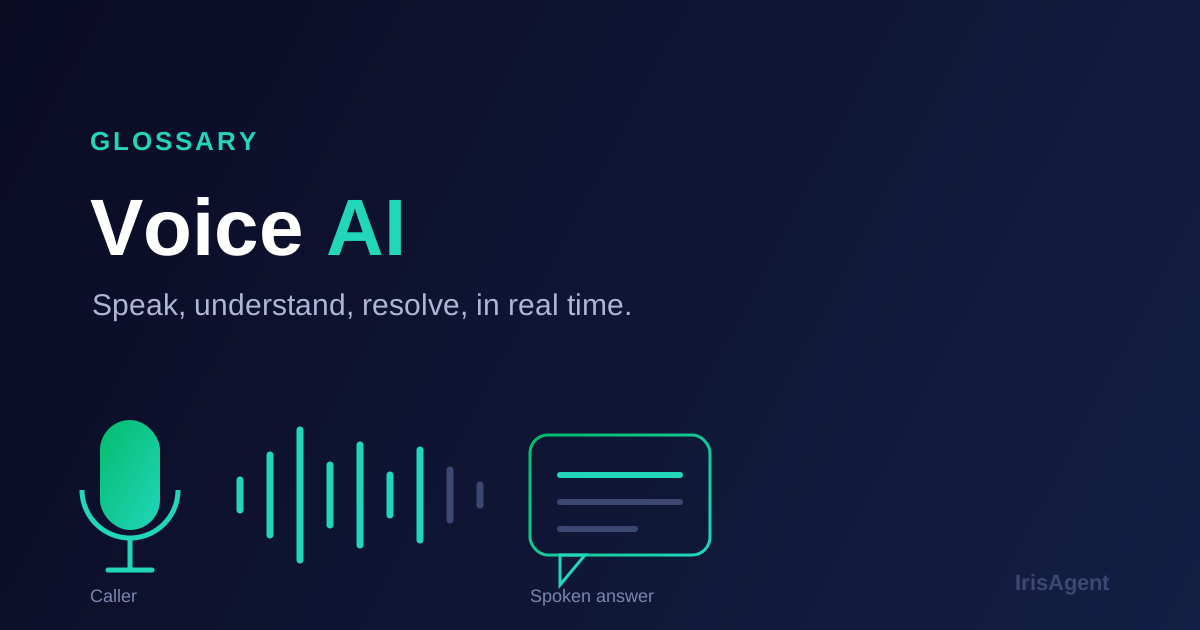
Voice AI is technology that lets people interact with software by speaking, using artificial intelligence to understand what a caller says, decide how to respond, and reply in a natural spoken voice. In customer support, voice AI answers phone calls, resolves routine requests end to end, and hands off to a human agent when a conversation needs one, all in real time.
What Is Voice AI?
Voice AI is the combination of speech and language technologies that make a spoken conversation with a machine feel natural. Where a traditional phone menu forces callers to press numbers and follow a rigid script, voice AI lets them speak in their own words and get a direct answer.
It goes well beyond the interactive voice response (IVR) systems most people have waited through. Modern voice AI understands intent, holds context across a conversation, handles interruptions, and responds in a fluid human-like voice rather than a robotic one. It is the voice-channel counterpart to an AI chatbot.
How Does Voice AI Work?
A voice AI system chains four capabilities together in real time:
Speech-to-text (ASR): Automatic speech recognition transcribes the caller's spoken words into text as they talk.
Natural language understanding (NLU): The system interprets the text to determine the caller's intent and pull out key details like an order number or account.
Dialogue and reasoning: A language model, usually grounded in the company's knowledge base, decides how to respond, whether that means answering, asking a clarifying question, taking an action, or escalating.
Text-to-speech (TTS): The response is converted back into natural spoken audio and played to the caller, often within a fraction of a second so the exchange feels conversational.
The hardest part is doing all of this fast enough to feel natural. Latency, handling people talking over the system, and staying accurate under noisy real-world audio are what separate a production-grade voice AI from a demo.
Voice AI Use Cases in Customer Support
Call deflection and resolution: Answering common questions such as order status, account balance, or store hours without an agent.
After-hours coverage: Handling calls around the clock when the contact center is closed.
Authentication and triage: Verifying the caller and understanding the reason for the call before any handoff.
Warm handoff to agents: Passing the full conversation and context to a human when the issue needs one, so the caller does not repeat themselves.
Outbound notifications: Proactive calls for appointment reminders, delivery updates, or renewals.
Why Voice AI Matters, and Where It Falls Short
Voice remains the channel customers reach for when an issue is urgent or complex, and it is the most expensive channel to staff. That makes it the highest-value place to apply AI, but also the least forgiving. A wrong answer spoken confidently over the phone is harder to catch than one on screen.
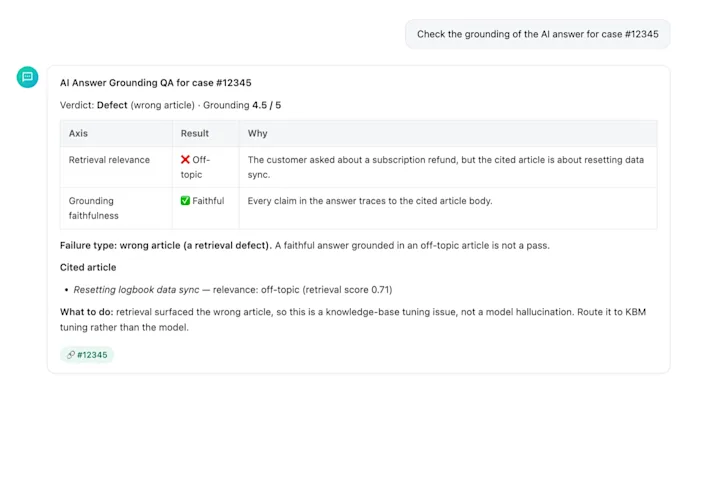
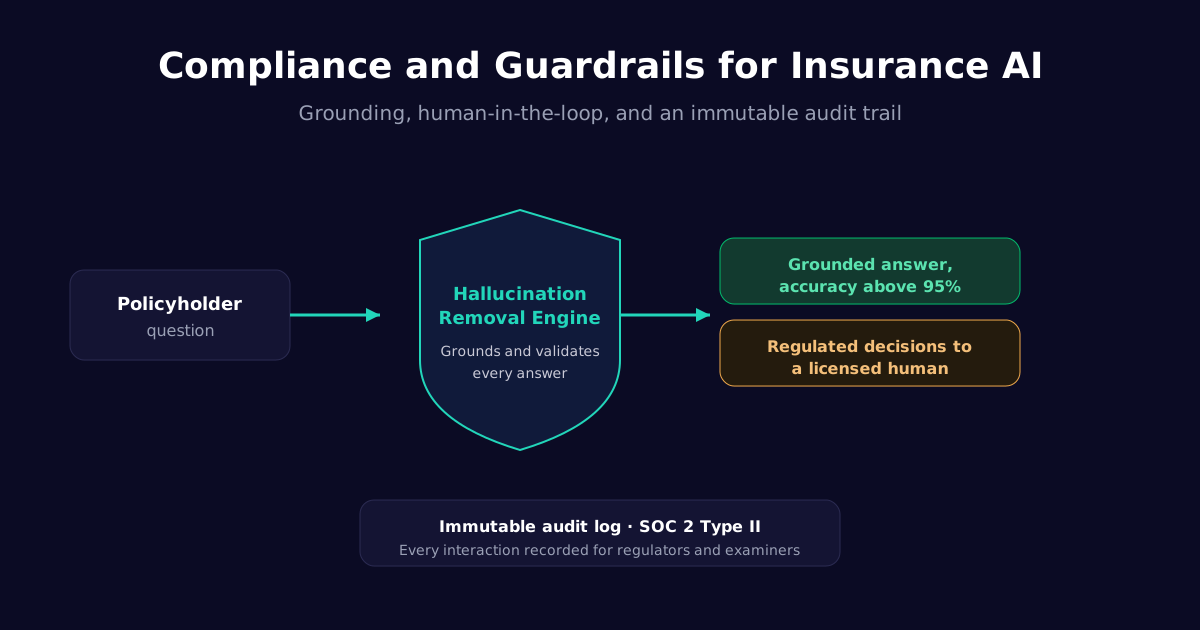
This is why grounding matters even more in voice. Realistic pilots resolve roughly 45% to 65% of calls without a human, not the 90% some vendors imply. The systems that reach the top of that range are the ones grounded in a verified knowledge base and validated for accuracy, so the AI speaks only what the company has actually documented and routes everything else to a person.
IrisAgent's voice AI is built on the same grounded, hallucination-free foundation as its chat and ticket automation, so spoken answers stay accurate and every unresolved call is handed off cleanly with full context.
Learn More About Voice AI
For realistic performance expectations, read voice AI benchmarks from 2026 production deployments. To compare tools, see 10 Best AI Voice Bots for Customer Service. For the broader category voice AI belongs to, read What Is Conversational AI?.
To hear grounded voice automation in action, explore IrisAgent's Voice AI.
Frequently Asked Questions
What is voice AI?
Voice AI is technology that lets people interact with software by speaking. It uses artificial intelligence to understand what a caller says, decide how to respond, and reply in a natural spoken voice. In customer support, voice AI answers phone calls, resolves routine requests end to end, and hands off to a human agent when a conversation needs one, all in real time.
How is voice AI different from IVR?
Traditional interactive voice response (IVR) forces callers to press numbers and follow a rigid script. Voice AI lets them speak in their own words and get a direct answer. It understands intent, holds context across a conversation, handles interruptions, and responds in a fluid human-like voice rather than a robotic menu. It is the voice-channel counterpart to an AI chatbot.
What can voice AI do in customer support?
Voice AI handles call deflection and resolution for common questions like order status or account balance, provides after-hours coverage, authenticates and triages callers before a handoff, passes full context to a human agent for a warm handoff, and makes outbound notification calls such as appointment reminders and delivery updates.
How many calls can voice AI resolve without a human?
Realistic pilots resolve roughly 45% to 65% of calls without a human, not the 90% some vendors imply. The systems that reach the top of that range are grounded in a verified knowledge base and validated for accuracy, so the AI speaks only what the company has actually documented and routes everything else to a person with full context.
Loading the form. Prefer email? Reach us at info@irisagent.com or call +1 617 249 3312.