
AI for Insurance Claims Status Support: A 2026 Guide
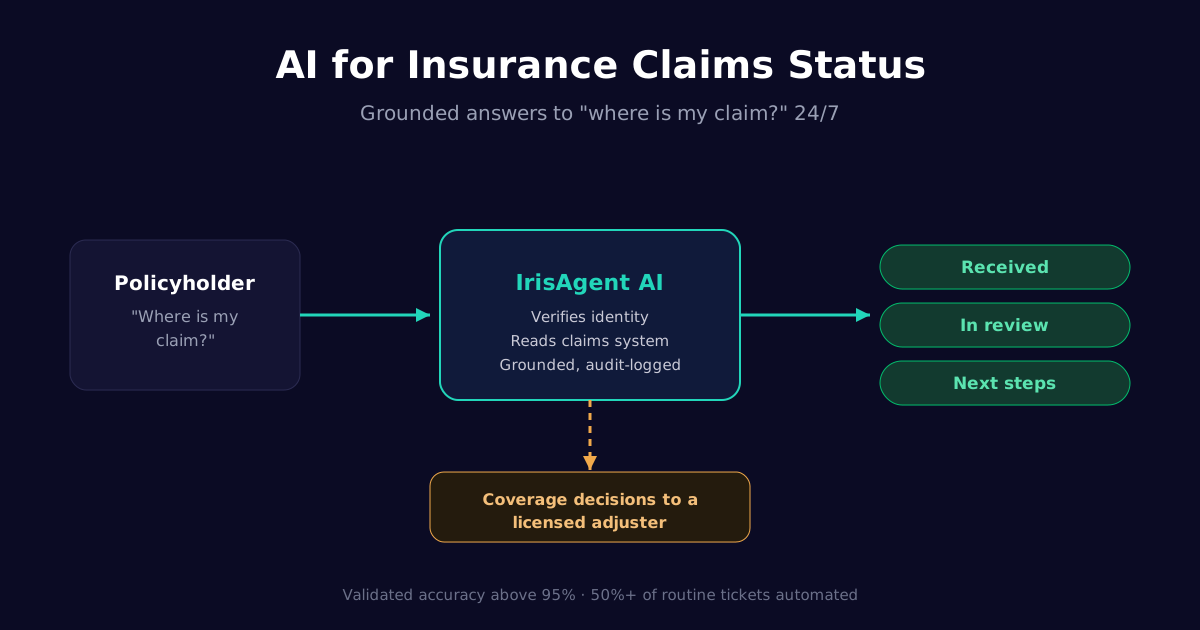
AI for insurance claims status support uses grounded, agentic AI to answer "where is my claim?" instantly. It verifies the policyholder, reads the claim record in your claims system, and returns the current stage, outstanding requirements, and next steps in plain language, 24/7, without waiting for an adjuster callback. IrisAgent's Hallucination Removal Engine keeps validated accuracy above 95% and automates 50%+ of routine claims-status tickets, while every coverage decision still routes to a licensed adjuster.
Claims status is the most repetitive question an insurance support team fields. A policyholder files a claim, then calls, emails, and messages again and again to ask what is happening. Each of those touches is low value for your team and high anxiety for the customer. This guide explains how AI resolves claims-status questions accurately, where the guardrails belong, and how to deploy it without taking human judgment out of adjudication.
Why Claims Status Questions Overwhelm Insurance Support
Status-chasing is a structural problem, not a staffing one. Claims take days or weeks to resolve, and during that window the policyholder has no visibility. So they contact you. Insurance consistently scores among the lower industries for customer satisfaction during claims, and slow or unclear status communication is a leading driver, according to the Insurance Information Institute.
The result is a queue full of "any update?" tickets that a human has to look up one at a time. Every one requires pulling the claim, reading the latest note, and translating internal status codes into something a customer understands. That is exactly the kind of repetitive, lookup-and-explain work AI does well.
Automating it frees adjusters and support agents to spend their time on the claims that actually need judgment, not on reading the same status field aloud fifty times a day.
What AI for Claims Status Actually Does
AI for claims status is not a generic chatbot bolted onto your website. It connects to your claims system and answers from the real record. When a policyholder asks about a claim, the AI verifies their identity, retrieves the claim, and explains the current stage, what is outstanding, and what happens next.
Grounding is what makes this safe. A grounded AI answers only from your systems and knowledge base, and validates each response against the source before sending. Ungrounded chatbots hallucinate on 15% to 30% of responses; IrisAgent keeps that under 5%. In claims, a wrong answer is not just a bad experience, it can create a regulatory or bad-faith problem, so accuracy is the whole game.
Crucially, the AI knows its limits. Reading a status is informational. Deciding whether a loss is covered is a regulated decision. The first is automated; the second escalates to a licensed adjuster with full context.
How AI Resolves a Claims Status Request in 6 Steps
A grounded claims-status resolution follows the same disciplined path a good adjuster's assistant would.
Verify identity. The AI confirms the policyholder against your records before sharing any claim detail, so sensitive information never goes to the wrong person.
Retrieve the claim. It pulls the specific claim from your claims system, not a general guess about how claims usually go.
Explain the current stage. It translates internal status codes into plain language: received, under review, awaiting documents, or approved.
Surface outstanding requirements. It tells the policyholder exactly what is still needed, such as a police report, photos, or a signed form.
Set expectations. It shares the typical next step and timeline, grounded in your published service standards, not an invented promise.
Log and escalate. It writes the interaction to an immutable audit log and routes any coverage question or dispute to a licensed adjuster with a full summary.
That sequence turns a multi-day phone-tag loop into a 30-second self-service answer, while keeping the regulated parts with a human.
Keeping Adjusters and Compliance in the Loop
The fastest way to lose trust in insurance AI is to let a model answer a question it should not. Coverage determinations, reserve changes, and anything that reads as advice must stay with a licensed professional.
IrisAgent handles this with confidence-gated escalation. When a request crosses from "what is the status?" into "is this covered?" or "why was this denied?", the AI stops answering and hands off to the right adjuster with the full conversation and a structured summary. The policyholder never has to repeat themselves, and the human makes the decision.
Every interaction, and every escalation, is written to an immutable audit trail. That record is what lets your compliance team show a regulator or examiner precisely who accessed what, when, and on what basis. Auditability is not a nice-to-have in insurance, it is the price of automating anything.
How IrisAgent Automates Claims Status Support
IrisAgent deploys grounded AI across chat, voice, email, and agent copilot, so claims-status questions get the same accurate answer on every channel. It connects to your existing claims and policy systems, answers from your approved knowledge, and escalates regulated decisions to licensed humans by design.
Because it is agentic, it does more than read a status. It can confirm what documents are outstanding, help a policyholder upload them, answer the billing questions that ride alongside a claim, and cover the queue after hours when your team is offline. For agents, IrisAgent's agent copilot surfaces the claim context and a drafted reply so the human touches resolve faster too.
The result for insurance teams is measurable: 50%+ of routine claims-status tickets automated, support costs down 30% to 60%, and adjusters focused on adjudication instead of status lookups. See the full AI customer support for insurance overview, or browse AI support by industry to compare regulated verticals.
Next Steps
Claims-status automation is the highest-leverage first project for most insurance support teams, because the volume is huge, the answer is grounded in a record you already have, and the compliance line is clear.
To get started:
Pull your top status-related contact reasons and confirm how much of the queue they represent.
Map which questions are informational (status, requirements, timelines) versus regulated (coverage, denial reasons).
Wire a grounded AI into your claims system, automate the informational tier, and route the rest to licensed adjusters with an audit trail.
Done right, AI for insurance claims status support cuts the most repetitive work out of your queue without ever letting a model make a coverage decision. Book a 20-minute demo to see grounded claims-status automation on your own workflow.
Frequently Asked Questions
Can AI answer insurance claims status questions?
Yes. AI answers claims status by connecting to your claims system, verifying the policyholder, and returning the current stage, outstanding requirements, and next steps in plain language, 24/7. A grounded AI like IrisAgent answers only from the real claim record and validates each response before sending, keeping validated accuracy above 95%. It handles the informational 'where is my claim?' volume while routing any coverage decision or dispute to a licensed adjuster with full context.
How do I check my insurance claim status?
You can check a claim status through your insurer's portal, app, or support channel. Increasingly, insurers use AI so a policyholder can just ask 'where is my claim?' in chat or on the phone and get an instant answer. The AI verifies identity, looks up the claim, and explains the stage and what is still needed. For coverage or denial questions, it hands off to a licensed adjuster rather than answering itself.
Is AI accurate enough for insurance claims support?
Grounded AI is. The risk with claims is a confident wrong answer, which in insurance can create a bad-faith or regulatory problem. IrisAgent's Hallucination Removal Engine answers only from your claims system and knowledge base and validates each response against its source, keeping hallucinations under 5% versus 15% to 30% for ungrounded chatbots. Anything requiring judgment, such as a coverage determination, escalates to a licensed adjuster.
Can AI automate first notice of loss (FNOL)?
Yes. AI automates FNOL intake by collecting structured loss details, verifying coverage status, creating the claim in your system, and setting expectations for next steps in a guided 24/7 conversation. IrisAgent triages the loss and routes complex or high-severity claims to a licensed adjuster with a complete summary, and logs the intake to an audit trail. This speeds up the first touch without removing human judgment from adjudication.
What claims questions still go to a human?
Anything that is a regulated decision. Reading a status, listing outstanding requirements, and explaining timelines is informational and safe to automate. Deciding whether a loss is covered, why a claim was denied, or how much to reserve or pay is a coverage or adjusting decision that must stay with a licensed professional. IrisAgent uses confidence-gated escalation to route those to the right adjuster with full context and an audit trail.
How much claims-status volume can AI automate?
Claims-status and other routine questions are usually the largest slice of an insurance support queue, and grounded AI commonly automates 50%+ of them. Because the answer is grounded in a claim record you already have and the compliance line is clear, claims status is often the highest-leverage first project. IrisAgent typically automates 50%+ of routine tickets while cutting support costs 30% to 60%.

Loading the form. Prefer email? Reach us at info@irisagent.com or call +1 617 249 3312.