
Compliance and Guardrails for AI in Insurance Support
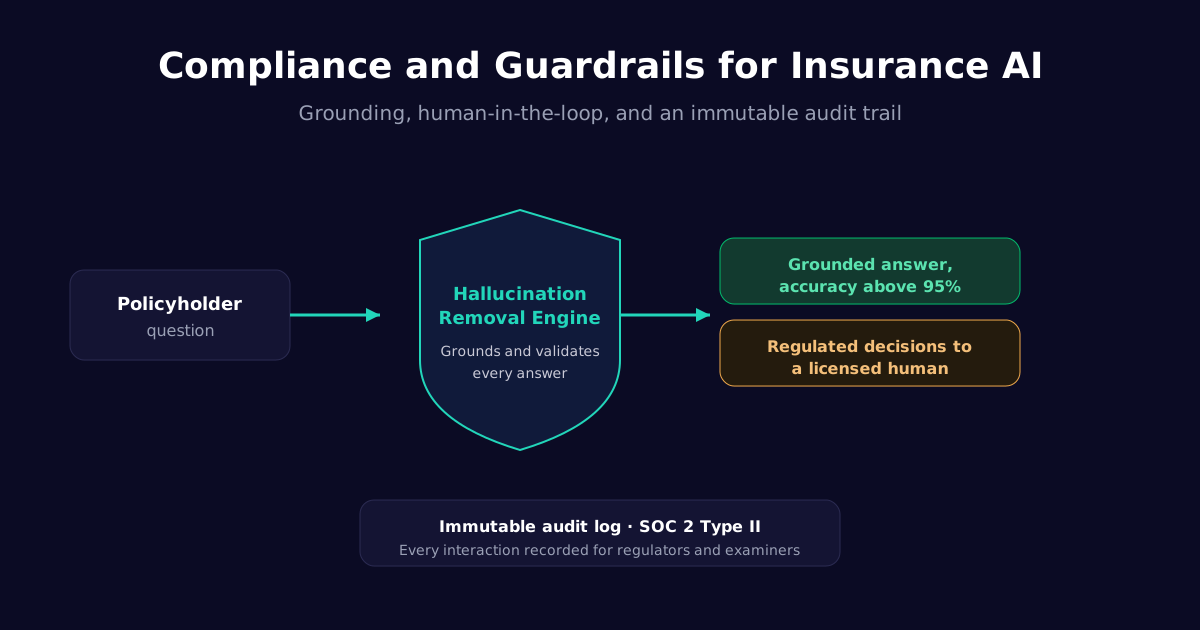
Compliance guardrails for AI in insurance support are the controls that keep an AI agent inside regulatory boundaries: grounding every answer in approved sources, escalating regulated decisions to licensed humans, and logging every interaction to an immutable audit trail. Together they let insurers automate high-volume policyholder support without the model ever making a coverage determination or giving unlicensed advice. IrisAgent is SOC 2 Type II certified and keeps validated accuracy above 95%, with hallucinations under 5% versus 15% to 30% for ungrounded chatbots.
Insurance is one of the most heavily regulated industries to deploy AI in, and for good reason. A wrong answer about coverage can trigger a bad-faith claim, a market-conduct finding, or a regulatory penalty. This guide lays out the guardrails that make AI support safe for insurance, so you can automate the routine work while keeping the regulated work with humans.
Why Insurance AI Needs Guardrails Most
Most industries treat an AI mistake as a customer-experience problem. In insurance it is also a legal and regulatory one. Coverage answers, claims decisions, and product recommendations are governed by state regulation, licensing requirements, and unfair-practices rules enforced by bodies like the National Association of Insurance Commissioners. Regulators are actively scrutinizing how insurers use AI in consumer interactions.
That means the bar is not "usually right." An insurance AI has to be grounded, auditable, and unwilling to make regulated decisions on its own. The good news is that these same guardrails are what make automation defensible, so you can safely resolve the large volume of routine questions that do not require a licensed human.
The goal is not to keep AI out of insurance support. It is to draw a clear line between informational work the AI can own and regulated work it must escalate.
The Three Core Guardrails for Insurance AI
Compliant insurance AI rests on three controls that work together. Remove any one and the automation becomes risky.
Grounding. The AI answers only from your approved policy documents and knowledge base, never from a general model's training data, so responses match the policyholder's actual contract.
Validation. Every response is checked against the source it cites before it is sent, which is how the Hallucination Removal Engine keeps hallucinations under 5%.
Human-in-the-loop escalation. Confidence-gated logic routes any regulated decision to a licensed human with full context, so the model never adjudicates or advises.
Grounding controls where answers come from. Validation controls whether they are correct. Escalation controls which decisions a machine is allowed to make. An audit trail records all three so you can prove it.
Grounding and Validation: Stopping Hallucinations
The failure mode everyone fears with AI in insurance is the confident, invented coverage answer. A generic chatbot trained on the open internet will happily tell a policyholder they are covered for something their policy excludes. That is a hallucination, and in insurance it is a liability.
Grounding removes the root cause. Retrieval-augmented generation (RAG) means the AI pulls answers from your specific documents at query time instead of generating them from training data. IrisAgent retrieves the exact policy form, endorsement, or knowledge article that applies, answers from it, and cites the source so a reviewer can verify it.
Validation is the second layer. The Hallucination Removal Engine compares the drafted answer against the retrieved source before it reaches the policyholder and blocks anything unsupported. The measurable result is validated accuracy above 95%, compared with the 15% to 30% hallucination rate typical of ungrounded models. In a regulated setting, that gap is the difference between safe automation and an exposure.
Human-in-the-Loop and the Audit Trail
Grounding and validation make answers accurate. They do not make the AI licensed. Some decisions must be made by a human no matter how good the model is: binding coverage determinations, claims adjudication, underwriting, suitability, and anything that constitutes advice.
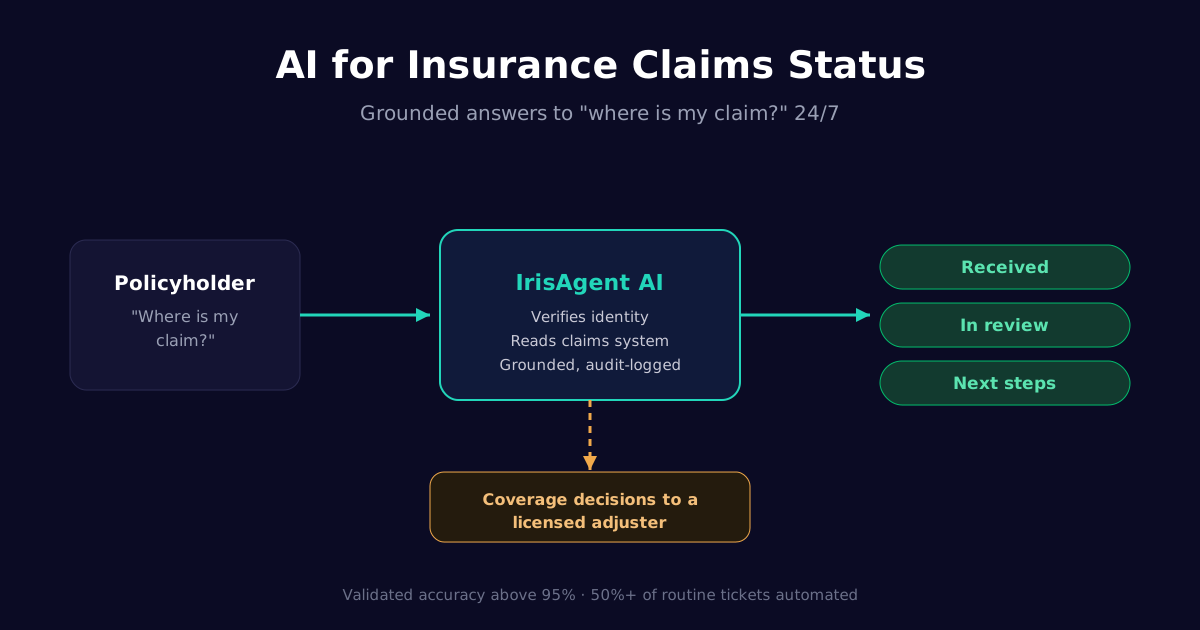
IrisAgent enforces this with confidence-gated escalation. When a conversation crosses from informational into regulated territory, the AI stops, hands off to the right licensed agent or adjuster, and passes along the full conversation and a structured summary. The policyholder gets a fast first touch; the human makes the decision that has to be theirs.
The immutable audit trail ties it together. Every AI interaction and every escalation is recorded, so your compliance team can show a regulator or examiner exactly who accessed what, when, and on what basis. Combined with SOC 2 Type II controls, encryption in transit and at rest, role-based access, and an air-gapped private deployment option for carriers who cannot put policyholder data in a shared cloud, auditability turns AI from a compliance risk into a documented, defensible process.
How IrisAgent Builds Compliance In by Design
IrisAgent was built for regulated support, so the guardrails are not add-ons. Grounding, validation, human-in-the-loop escalation, and audit logging are the default behavior of the platform across chat, voice, email, and agent copilot.
That design lets insurance teams automate 50%+ of routine policyholder tickets, cut support costs 30% to 60%, and stay inside their compliance obligations at the same time. It also gives your security and compliance reviewers what they need: a SOC 2 Type II report, a security questionnaire, and a clear model of which decisions the AI makes and which it escalates. See the full AI customer support for insurance overview, or compare regulated verticals on the AI support by industry hub.
The insurers winning with AI are not the ones who let a model loose on coverage questions. They are the ones who put grounding, escalation, and audit trails in front of it.
Next Steps
Guardrails are what let you say yes to AI in insurance support without saying yes to regulatory risk.
Inventory which policyholder questions are informational versus regulated, and draw the escalation line explicitly.
Require grounding and source citation on every AI answer, and validation before send.
Insist on an immutable audit trail and SOC 2 Type II controls before any policyholder data touches the system.
With those compliance guardrails in place, AI in insurance support becomes a documented, auditable process that automates the routine and escalates the regulated. Book a 20-minute demo to see grounded, audit-ready insurance AI in action.
Frequently Asked Questions
What are compliance guardrails for AI in insurance support?
Compliance guardrails are the controls that keep an AI agent inside regulatory boundaries. The three core ones are grounding (answering only from approved sources), validation (checking each answer against its source before sending), and human-in-the-loop escalation (routing regulated decisions to a licensed human). An immutable audit trail records all three. Together they let insurers automate routine support without the model ever making a coverage determination or giving unlicensed advice.
Is AI compliant for regulated insurance support?
It can be, when it is grounded, auditable, and unwilling to make regulated decisions. Coverage answers, claims decisions, and recommendations are governed by state regulation and licensing rules. A compliant AI answers only from approved documents, logs every interaction, and escalates regulated decisions to licensed humans. IrisAgent is SOC 2 Type II certified, encrypts data in transit and at rest, and keeps validated accuracy above 95%.
How do you stop AI from hallucinating in insurance?
You ground it and validate it. Grounding means the AI answers from your specific policy documents and knowledge base at query time using retrieval-augmented generation, not from training data. Validation compares each drafted answer against the retrieved source and blocks anything unsupported. IrisAgent's Hallucination Removal Engine uses both, keeping hallucinations under 5% versus 15% to 30% for ungrounded chatbots, which in a regulated setting is the difference between safe automation and an exposure.
What is human-in-the-loop escalation in insurance AI?
Human-in-the-loop escalation means the AI resolves informational questions but hands regulated decisions to a licensed human. Confidence-gated logic detects when a conversation crosses into a coverage determination, claims adjudication, underwriting, suitability, or advice, and routes it to the right licensed agent or adjuster with the full conversation and a structured summary. The policyholder gets a fast first touch, and the human makes the decision that has to be theirs.
Why does insurance AI need an audit trail?
Because auditability is the price of automating anything in a regulated industry. An immutable audit trail records every AI interaction and every escalation, so your compliance team can show a regulator or examiner exactly who accessed what, when, and on what basis. Combined with SOC 2 Type II controls and encryption, the audit trail turns AI from a compliance risk into a documented, defensible process. IrisAgent logs every policyholder interaction by default.
Is IrisAgent SOC 2 compliant for insurance?
Yes. IrisAgent is SOC 2 Type II certified, with a report and security questionnaire available under NDA for vendor reviews. Data is encrypted in transit (TLS) and at rest (AES-256), access is role-based with enterprise SSO, and every interaction is written to an immutable audit log. For carriers who cannot put policyholder data in a shared cloud, IrisAgent can deploy in your own cloud or data center with zero data egress and an air-gapped option.

Loading the form. Prefer email? Reach us at info@irisagent.com or call +1 617 249 3312.