
AI for Insurance Policy and Billing Questions
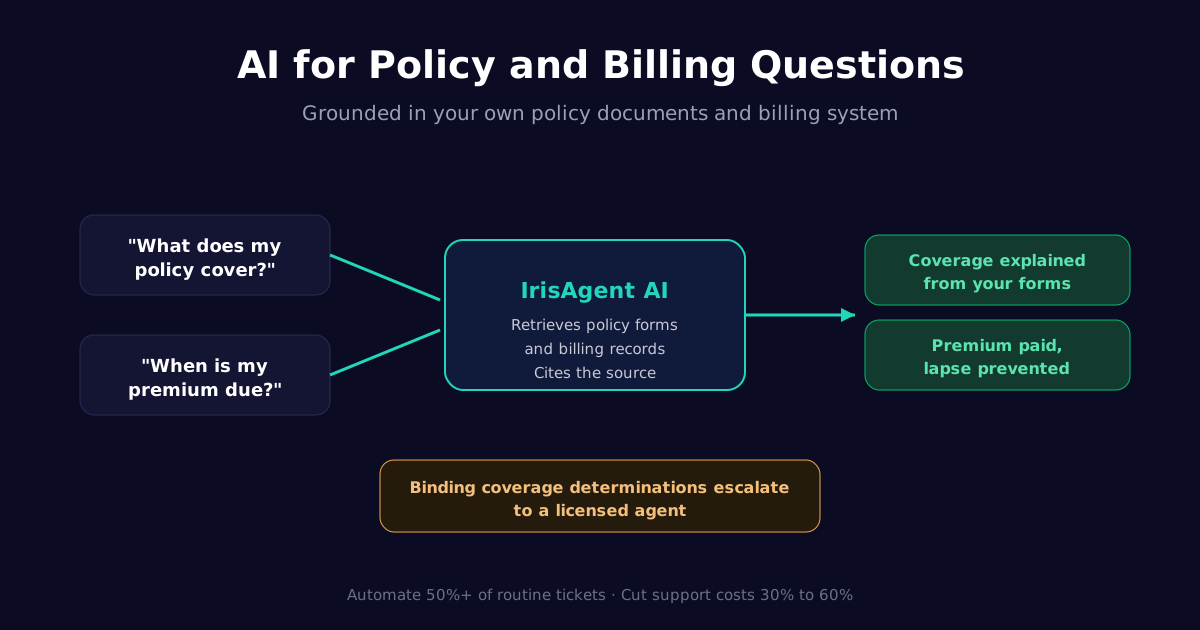
AI for insurance policy and billing questions uses grounded AI to answer coverage, premium, and payment questions directly from your own policy documents and billing system. A policyholder asks "what does my policy cover?" or "when is my premium due?", and the AI retrieves the relevant policy language or billing record, answers in plain language, and cites the source, 24/7. IrisAgent automates 50%+ of these routine tickets while keeping validated accuracy above 95% and escalating binding coverage determinations to a licensed agent.
Policy and billing questions are the daily bread of insurance servicing. They are high volume, mostly informational, and grounded in documents you already maintain. That combination makes them the ideal work to automate first, as long as the AI answers from your real forms and knows when to hand a regulated decision to a human. This guide covers how it works, where the compliance line sits, and how to deploy it.
Why Policy and Billing Questions Flood the Queue
Every policyholder has the same handful of questions, and they ask them at renewal, after a life change, and whenever a bill arrives. "Is this covered?" "What is my deductible?" "Why did my premium go up?" "When is payment due?" "Can I set up autopay?"
Individually each is simple. In aggregate they are the largest, most repetitive slice of an insurance support queue, and they spike predictably around billing cycles and renewals. Handled by humans, they consume Tier-1 capacity that should be spent on complex servicing and retention.
They are also the questions most likely to drive a policy lapse when they go unanswered. A policyholder who cannot quickly find out what they owe, or how to pay, is a policyholder at risk of an involuntary lapse and the churn that follows.
How AI Answers Policy Questions Without Guessing
The danger with policy questions is a confident wrong answer. Coverage language is specific, varies by form and endorsement, and changes over time. A general chatbot that answers from training data will invent plausible-sounding coverage that does not match the policyholder's actual contract.
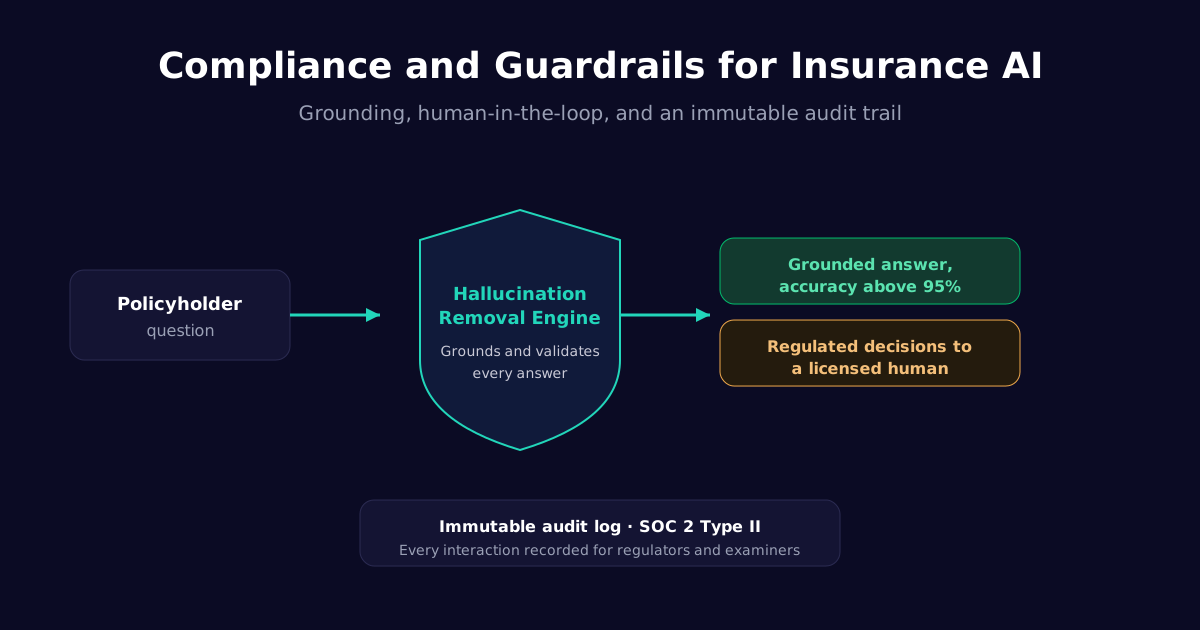
Grounding solves this. IrisAgent retrieves the policyholder's actual policy forms and endorsements at query time and answers only from that source, citing the document it used. Retrieval-augmented generation (RAG) means the AI pulls answers from your specific documents at query time instead of making them up. The Hallucination Removal Engine validates every response against its source before sending, keeping hallucinations under 5% versus 15% to 30% for ungrounded models.
The line to hold is between explaining and deciding. Explaining what a policy says is informational and safe to automate. Making a binding coverage determination, or giving advice on which coverage to buy, is a regulated act that escalates to a licensed producer.
How AI Resolves Billing and Premium Questions
Billing is where agentic AI earns its keep, because these questions usually end in an action, not just an answer. IrisAgent connects to your billing system and can both explain and resolve.
Answer the amount and due date. It reads the billing record and states exactly what is owed and when, with no ambiguity.
Explain a premium change. It walks through the factors behind a renewal increase, grounded in your published rating explanations, and escalates disputes.
Take the payment. It guides the policyholder through paying, updating a card, or enrolling in autopay, all logged for audit.
Set up a payment plan. It offers the plans your rules allow and helps the policyholder enroll before a due date passes.
Recover a failed payment. It proactively reaches out on a failed premium payment and helps fix it before the policy lapses.
Automating this tier does more than deflect tickets. It prevents lapses, protects renewal revenue, and gives policyholders a way to resolve a bill at midnight without waiting for business hours.
Keeping Regulated Decisions With Licensed Humans
Insurance is a licensed business for a reason, and AI does not change that. The platform has to make the compliance boundary structural, not a matter of hoping the model behaves.
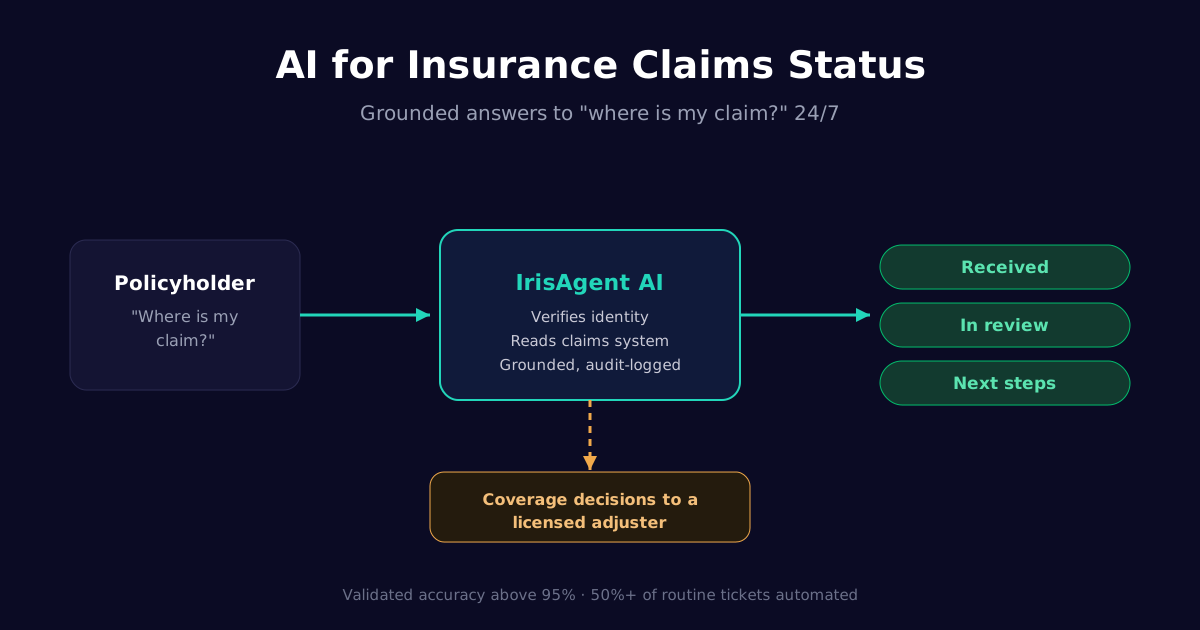
IrisAgent uses confidence-gated escalation. Informational policy and billing questions are automated. Anything that becomes a binding coverage determination, a suitability judgment, or advice on what to buy is routed to a licensed agent with full context and a structured summary. The model never makes the regulated call.
Every interaction is written to an immutable audit log, so you can demonstrate to regulators and examiners exactly how each question was handled. That audit trail, paired with SOC 2 Type II controls and encryption in transit and at rest, is what makes automating policyholder servicing defensible rather than risky. You can read more in the compliance and guardrails guide for insurance AI.
How IrisAgent Automates Policy and Billing Support
IrisAgent grounds every answer in your own policy documents and billing data, resolves the routine questions end to end, and escalates regulated decisions to licensed humans by design. It works across chat, voice, email, and agent copilot, so a policyholder gets the same accurate answer wherever they reach out.
For your team, that means 50%+ of routine policy and billing tickets automated, support costs down 30% to 60%, and fewer lapses from unanswered billing questions. For agents, IrisAgent's agent copilot surfaces the right policy language and a drafted reply, so even the human touches are faster. Explore the full AI customer support for insurance overview, or see how billing questions get automated across industries.
Insurers that get policy and billing automation right turn their highest-volume, lowest-value queue into instant self-service, without ever letting the model make a coverage decision.
Next Steps
Policy and billing questions are the natural starting point for insurance AI: high volume, grounded in documents you already own, and mostly informational.
Identify your top policy and billing contact reasons and the share of the queue they represent.
Separate the informational questions (coverage explanations, amounts, due dates) from the regulated ones (binding determinations, advice).
Ground a compliant AI in your policy forms and billing system, automate the informational tier, and route the rest to licensed producers with an audit trail.
Handled this way, AI for insurance policy and billing questions protects renewal revenue and cuts support cost while staying inside the rules. Book a 20-minute demo to see it grounded in your own policies.
Frequently Asked Questions
Can AI answer insurance policy and coverage questions?
Yes, when it is grounded in your actual policy forms and endorsements rather than a general model's training data. IrisAgent retrieves the relevant policy language at query time, explains what a plan covers, deductibles, and effective dates, and cites the source document. Explaining what a policy says is informational and safe to automate. A binding coverage determination or advice on what to buy is regulated and escalates to a licensed producer.
How does AI handle insurance billing and premium questions?
AI connects to your billing system and answers about amounts due, due dates, payment methods, autopay, and lapse or reinstatement status. Agentic AI can also act: it walks a policyholder through making a payment, updating a card, or setting up a payment plan, and recovers failed premium payments before a policy lapses. Every action is logged for audit. IrisAgent automates these high-volume billing tickets 24/7 while cutting support costs 30% to 60%.
Is it safe to let AI answer insurance coverage questions?
It is safe when the AI is grounded and knows its limits. A grounded AI answers only from your approved policy documents and validates each response against its source, so it does not invent coverage. IrisAgent keeps hallucinations under 5% versus 15% to 30% for ungrounded chatbots. It explains what a policy says but escalates binding coverage determinations and advice to a licensed agent, so the model never makes a regulated call.
Can AI take an insurance premium payment?
Yes. Agentic AI can guide a policyholder through paying a premium, updating a payment method, enrolling in autopay, or setting up a payment plan, all within your billing system and logged for audit. IrisAgent also proactively recovers failed premium payments before a policy lapses, which protects renewal revenue. Payments and any sensitive data are handled with encryption in transit and at rest under SOC 2 Type II controls.
What insurance questions should still go to a licensed agent?
Any binding coverage determination, suitability judgment, or advice on which coverage to buy must go to a licensed producer. Explaining existing policy language, amounts due, and due dates is informational and can be automated. IrisAgent uses confidence-gated escalation to keep that line structural: it resolves the informational questions and routes regulated decisions to a licensed human with full context and a structured summary.

Loading the form. Prefer email? Reach us at info@irisagent.com or call +1 617 249 3312.