
Sierra AI Alternatives and Competitors in 2026: 6 Tools Compared

A Sierra alternative is an AI customer support platform you choose instead of Sierra AI when its six-figure annual minimums, enterprise-only positioning, or high-touch build cycle do not fit your team. The strongest alternative in 2026 is IrisAgent, which deploys in 24 hours, layers onto your existing help desk, and delivers validated accuracy above 95% through its Hallucination Removal Engine, without a $150K annual floor.
Sierra is a genuinely capable enterprise conversational AI platform. It just is not the right fit for most support teams. This guide compares the 6 best Sierra alternatives, credits where each one wins, and is honest about where each one falls short, so you can match a tool to your actual budget, help desk, and timeline.
Why Teams Look for a Sierra Alternative
Sierra AI sells to large enterprises, and it prices accordingly. Public pricing signals point to annual minimums around $150,000, with setup fees that commonly run $50,000 to $200,000 on top. First-year budgets often land closer to $200,000 to $350,000 once onboarding and rollout work are included. In May 2026 Sierra raised $950 million at a $15.8 billion valuation, which tells you exactly which segment of the market it is built for.
Most teams that evaluate Sierra and then look elsewhere share three reasons:
Budget. Six-figure annual commitments are hard to justify before you can model ROI, and Sierra does not offer a self-serve tier to test the numbers.
Timeline. Sierra runs a high-touch implementation that takes weeks to months with dedicated teams. Support leaders who committed to shipping AI this quarter cannot wait a quarter for the first resolution.
Architecture fit. Sierra favors a greenfield build. If you already run Zendesk, Salesforce, Intercom, or Freshworks, layering AI onto that stack matters more than rearchitecting around a new vendor.
None of that makes Sierra a bad product. It makes it a specific product for a specific buyer. The alternatives below solve the same job for teams that need faster time to value, predictable pricing, or a tool that respects the help desk they already own.
What to Look for in a Sierra Alternative
Before you compare vendors, decide which of these criteria actually matter for your team. The right Sierra alternative is the one that scores well on the two or three that are non-negotiable for you.
Grounded accuracy. Ask for a real number. Ungrounded models hallucinate on 15% to 30% of responses, which is a customer-trust problem, not a rounding error. Look for validation against your own knowledge base before an answer is sent.
Pricing model. Decide whether you want outcome-based, per-resolution, per-session, or predictable flat pricing. Each bills differently, and the same sticker price can produce very different invoices.
Time to deploy. Same-day or same-week beats a multi-month build if leadership is asking what you are doing with AI right now.
Help desk fit. A tool that installs into Zendesk, Salesforce, Intercom, or Freshworks avoids a re-platforming project.
Ownership. Confirm whether a support ops lead can configure and maintain the tool without engineering, or whether every change is a vendor ticket.
Depth of automation. Deflection is not resolution. Check whether the AI can look up an account, take an action in a backend system, and close the ticket, not just surface a help article.
How we evaluated the Sierra alternatives
Every tool on this list has a real production support capability and at least one public customer or widely reported deployment. We scored the Sierra alternatives on five factors that separate a Fortune-500 build program from a mid-market support overlay:
Pricing floor. Does the vendor publish a usable entry point, or start at a six-figure annual minimum (Sierra's commonly reported $150K floor plus setup)? Predictable mid-market pricing beats opaque enterprise quotes when you still need to model ROI.
Deploy time. Same-day or same-week on the help desk you already run, or a weeks-to-months high-touch build with a dedicated vendor team?
Grounding and accuracy. Does the platform validate answers against your knowledge base and ticket history before send, or leave accuracy unpublished?
Helpdesk overlay. Does it layer onto Zendesk, Salesforce, Intercom, Freshworks, or Jira without a greenfield rip-and-replace?
Mid-market fit. Can a support ops lead configure and own the tool without an enterprise conversation-design program?
A note on sources: pricing floors, setup bands, and limitation claims here are drawn from vendor public pages, published case studies, or widely reported terms already cited on this page. Enterprise quotes change often. Verify current numbers with the vendor before you sign.
The 6 Best Sierra AI Alternatives in 2026
1. IrisAgent
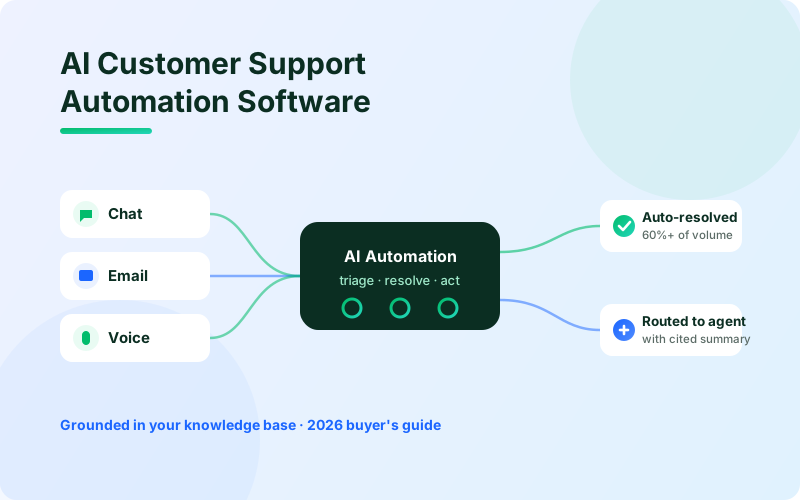
IrisAgent is a multi-agent AI support platform that resolves tickets across email, chat, voice, and agent copilot, grounded in your own knowledge base and support history. It is the closest match to Sierra's ambition without Sierra's price tag or timeline. IrisAgent is in production at Dropbox, Zuora, and Teachmint, and its Dropbox deployment saved 160,000 agent minutes while cutting average handle time by two minutes.
Where it wins: Validated accuracy above 95% through the Hallucination Removal Engine, which checks every response against your source before it is sent. Deploys in under 24 hours with no engineering resources and no ticket-volume minimum. Native integrations with Zendesk, Salesforce, Intercom, Freshworks, and Jira, so it layers onto your existing help desk. Flexible pricing, usage-based or resolution-based, so cost can match your ticket profile. It also adds trending-incident detection and per-ticket sentiment and escalation analysis that Sierra does not focus on.
Where it does not: IrisAgent is support-first, so teams that want a broad, brand-facing agentic assistant spanning many non-support workflows may find Sierra's autonomous scope wider. IrisAgent does not chase Fortune 500-only positioning, which is a feature for most buyers and a mismatch for a few.
Best for: Mid-market and enterprise support teams that want Sierra-class resolution, grounded accuracy, and same-day deployment without a six-figure floor.
2. Decagon
Decagon is an enterprise agentic AI platform with a polished product and a strong roster of consumer-brand logos. It is one of the closest peers to Sierra in positioning.
Where it wins: Strong agentic execution and a refined enterprise experience. Good fit for large consumer brands with the budget and internal resources to support a custom build.
Where it does not: Decagon does not publish pricing. Public data points to an annual platform fee around $50,000 combined with custom per-conversation or per-resolution fees, and a roughly six-week development implementation. Like Sierra, it is a heavier lift than teams that need to move this month can absorb.
Best for: Well-resourced enterprises that want a custom-built agentic deployment and can staff the implementation.
3. Intercom Fin
Fin by Intercom is a strong out-of-the-box AI agent, especially if you already run Intercom as your help desk.
Where it wins: Fast to turn on inside Intercom, mature product, and a clean per-resolution model at $0.99 per resolution. You pay when Fin resolves a conversation, which many teams find easier to reason about than an annual minimum.
Where it does not: The full cost adds up beyond the headline. Fin layers per-resolution fees on top of Intercom seats at roughly $29 to $132 per seat, plus a copilot add-on around $35. At high volume, per-resolution pricing can exceed a predictable flat plan, and Fin is happiest inside the Intercom ecosystem.
Best for: Teams already committed to Intercom that want native AI resolution without adding another vendor.
4. Ada
Ada is a mature, no-code automation platform with deep multilingual support and a long track record in customer service.
Where it wins: A polished no-code builder, strong language coverage, and brand recognition. A reasonable choice for teams that prioritize a self-service bot builder.
Where it does not: Ada's pricing is fully custom and quoted, reportedly ranging from $30,000 to more than $300,000 per year, with no self-service option to test first. Its heritage is deflection-first, so resolution depth on complex, action-taking tickets can lag newer agentic platforms.
Best for: Global brands that want a mature, multilingual no-code bot and can negotiate a custom contract.
5. Zendesk AI (formerly Forethought)
Forethought was acquired by Zendesk in March 2026, so its AI now sits inside the Zendesk ecosystem. If Zendesk is your help desk, that integration is the draw.
Where it wins: Deep native integration with Zendesk workflows and reporting. A logical path for Zendesk-committed teams that want AI without leaving the platform.
Where it does not: Historically Forethought carried a 20,000-ticket minimum and a 30-day to 90-day implementation, and the acquisition adds vendor lock-in risk for teams that want to stay help-desk independent. Per-resolution pricing is native to Zendesk, so your AI costs are tied to your help desk contract.
Best for: Zendesk-native teams that want first-party AI and are comfortable inside a single vendor.
6. Freshworks Freddy AI (Freshdesk)
Freddy AI is Freshworks' native agent, and it is the most accessible entry point on this list for teams already on Freshworks.
Where it wins: Low entry cost at roughly $0.10 per session, or $100 per 1,000 sessions, and a native fit inside Freshdesk and Freshservice. Easy to switch on if you are already a Freshworks customer.
Where it does not: Freddy bills per session, not per resolution, so you pay for every interaction whether or not the issue is solved. That model can get expensive on high-traffic, low-resolution queues, and Freddy is weaker on complex, cross-system agentic workflows than Sierra or IrisAgent.
Best for: Freshworks customers that want a low-cost native agent for straightforward, high-volume questions.
Sierra Alternatives Compared
Tool | Help desk model | Pricing | Time to deploy | Grounded accuracy |
|---|---|---|---|---|
IrisAgent | Layers onto Zendesk, Salesforce, Intercom, Freshworks, Jira | Flexible: usage-based or resolution-based | Under 24 hours | 95%+ validated |
Decagon | Custom build, enterprise | ~$50K platform fee plus custom per-resolution | ~6 weeks | Not published |
Intercom Fin | Native to Intercom | $0.99 per resolution plus seats | Days (inside Intercom) | Not published |
Ada | Platform-agnostic, custom | $30K to $300K+ per year, custom | Weeks | Not published |
Zendesk AI (Forethought) | Native to Zendesk | Per-resolution, tied to Zendesk | 30 to 90 days | Not published |
Freshworks Freddy | Native to Freshworks | ~$0.10 per session | Days (inside Freshworks) | Not published |
Sierra (reference) | Greenfield build, enterprise | $150K+ annual, plus $50K to $200K setup | Weeks to months | Not published |
Sierra AI Competitors at a Glance
Sierra AI's main competitors in 2026 are IrisAgent, Decagon, Intercom Fin, Ada, Zendesk AI, and Freshworks Freddy. They split into two groups: enterprise build-partners that quote six figures and deploy over months, and platform tools that install onto the help desk you already run and deploy in days.
IrisAgent: the closest like-for-like swap. Grounded resolution on your existing help desk, live in 24 hours, validated accuracy above 95%, and both usage-based and resolution-based plans.
Decagon: the most direct Sierra competitor on positioning and price. Strong enterprise build quality, median annual contract reported around $386,000, and a build cycle measured in weeks.
Intercom Fin: the strongest fit if you already run Intercom. Priced from $0.99 per outcome plus seats at $29 to $132 per month, which starts cheap and scales with volume.
Ada: mature brand automation with a long track record in ecommerce. Ada does not publish pricing, so budget it as a sales-led enterprise quote.
Zendesk AI (formerly Forethought): the path of least resistance for Zendesk-native teams, with the vendor lock-in that follows from Zendesk's 2026 acquisition of Forethought.
Freshworks Freddy AI (Freshdesk): the value option, best when you already run Freshdesk and want automation bundled rather than bought separately.
Sierra is not the only platform driving switching conversations this year. Teams switching from Intercom Fin are weighing a similar set of tradeoffs on pricing structure and vendor independence.
How to Choose the Right Sierra Alternative
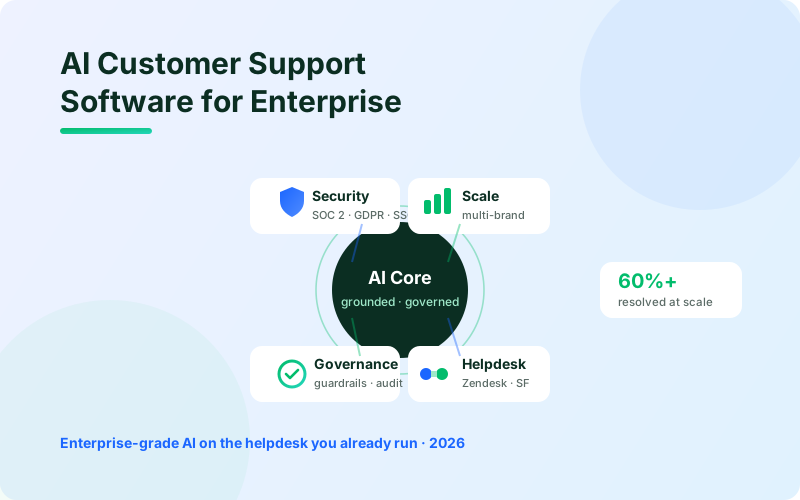
If your evaluation is being driven by a security review rather than by budget, our comparison of enterprise AI customer support software on trust and governance covers the same vendors against SOC 2, HIPAA, and data residency.
Start from the constraint that will actually block a deal, then work outward.
If budget predictability is the constraint, rule out annual minimums and custom quotes first. IrisAgent's flat pricing and Freshworks' per-session model are the two most transparent options, though the per-session math turns against Freddy at high volume.
If you are locked to a help desk, let that decide. Fin is the natural pick on Intercom, Zendesk AI on Zendesk, and Freddy on Freshworks. IrisAgent is the choice when you want AI that is independent of any single help desk and integrates with all of them.
If accuracy is the constraint, ask every vendor for a published, validated number and treat "not published" as an unanswered question. IrisAgent is the only option here that commits to a validated accuracy figure above 95%.
And if timeline is the constraint, the multi-month builds (Sierra and Decagon) come off the list, and same-day options move up. You can see the full head-to-head on the IrisAgent vs Sierra comparison page, or review the wider field on the IrisAgent vs alternatives overview.
What Sierra AI costs in 2026, and what moves the number
Sierra prices at the enterprise end and does not publish a rate card. The commonly reported entry point is a $150,000 annual floor plus a $50,000 to $200,000 implementation engagement, which puts a realistic first-year commitment between $200,000 and $350,000 before a single ticket is resolved.
Decagon sits in similar territory, with a median annual contract reported around $386,000 and a build cycle measured in weeks rather than days. Intercom Fin is the one competitor here that publishes its numbers: $0.99 per resolved outcome plus seats at $29, $85, or $132 per month depending on plan, which starts low and scales with volume in a way that is hard to forecast. Ada and Sierra both keep pricing behind a sales conversation.
The number that actually decides the budget conversation is not the license. It is the implementation window. A six-week build cycle means a quarter of paying for something that resolves nothing, and that cost never appears on the quote. IrisAgent deploys in 24 hours onto your existing help desk and offers both usage-based and resolution-based plans, so the pricing structure can be matched to the ticket profile rather than the other way round.
Ask every vendor on the shortlist for the fully loaded first-year number, implementation included. The gap between the license and that number is the real comparison.
Next Steps
Choosing a Sierra alternative comes down to five decisions:
Set your budget model first: flat, per-resolution, or per-session.
Let your help desk narrow the field before you compare features.
Demand a validated accuracy number and reject "not published."
Weigh time to value against how quickly leadership expects results.
Confirm whether a support ops lead can own the tool without engineering.
For most mid-market and enterprise teams, the best Sierra alternative is the one that delivers grounded resolution and same-day deployment without a six-figure commitment. That is where IrisAgent fits: 95%+ validated accuracy, a 24-hour deploy, and help-desk independence, with usage-based or resolution-based pricing. See how the AI for customer support platform works, compare the field in our best Decagon alternatives guide, and book a 20-minute demo to run your own numbers.
Frequently Asked Questions
What is the best alternative to Sierra AI?
For most support teams, IrisAgent is the best Sierra alternative. It matches Sierra's goal of full ticket resolution across email, chat, and voice, but deploys in under 24 hours, layers onto your existing help desk, and delivers validated accuracy above 95% without a weeks-long custom build. Decagon, Intercom Fin, Ada, Zendesk AI, and Freshworks Freddy are also credible alternatives depending on your help desk and budget.
How much does Sierra AI cost?
Sierra does not publish pricing. Contracts are quote-only and outcome-based, with no self-serve tier. That opacity, plus a weeks-to-months implementation, is a common reason teams evaluate alternatives that publish a price and go live in 24 hours.
Why do teams switch from Sierra AI?
Teams look past Sierra for three main reasons: quote-only contracts that are hard to model before a sales cycle, a high-touch implementation that runs weeks to months, and a greenfield architecture that does not layer cleanly onto an existing help desk. Sierra is built for Fortune 50 programs with time for a custom build, so teams that need faster or more integrated options look elsewhere.
Is IrisAgent a good Sierra alternative?
Yes. IrisAgent delivers the same core outcome as Sierra, automated resolution of real support tickets, with validated accuracy above 95% from its Hallucination Removal Engine. It deploys in under 24 hours, integrates natively with Zendesk, Salesforce, Intercom, Freshworks, and Jira, and offers flexible pricing with both usage-based and resolution-based plans. It is in production at Dropbox, Zuora, and Teachmint, and it fits teams that want Sierra-class capability without a weeks-long program.
What should I look for in a Sierra alternative?
Compare on six criteria: grounded accuracy validated against your own data, a pricing model you can predict, time to deploy, native fit with your help desk, whether a support ops lead can own it without engineering, and whether the AI truly resolves tickets rather than just deflecting them. Prioritize the two or three that are non-negotiable for your team, then match a vendor to those rather than to a feature checklist.
Sierra vs Decagon: which is cheaper?
Neither Sierra nor Decagon publishes pricing. Both are quote-only enterprise programs. Decagon's implementation runs about six weeks versus Sierra's weeks-to-months high-touch build. Time-to-value and whether engineering keeps the tools is the real split, not a published floor neither vendor has.
Is Intercom Fin cheaper than Sierra?
At low to moderate volume, often yes, because Fin bills $0.99 per resolution (as of July 2026) rather than a quote-only enterprise contract. Model the full stack before you decide: Fin sits on top of Intercom seats at roughly $29 to $132 per seat, plus a copilot add-on around $35. At high resolution volume, per-resolution billing on top of seats can exceed a usage-based plan, so model both. Fin works best if Intercom is already your help desk.
How fast can I deploy a Sierra alternative?
It depends on the architecture, not the vendor's sales cycle. Tools that layer onto your existing help desk, such as IrisAgent, install from the marketplace and go live in under 24 hours with no engineering resources. Greenfield platforms like Sierra run weeks to months with a dedicated implementation team, and Decagon lands around six weeks. If leadership wants AI resolving tickets this quarter, deployment model is the constraint that matters most.
Who are Sierra AI's competitors?
Sierra AI's main competitors in 2026 are IrisAgent, Decagon, Intercom Fin, Ada, Zendesk AI, and Freshworks Freddy. They fall into two groups. Decagon and Sierra are enterprise build-partners that quote six figures and deploy over weeks or months. IrisAgent, Intercom Fin, Zendesk AI, and Freshworks Freddy install onto a help desk you already run and deploy in days. Which group fits depends less on features than on whether you have a quarter to spend on implementation.

Loading the form. Prefer email? Reach us at info@irisagent.com or call +1 617 249 3312.