
AI for Telecom Outage and Service-Status Deflection
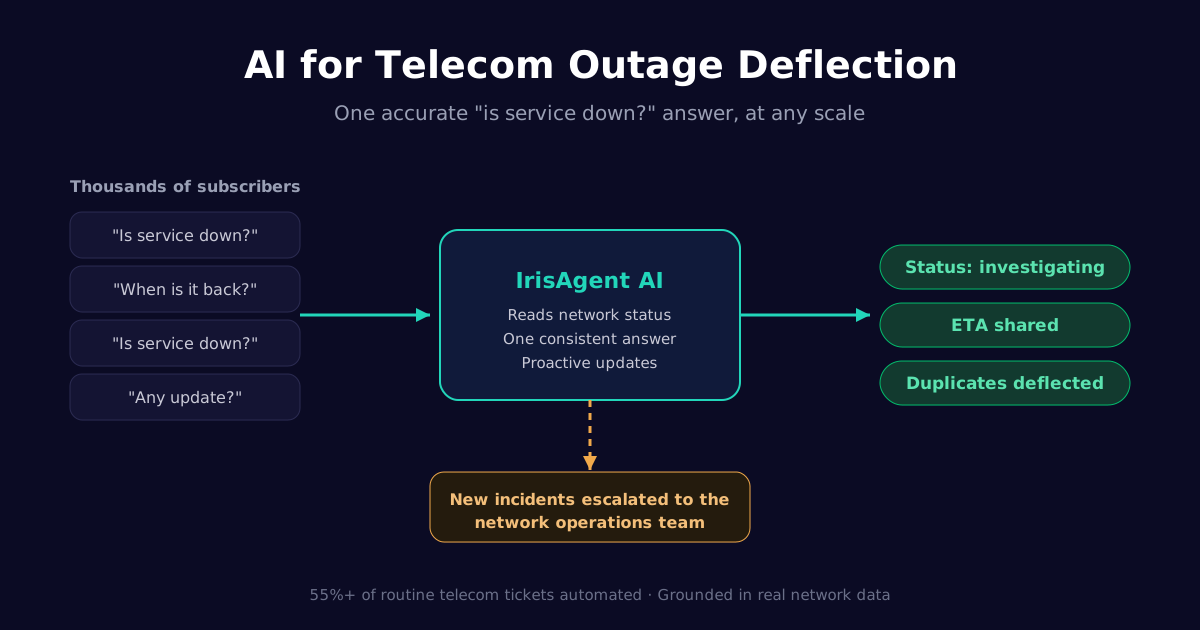
AI for telecom outage and service-status deflection is conversational AI that reads your network status, gives every affected customer one accurate answer at scale, sends proactive updates, and escalates genuinely new issues, so agents are not buried during a disruption. It turns the spikiest event in telecom support into a controlled, grounded response. IrisAgent resolves 55%+ of routine telecom tickets automatically and grounds every status answer in real network data.
An outage is the moment telecom support is tested hardest. Within minutes, thousands of customers ask the same two questions: is service down, and when will it be back. Handled by humans alone, that wave overwhelms the queue and buries the tickets that still need real work.
Why outages are the spikiest event in telecom support
No other support event compares to a network outage for sheer velocity. Volume can multiply in minutes and stay elevated for hours until service is restored. The questions are near-identical, the answer is the same for everyone in the affected area, and the emotional stakes are high because customers cannot work, stream, or call.
That combination, high volume plus a single correct answer, is exactly what grounded AI is built to absorb. Deflecting the duplicate questions protects your first-response time on everything else in the queue.
How AI deflects outage and service-status tickets
Outage deflection works in three layers, from reactive answers to proactive prevention.
One grounded answer at any scale
When a customer asks about service, the AI reads your network status and incident data and returns one accurate, consistent answer in seconds: the status, the affected area, and an estimated restoration time. It scales to thousands of simultaneous conversations without the queue backing up.
Proactive outage notifications
The highest-leverage tactic is removing the reason to contact support at all. When your monitoring flags a disruption, the AI can proactively message affected customers with the status and expected timeline before they open a ticket. Pair this with proactive issue detection to get ahead of the volume.
Detecting new incidents from ticket clusters
Not every spike is a known outage. When the AI sees a cluster of related reports, like dropped connections from one region, it raises a real-time alert before the issue is formally declared. That early signal helps network and support teams confirm and respond faster. It also keeps after-hours coverage intact when no one is watching the queue.
Keeping outage answers accurate and trustworthy
An outage is the worst time to guess. A chatbot that invents a restoration time makes the disruption worse and erodes trust. Grounded AI ties every answer to live network and incident data and validates it before sending, keeping hallucinations under 5%.
Just as important, the AI knows what it does not know. If there is no confirmed status for a specific issue, it says so and escalates rather than inventing an answer. That honesty is what preserves customer trust during the most sensitive moments.
How IrisAgent handles telecom outages
IrisAgent reads your network status and incident systems and resolves service-status questions from one grounded AI support platform. It deploys in about 24 hours on your existing help desk, so outage deflection is live before your next major incident.
Beyond deflection, automated sentiment analysis surfaces the frustrated, at-risk accounts inside the outage traffic, so retention outreach can start while the incident is still open. The result is fewer duplicate tickets, faster incident confirmation, and protected first-response times.
Next steps
AI for telecom outage and service-status deflection converts a chaotic volume spike into a controlled, grounded response. To get started:
Give one accurate, network-grounded status answer to every customer, at any scale.
Send proactive notifications so affected customers never need to open a ticket.
Use ticket-cluster alerts to confirm new incidents faster, and escalate them to the network team.
See the full AI customer support for telecom overview, or book a 20-minute demo to see outage deflection on your own help desk.
Frequently Asked Questions
How does AI deflect telecom outage tickets?
During an outage, thousands of customers ask the same question at once: is service down, and when will it be back. AI reads your network status and incident data and gives every one of them a single accurate, consistent answer in seconds, deflecting the duplicate tickets that normally bury agents. IrisAgent also proactively updates affected subscribers and collects structured details on genuinely new issues, which shortens the time to confirm a real outage.
Can AI proactively notify customers about outages?
Yes. When your monitoring or incident systems flag a service disruption, AI can proactively message affected customers with the status, the area impacted, and an estimated restoration time, before they open a ticket. Proactive notification is one of the highest-leverage deflection tactics in telecom because it removes the reason to contact support at all. IrisAgent ties these updates to real network data so the message is accurate and consistent across every channel.
How much support volume do telecom outages create?
Outages are the single spikiest event in telecom support. Inbound volume can multiply within minutes and stay elevated until service is restored, overwhelming agents with near-identical status questions. Because the questions are repetitive and the answer is the same for everyone in the affected area, this is exactly the volume grounded AI is built to absorb. Deflecting it protects first-response times on the tickets that still need a human.
Does outage AI give accurate status answers?
Only if it is grounded. A chatbot that guesses at restoration times makes an outage worse. IrisAgent reads live network and incident data and validates each response before sending, so the status it reports matches reality, with hallucinations kept under 5%. If the system has no confirmed status for a specific issue, the AI says so and escalates rather than inventing an answer, which preserves customer trust during the most sensitive moments.
Can AI detect emerging telecom issues from ticket patterns?
Yes. Beyond deflecting known outages, IrisAgent surfaces real-time alerts when it sees a cluster of related tickets, like a spike in dropped-connection reports from one region, before it is formally declared an incident. This early signal helps network and support teams confirm and respond to emerging issues faster. It turns the support queue into a detection sensor instead of just a cost center.
Loading the form. Prefer email? Reach us at info@irisagent.com or call +1 617 249 3312.