
Fintech Support Compliance and AI Guardrails
Fintech support compliance with AI guardrails means deploying AI to handle customer support in a regulated financial environment while a set of architectural controls keeps it on the right side of the line: the AI is grounded in approved sources, scoped so it never makes a regulated decision, required to escalate edge cases to a human, and logged end to end for audit. The short answer to "is AI safe for regulated support" is yes, but only when the boundary is enforced by the system rather than trusted to a prompt. AI is safe explaining outcomes, guiding customers, and doing the legwork. It is not safe deciding KYC approvals, adjudicating disputes, or giving regulated financial advice. IrisAgent is built so the AI resolves the routine support load inside those guardrails and hands the regulated judgment calls to your compliance team with full context.
That is the headline. The rest of this guide is the operator's version: where the safe-versus-unsafe line actually sits, the four guardrails that keep AI compliant, how to handle escalation and audit, and what to measure.
Key takeaways - The question is not "is AI compliant" but "which support tasks are safe to automate and which must stay with a human." Get the line right and AI lowers risk; get it wrong and it creates liability. - AI is safe on the support side: explaining requirements and outcomes, guiding customers, checking status, and preparing cases. It must not make regulated decisions like KYC approvals, fraud adjudication, or personalized financial advice. - Four guardrails make it work: grounding in approved sources, hard scope limits, mandatory escalation of edge cases, and a complete audit trail. - The guardrail has to live in the architecture, not the prompt. A model instructed to "not give advice" will eventually drift; a system that cannot take the action will not. - Track three numbers: escalation accuracy, grounded-answer rate, and audit-trail completeness.
The real question: which support tasks are safe to automate
Most "is AI safe for fintech" debates go wrong by treating the whole of support as one yes-or-no decision. It is not. Support in a regulated fintech is a mix of tasks, and they sit on very different sides of the compliance line.
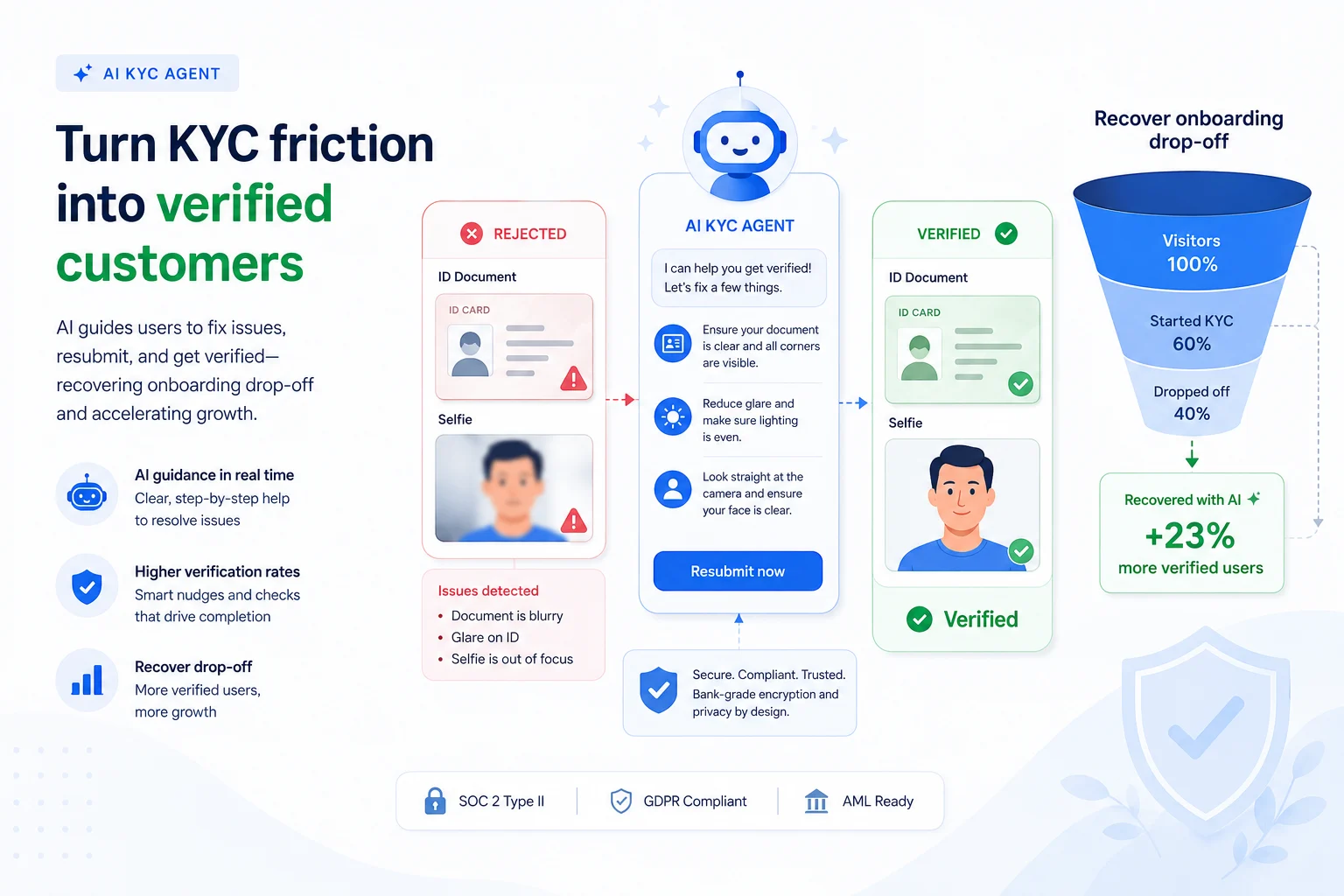
On the safe side are the high-volume interactions that are about helping a customer understand and navigate: explaining what documents KYC requires, decoding why a payment was declined, checking a verification or transaction status, walking through a resubmission, and preparing a complete dispute case. None of these is a regulated decision. They are the legwork around the decision, and they are exactly where support time is spent.
On the unsafe side are the regulated decisions themselves: approving or denying a KYC identity, adjudicating whether a transaction was fraud, deciding a chargeback, or giving personalized financial or lending advice. These are governed by frameworks like FATF customer due diligence guidance, card-network and consumer-protection rules, and the CFPB's 2023 expectations for chatbots in consumer finance. They carry real regulatory liability and they belong to your compliance and risk teams.
The win is that the safe side is the large side. The bulk of support volume is navigation and explanation, not regulated judgment. Automating that safely is what frees your compliance specialists to spend their time only on the calls that genuinely need them, which is covered more broadly in the guide on AI customer service for banking and financial services.
The four guardrails that keep AI compliant in fintech support
A safe deployment is not a matter of a careful prompt. It is four concrete controls built into the system.
1. Grounding in approved sources
The AI answers only from your approved, current content: your documented policies, your accepted-document rules, your real transaction records. It does not improvise from training data, and it does not guess. Grounding is what prevents the hallucinated answer that becomes a compliance incident, and it is the foundation every other guardrail sits on.
2. Hard scope limits
The AI is architecturally prevented from taking regulated actions. It cannot approve an identity, release a held transaction, or adjudicate a dispute, because those capabilities are simply not wired to it. This is the difference that matters: a model told not to do something can be talked into it, but a system that has no path to the action cannot perform it regardless of how the conversation goes. The KYC version of this boundary is detailed in the KYC and identity verification support guide, and it reinforces the automate KYC verification use case.
3. Mandatory escalation of edge cases
When a case crosses from support into regulated territory, a possible sanctions hit, a suspected fraud pattern, a request for advice, the AI does not stretch to handle it. It escalates to a human specialist with the full context attached. Confidence thresholds and intent detection decide when to hand off, and the default on anything ambiguous is to escalate, not to guess. This is the same discipline that powers agent assist: the AI does the legwork and the human owns the judgment.
4. A complete audit trail
Every interaction is logged end to end: the customer request, the sources the AI used, the answer it gave, the action it took or declined, and any escalation. Regulated support has to be reconstructable after the fact, and a complete audit trail is what makes the deployment defensible to a regulator or an internal risk review. Frameworks like the NIST AI Risk Management Framework treat this kind of traceability as core to trustworthy AI.
How escalation and audit work together in practice
Here is the workflow for a case that starts as routine support and turns into a compliance edge case.
Intake. A customer asks why their account is on hold. The AI authenticates them and reads the account state.
Grounded response. For the routine part, the AI explains the documented reason and the standard next step, from approved sources.
Boundary detection. The AI recognizes that resolving the hold would require a regulated review decision, which is outside its scope.
Escalation with context. The AI routes the case to a compliance specialist with the full record: the customer's question, the account state, the sources consulted, and what it has and has not told the customer.
Audit logging. The entire chain is logged, so the handoff and the eventual decision are fully reconstructable.
The customer gets a fast, accurate answer on everything that is safe to answer, and the regulated decision reaches a human who is set up to make it quickly. Nothing about the customer experience requires the AI to step over the line, because the line is built into the flow. This is the same agentic capability the fintech support AI page describes, operating inside compliance guardrails.
Where compliant AI support breaks (and how to keep it safe)
Even a well-designed deployment fails in predictable ways if you are not careful.
It breaks when the guardrail lives only in the prompt. A model instructed to avoid regulated decisions will, over enough conversations and edge cases, eventually be steered across the line. The fix is architectural scope limits, so the unsafe action is impossible, not merely discouraged.
It breaks when grounding is stale. If the AI answers from outdated policy, it gives compliant-sounding but wrong answers. Keep the approved sources current and treat content freshness as a compliance control, not a nicety.
It breaks when escalation is tuned for deflection. If the system is optimized to close tickets, it will under-escalate the cases it should hand off. Tune the default toward escalation on anything ambiguous, and measure escalation accuracy, not just deflection.
What to measure
Three numbers tell you whether your compliant AI deployment is actually safe, not just fast.
Escalation accuracy: the share of cases that should have gone to a human that actually did. This is the most important safety metric, because the failure mode that matters is the AI handling a case it should have escalated.
Grounded-answer rate: the share of answers traceable to an approved source. A high grounded rate is what keeps hallucinated, non-compliant answers out of regulated conversations.
Audit-trail completeness: the share of interactions with a full, reconstructable log. This is what makes the deployment defensible under review, and it should be effectively total.
Model the support savings that come from safely automating the large, safe side of the queue with the ROI calculator.
How compliant AI support fits the rest of your fintech stack
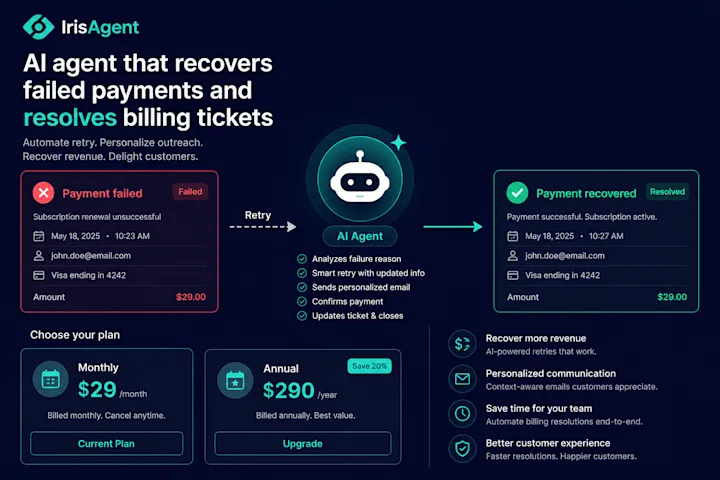
Compliance guardrails are not a separate feature, they are the operating condition for everything else AI does in fintech support. The same grounded, scope-limited, audited agent that safely explains a KYC requirement also recovers a failed payment, prepares a transaction dispute for review, and answers account questions, all inside the same boundary. The strategic picture of where AI fits across the regulated fintech support journey lives on the fintech support AI hub, and the broader product capability is covered on the AI for customer support page.
Done right, compliant AI support is not a constraint on automation, it is what makes automation safe enough to deploy at scale in a regulated business.
Frequently Asked Questions
Is AI safe to use for regulated fintech customer support?
Yes, for the support side of the work, when the boundary is enforced by the system. AI is safe explaining requirements and outcomes, guiding customers, checking status, and preparing cases. It should not make regulated decisions like KYC approvals, fraud adjudication, or personalized financial advice. The safety comes from architectural guardrails, not from a carefully worded prompt.
What guardrails keep AI compliant in financial services support?
Four controls: grounding so the AI answers only from approved sources, hard scope limits so it cannot take regulated actions, mandatory escalation so edge cases reach a human, and a complete audit trail so every interaction is reconstructable. Together these keep the AI on the support side of the compliance line.
Can AI give financial or lending advice to customers?
No. Personalized financial and lending advice is a regulated activity that should stay with qualified humans. A compliant support AI explains products, requirements, and outcomes factually and escalates any request that crosses into advice, rather than generating recommendations itself.
Why must the compliance boundary live in the architecture instead of the prompt?
Because a prompt is a soft instruction that conversations can erode over time, while an architectural scope limit removes the capability entirely. If the AI has no path to approve an identity or release a transaction, it cannot do so no matter how the conversation goes. That is what makes the deployment defensible.
Loading the form. Prefer email? Reach us at info@irisagent.com or call +1 617 249 3312.