IrisAgent vs Chatbase: Built for Support Queues, Not Just Website Chat
a website, priced in message credits. IrisAgent runs
natively inside Zendesk, Salesforce, Intercom, and
Freshworks, validates every answer against your own
data, and is live in under 24 hours.

What's the difference between IrisAgent and Chatbase?
Chatbase is a self-serve AI agent builder. You point it at your website or docs, author plain-language procedures, and deploy an agent across chat, email, and voice, all without engineering. IrisAgent is a support resolution platform that layers onto the helpdesk your team already runs, trains on your knowledge base, historical tickets, macros, and linked product bugs, and validates every answer through a Hallucination Removal Engine before it reaches a customer.
- Where the AI lives: Chatbase is widget-first with its own inbox. IrisAgent runs natively inside Zendesk, Salesforce, Intercom, and Freshworks, plus Jira for product bug context.
- Pricing: Chatbase meters message credits, from a free tier up to $400 per month for 15,000 credits, and credits are consumed at 1 to 6 per response depending on model. IrisAgent offers flexible usage-based and resolution-based plans.
- Accuracy: IrisAgent's Hallucination Removal Engine validates every response against your own data at 95%+ accuracy. Chatbase grounds answers in uploaded sources without a separate validation step.
- Scope: IrisAgent adds an agent copilot, AutoQA across 100% of conversations, and trending incident detection. Chatbase focuses on the customer-facing agent and conversation analytics.
By the IrisAgent team · Last updated August 17, 2026
Why support teams choose IrisAgent over Chatbase
A website chat agent and a support resolution platform solve different problems
Native in Your Helpdesk
Runs inside Zendesk, Salesforce, Intercom, and Freshworks, on the same queue your agents work. Not a widget bolted to the side.
Hallucination-Free AI
The Hallucination Removal Engine validates every response against your own data before it reaches a customer.
No Credit Meter
Usage-based and resolution-based plans instead of message credits that drain at 1 to 6 per response depending on model.
Copilot and QA Included
Agent copilot, AutoQA across every AI and human conversation, and trending incident detection are part of the platform.
The verdict
Last verified: August 2026Chatbase is the stronger choice for founders, small teams, and marketing owners who want a capable AI agent live on a website, docs site, or storefront today, on a published self-serve plan with a real free tier and no implementation project. IrisAgent is the stronger choice for support organizations running Zendesk, Salesforce, Intercom, or Freshworks that need answers validated against their own data, an agent copilot for the humans handling escalations, AutoQA across every conversation, and pricing that tracks outcomes rather than a message-credit balance.
IrisAgent vs Chatbase: Feature-by-feature comparison
 | Chatbase | |
|---|---|---|
| Pricing Model |  Flexible pricing with both usage-based and resolution-based plans, so you pick the structure that matches your ticket mix No message-credit meter to run dry, and no per-seat cap on how many agents can work in the platform |  Message credits, not resolutions: Free (50 credits), Hobby $32/month, Standard $120/month for 4,000 credits, Pro $400/month for 15,000 credits (published pricing, August 2026) Add-ons stack on top: $40 per 1,000 auto-recharge credits, $300 per extra agent per year, and $118 a year to remove the Powered by Chatbase badge |
| Cost Predictability | Pricing tracks the outcome you care about, so a longer conversation does not quietly cost more than a short one Every AI and human conversation stays covered without a balance that can hit zero | One customer message does not equal one credit: Chatbase's own docs list 1 to 6 credits per response depending on model, so Claude Sonnet costs 3 credits and Claude Opus costs 5 to 6 If the credit balance reaches zero without auto-recharge, the agent stops answering and shows "This AI Agent is currently unavailable" |
| Where the AI Lives | Runs natively inside Zendesk, Salesforce, Intercom, and Freshworks, alongside the agents already working those queues Links tickets to known product bugs through Jira, so support sees engineering context on the same ticket | Built widget-first, with its own helpdesk inbox as the primary workspace for AI and human conversations The Zendesk integration replies to tickets and escalates with context, but the agent does not run inside the Zendesk agent workspace itself |
| AI Accuracy & Hallucinations | 95%+ validated accuracy with a proprietary Hallucination Removal Engine Every response is validated against your knowledge base and real support data before it reaches a customer | Answers are grounded in the sources you upload, with model choice and prompt instructions as the main accuracy controls No separate validation layer that checks a confident wrong answer before it is sent |
| Training Data & Coverage | Trains on knowledge base articles, historical tickets, macros, and linked product bugs, so it covers the long tail your KB never documented Learns how your team actually resolved past tickets, not only what the help center says | Trained primarily on uploaded sources: website content, files, Q&A pairs, and plain-language procedures you author Tickets as a training source is gated to the Pro plan and above |
| Setup & Time to Value | Live in under 24 hours on your existing helpdesk, configured in plain English by support leaders No widget to design or procedure library to author before the AI resolves real tickets | Genuinely fast to a first working bot: sign up, point it at a site or docs, and you have an agent in minutes Getting from a working bot to production support coverage means authoring procedures and wiring actions for each flow |
| Team Size & Seats | Built for support organizations, with no workspace seat ceiling that forces a plan change as the team grows | Workspace seats are capped by plan: 1 on Free, 2 on Hobby, 3 on Standard, and 5 on Pro, with more only on Enterprise A support team larger than five people needs an Enterprise conversation to get everyone into the workspace |
| AI Copilot for Agents | Built-in copilot with real-time resolution suggestions, response drafting, and ticket summarization Proactive recommendations drawn from similar tickets and linked bug data | Emphasis is on the customer-facing agent and draft replies, rather than a copilot working next to human agents in their own helpdesk |
| Conversation QA | AutoQA scores 100% of AI and human conversations against plain-English rules as part of the platform QA findings feed straight back into knowledge gaps and AI tuning | Analytics cover resolution rate, escalations, sentiment, and conversation summaries, without automated QA scoring of human agent conversations |
| Trending Incidents & Proactive Insights | Automatic trending topic discovery with proactive alerts on emerging issues Real-time escalation prediction using customer health, sentiment, and revenue signals | Reporting centers on conversation-level metrics, without trending incident detection tied to product bugs |
| Security & Compliance | SOC 2 Type II certified and GDPR compliant on every plan, and your data is never used to train models for anyone else Data residency options for regulated industries like fintech and healthcare | SSO, audit logs, custom roles and permissions, HIPAA eligibility, and zero data retention are all Enterprise-only per the published pricing page Regulated teams on Standard or Pro cannot buy the compliance controls without moving to a custom contract |
Chatbase pricing, as published
Credit where it is due: Chatbase publishes its full rate card, offers a free tier you can actually use, and gets a working agent live in minutes without a sales call. That transparency and speed are real advantages. Here is what the plans look like, taken from chatbase.co/pricing in August 2026.
| Plan | Price | Message credits / month | Workspace seats |
|---|---|---|---|
| Free | $0 | 50 | 1 |
| Hobby | $32/month ($384/year) | 700 | 2 |
| Standard | $120/month ($1,440/year) | 4,000 | 3 |
| Pro | $400/month ($4,800/year) | 15,000 | 5 |
| Enterprise | Custom | Higher limits | Custom |
Add-ons sit on top of those plans: $40 per 1,000 auto-recharge credits, $300 per extra agent per year, and $118 a year to remove the Powered by Chatbase badge.
The thing to model before you commit: a message credit is not a conversation. Chatbase's own documentation lists 1 to 6 credits per AI response depending on the model, with Claude Sonnet class models at 3 credits and Claude Opus at 5 to 6. On the Pro plan, 15,000 credits works out to roughly 5,000 responses a month at 3 credits each, and a multi-turn support conversation burns several. If the balance hits zero without auto-recharge, the documentation says the agent stops answering and shows a "currently unavailable" message, which is exactly the wrong outcome during a traffic spike. IrisAgent offers both usage-based and resolution-based plans, so your bill tracks the outcome instead of a per-model multiplier. Compare IrisAgent pricing →
See IrisAgent in action
Connect the helpdesk you already run and start resolving real tickets in under 24 hours.







Inside your helpdesk, not beside it
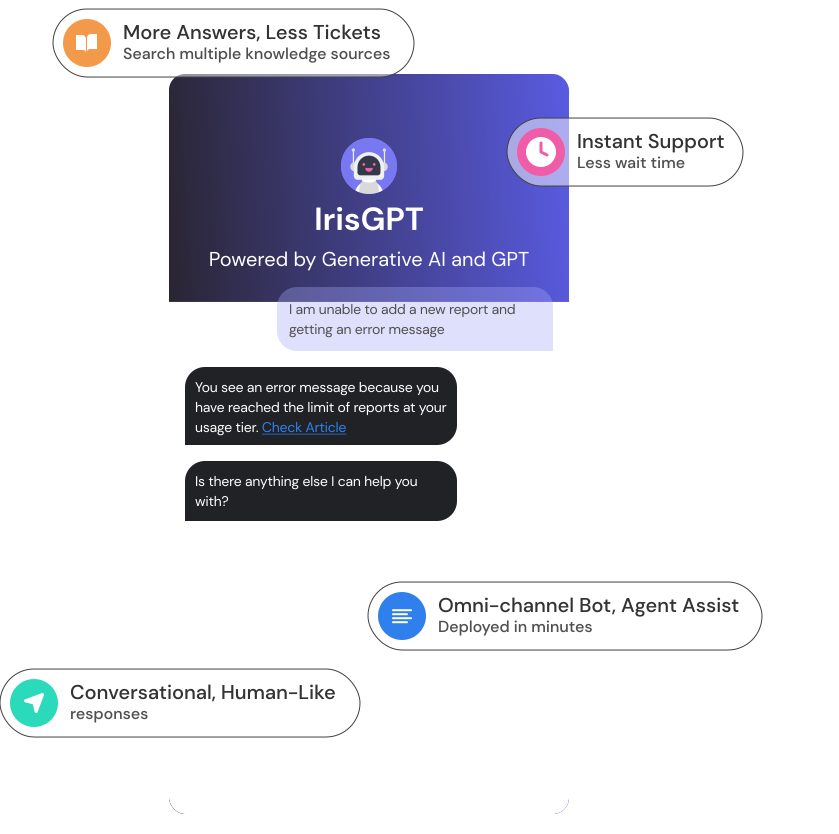
Grounded is the floor. Validated is the bar.
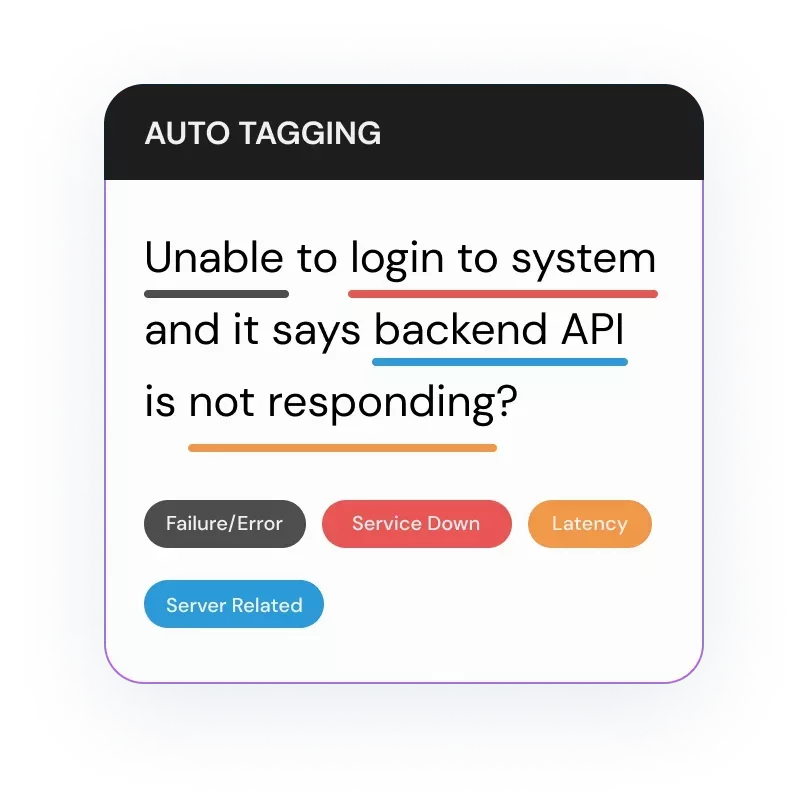
The rest of the support operation, not just the bot
Which one is right for you?
An honest look at where each platform is the better fit.
Where Chatbase is the better fit
- Fastest path to a working agent: Sign up, point it at a website or docs site, and you have a functioning AI agent in minutes. No sales call, no implementation plan, and a free tier you can actually try.
- Genuinely low entry price: Hobby at $32 a month and Standard at $120 a month put a capable multi-channel agent within reach of a small team, and the rate card is published rather than quote-only.
- Website, docs, and storefront use cases: Lead capture, product guidance, and FAQ deflection on a web page are what the product was built for, and it does them well across chat, WhatsApp, Slack, and voice.
- Broad model choice, no code required: Plain-language procedures with built-in actions, plus a wide menu of frontier models, so a non-technical owner can build and tune the agent without engineering.
Where IrisAgent is the better fit
- Native inside the helpdesk you already run: Installs into Zendesk, Salesforce, Intercom, and Freshworks so the AI works the same queue as your agents, with Jira linking tickets to known product bugs.
- Validated answers, not just grounded ones: The Hallucination Removal Engine checks every response against your own data before it goes out, for 95%+ validated accuracy.
- Learns from tickets, not only uploads: Trains on knowledge base articles, historical tickets, macros, and linked bugs, so it covers the long tail your help center never documented.
- Pricing that tracks outcomes, not credits: Usage-based and resolution-based plans, with no message-credit balance to forecast against a per-model multiplier and no seat ceiling as the team grows.
- Built for the whole support operation: Agent copilot, AutoQA across 100% of AI and human conversations, trending incident detection, and sentiment-based escalation prediction in one platform.
Outgrowing a website chat agent? That is the usual reason teams look. IrisAgent deploys on the helpdesk you already run in about a day, trains on your own ticket history, and you can pilot it on real past tickets before you commit to anything.
Considering a Chatbase alternative?
We've got answers.
Ready to move from website chat to real ticket resolution?
Join Dropbox, Zuora, and InvoiceCloud teams resolving 1M+ tickets a month with grounded, hallucination-free AI running inside the helpdesk they already own.
Zooming out from a single vendor comparison, see how AI customer support software fits into your stack, from ticket automation to knowledge base grounding.