IrisAgent vs Lorikeet: Grounded AI Support Without a Workflow Build
charges a platform fee plus a rate per resolution.
IrisAgent trains on your tickets and knowledge base,
so it answers the long tail from day one. Live in
under 24 hours with 95%+ validated accuracy.

What's the difference between IrisAgent and Lorikeet?
Lorikeet is a workflow-first AI support agent built for complex, high-stakes tickets in regulated industries such as fintech and healthtech, and it says openly that its agent runs on workflows rather than RAG. IrisAgent is a grounded, no-code AI support platform that trains on your knowledge base, historical tickets, macros, and linked product bugs, validates every answer through a Hallucination Removal Engine, and goes live on your existing helpdesk in under 24 hours.
- Coverage: Lorikeet resolves the flows your team has authored. IrisAgent answers the long tail from your existing tickets and knowledge base without a workflow library.
- Setup: IrisAgent ships in 24 hours. Lorikeet publishes no deployment timeline and starts with a demo plus SOP-to-workflow mapping.
- Accuracy: IrisAgent's Hallucination Removal Engine validates every response against your data at 95%+ accuracy. Lorikeet contains risk by keeping the agent inside deterministic workflows.
- Pricing: Lorikeet charges $1,500 to $4,000 per month billed annually, plus $0.80 to $0.95 per chat, email, or SMS resolution and metered add-ons. IrisAgent offers flexible usage-based and resolution-based plans.
By the IrisAgent team · Last updated August 14, 2026
Why support teams choose IrisAgent over Lorikeet
Answer every question, not only the ones you scripted
Fastest Time to Value
Go live in under 24 hours. Lorikeet starts with a demo and an SOP-to-workflow mapping exercise before broad coverage.
Long Tail Covered
Trains on your knowledge base, tickets, macros, and bugs. No workflow library to author before the AI resolves anything.
Hallucination-Free AI
The Hallucination Removal Engine validates every response against your own data before it reaches a customer.
Copilot and QA Included
Agent copilot, AutoQA, and trending incidents are part of the platform. Lorikeet meters QA and routing per ticket.
The verdict
Last verified: August 2026Lorikeet is the stronger choice for fintech, healthtech, and other regulated teams whose hardest tickets are multi-step transactions against internal systems, where deterministic workflows, granular permissions, and auditable execution matter more than breadth of coverage, and whose teams can author and maintain those workflows. IrisAgent is the stronger choice for support teams that need grounded, hallucination-free answers across the whole ticket mix, live on their existing helpdesk in 24 hours, with an agent copilot, AutoQA, and trending incident detection included rather than metered per ticket.
IrisAgent vs Lorikeet: Feature-by-feature comparison
 | Lorikeet | |
|---|---|---|
| Pricing Model |  Flexible pricing with both usage-based and resolution-based plans, so you can pick the model that matches your ticket mix Agent copilot, AutoQA, and trending incident detection are part of the platform, not separately metered add-ons |  Platform subscription plus per-resolution charges: $1,500/month (Start) or $4,000/month (Scale), billed annually, on top of $0.80 to $0.95 per chat, email, or SMS resolution Routing, tagging, and automated QA are metered separately at $0.25 to $0.30 per ticket, and voice resolutions run $1.20 to $1.50 each (published pricing, August 2026) |
| AI Architecture | Grounded retrieval across your knowledge base, historical tickets, macros, and linked product bugs, so the long tail is covered without hand-authored workflows Specialized agents for chat, email, voice, and agent copilot, with your choice of underlying model (OpenAI, Anthropic, Azure, and more) | Workflow-first design: Lorikeet states its agent is built on workflows rather than RAG, so coverage tracks the workflows your team has authored Unmapped and long-tail questions need new workflow authoring before the AI can resolve them |
| Setup & Time to Value | Live in under 24 hours on your existing helpdesk, configured in plain English by support leaders No workflow library to build before the AI starts resolving real tickets | No published deployment timeline: onboarding starts with a custom demo and mapping your SOPs into workflows Front-loaded workflow build before coverage broadens across ticket types |
| AI Accuracy & Hallucinations | 95%+ validated accuracy with a proprietary Hallucination Removal Engine Every response is validated against your knowledge base and real support data before it reaches a customer | Accuracy is contained through deterministic workflow guardrails and escalation, without a separate response validation layer The headline 99% accuracy figure is vendor-reported and not broken out by channel or ticket type |
| Integration with Existing Tools | Native integrations with Zendesk, Salesforce, Intercom, and Freshworks, plus Jira for linking tickets to known product bugs Layers onto the helpdesk you already run, with no rip and replace | Packaged helpdesk integrations (Zendesk, Intercom, HubSpot, Front, Salesforce) vary by plan tier Anything beyond the packaged set is wired through APIs, MCP, and webhooks, which pulls engineering into the build |
| Target Market & Fit | Built for mid-market and enterprise support teams across B2B SaaS, fintech, education, and consumer, with Dropbox, Zuora, InvoiceCloud, and Teachmint in production Works for high-volume L1 deflection and complex escalations in the same deployment | Deliberately built around complex, high-stakes tickets in regulated verticals, so teams with mostly standard L1 volume pay for depth they may not use Independent reviews note that teams wanting straightforward knowledge-grounded deflection will find it heavier than they need |
| AI Copilot for Agents | Built-in copilot with real-time resolution suggestions, response drafting, and ticket summarization Proactive recommendations drawn from similar tickets and linked bug data | Emphasis is on autonomous resolution and context-rich escalation, not a real-time drafting copilot working alongside human agents |
| Conversation QA | AutoQA scores 100% of AI and human conversations against plain-English rules as part of the platform QA findings feed straight back into knowledge gaps and AI tuning | Coach reviews 100% of tickets, but automated QA is billed as a separate per-ticket line item at $0.25 to $0.30 |
| Trending Incidents & Proactive Insights | Automatic trending topic discovery with proactive alerts on emerging issues Real-time escalation prediction using customer health, sentiment, and revenue signals | Analytics center on support-metric movement and coaching, without trending incident detection tied to product bugs |
| Sentiment & Escalation Analysis | AI-powered, granular sentiment analysis measured per ticket, with predictive escalation scoring | Escalation is workflow and rules driven, without predictive sentiment-based escalation scoring |
Lorikeet pricing, as published
Credit where it is due: Lorikeet posts its rate card publicly, charges for resolved tickets rather than seats, does not bill for escalations, and lets the customer decide what counts as resolved. Here is what that adds up to, taken from lorikeetcx.ai/pricing in August 2026.
| Plan | Platform fee | Chat, email, SMS resolution | Voice resolution | Routing / tagging and automated QA |
|---|---|---|---|---|
| Start (under 5,000 tickets/month) | $1,500/month, billed annually | $0.95 per resolution | $1.50 per resolution | $0.30 per ticket each |
| Scale (5,000 to 20,000 tickets/month) | $4,000/month, billed annually | $0.80 per resolution | $1.20 per resolution | $0.25 per ticket each |
| Enterprise (20,000+ tickets/month) | Custom | Custom | Custom | Custom |
The thing to model before you sign: on the Scale plan, 12,000 resolved chat tickets a month is roughly $9,600 in resolution charges on top of the $4,000 platform fee, and turning on automated QA across those tickets adds another metered line. IrisAgent offers both usage-based and resolution-based plans, so you can pick the structure that matches your volume instead of stacking a subscription, a per-resolution rate, and per-ticket add-ons. Compare IrisAgent pricing →
See IrisAgent in action
Skip the workflow mapping project. Connect your helpdesk and start resolving tickets in under 24 hours.







Workflows cover what you scripted. Grounding covers the rest.
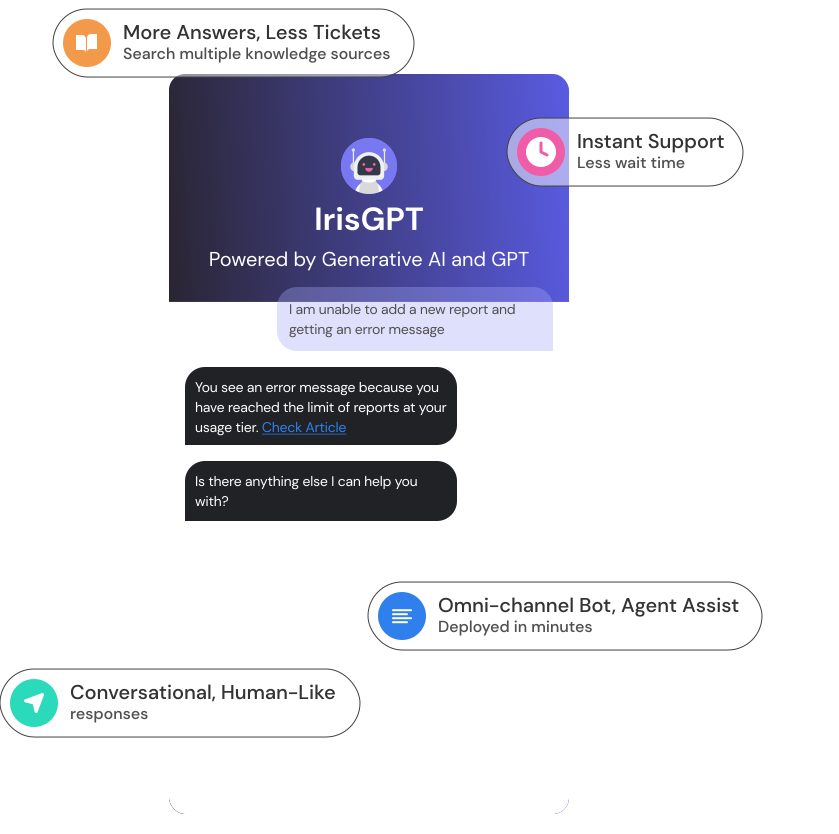
Live in 24 hours, not after an SOP mapping project
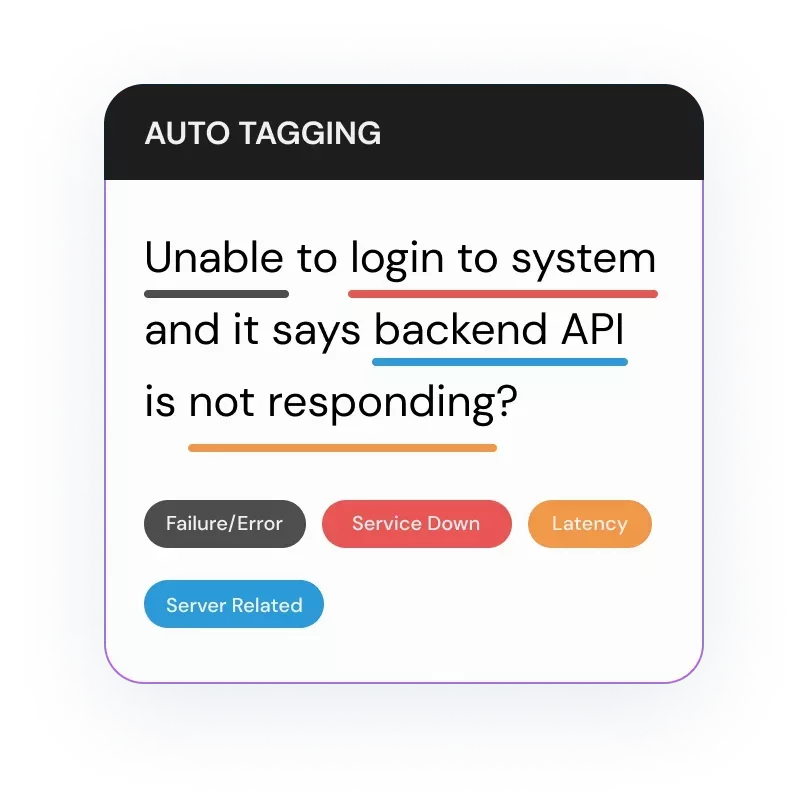
Copilot, AutoQA, and trending incidents in the platform
Which one is right for you?
An honest look at where each platform is the better fit.
Where Lorikeet is the better fit
- Regulated, high-stakes transactions: Purpose-built for fintech, healthtech, and other regulated use cases where the hardest tickets involve real actions against internal systems, with granular permissions and auditable execution.
- Deterministic workflow execution: Workflows, rather than retrieval, drive the agent. For a known, high-risk flow that must run the same way every time, that determinism is a genuine strength.
- Published, outcome-based pricing: Lorikeet posts its rate card publicly, charges per resolved ticket, does not bill for escalations, and lets the customer decide what counts as resolved. That transparency is unusual in this category and worth crediting.
- Deep engineering pedigree: Founded by an ex-Stripe product lead and a former Google Brain researcher who worked on factual grounding in LLMs, and backed by roughly $75M including a Series A led by QED Investors.
Where IrisAgent is the better fit
- Coverage without authoring workflows: Trains on knowledge base articles, historical tickets, macros, and linked bugs, so it answers the long tail on day one instead of only what a workflow describes.
- Live in 24 hours: Connect your helpdesk and start resolving the same day, with no SOP mapping project before the agent covers meaningful volume.
- Grounded, hallucination-free answers: The Hallucination Removal Engine validates every response against your own data before delivery, for 95%+ validated accuracy.
- Flexible pricing that fits your mix: Usage-based and resolution-based plans, with the agent copilot, AutoQA, and trending incident detection part of the platform rather than metered per ticket.
- Insight beyond the single ticket: Trending incident detection, sentiment and escalation prediction, and Jira bug linkage tell you why customers are writing in, not just how many did.
Not sure your tickets need a workflow engine? Most support queues are long-tail questions, not multi-step financial transactions. IrisAgent deploys on your existing helpdesk in about a day and you can pilot it on your own historical tickets before you commit to anything.
Considering a Lorikeet alternative?
We've got answers.
Ready to resolve the whole queue, not just the scripted part?
Join Dropbox, Zuora, and InvoiceCloud teams resolving 1M+ tickets a month with grounded, hallucination-free AI on the helpdesk they already run.
Zooming out from a single vendor comparison, see how AI customer support software fits into your stack, from ticket automation to knowledge base grounding.