
Best AI Player Support Platforms for Game Studios in 2026
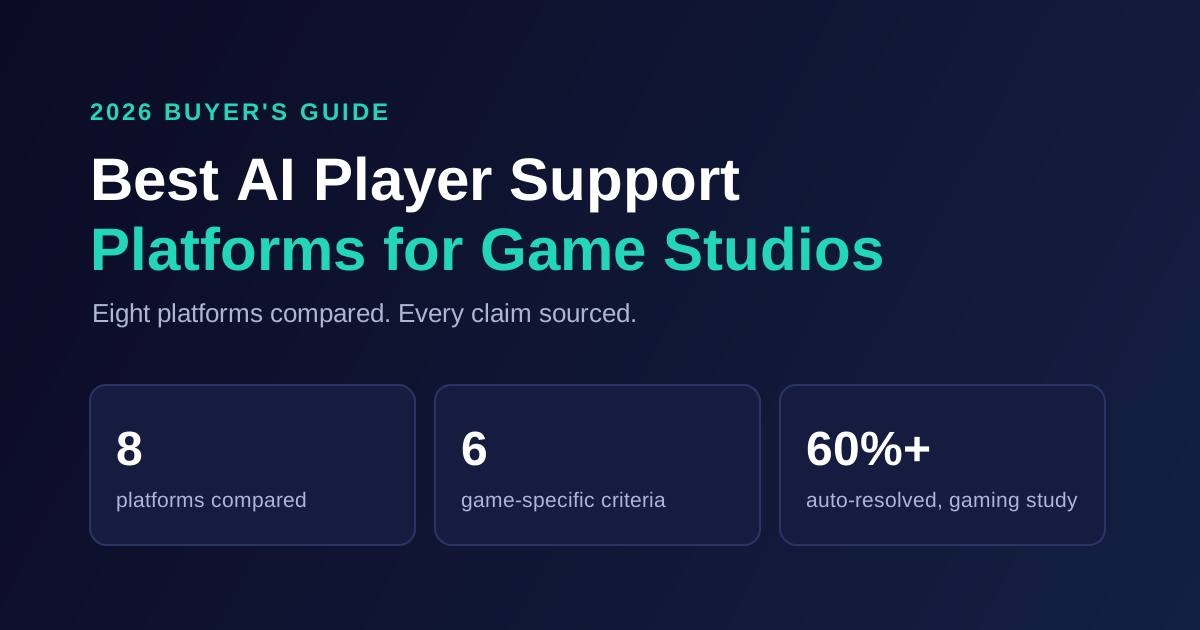
The best AI player support platform for most game studios already running a help desk is IrisAgent, because it layers grounded AI on top of Zendesk, Salesforce, Intercom, or Freshdesk and has public game-studio proof. Studios that want one vendor for an in-game SDK, player support technology, and human services should evaluate Helpshift first. Fin by Intercom and Zendesk AI are the practical choices when you want published per-outcome pricing or AI inside the suite you already run.
The proof behind our first pick: the IrisAgent gaming case study covering Larian Studios, MY.GAMES, and Pixonic reports 60%+ of player queries auto-resolved, 45% lower support operating costs, 5x faster mean time to resolution, and launch periods that produced 10x to 50x normal ticket volume.
IrisAgent wrote this guide, so treat our first-place ranking accordingly. To make it checkable, every competitor fact below links to the vendor's own page, was reviewed on November 2, 2026, and is labeled as vendor-reported where it is a performance claim. None of these resolution figures are independently audited, including ours.
How we evaluated AI player support platforms
General customer service AI buying guides miss what breaks in games. We scored each platform on six criteria that matter to a player support lead.
Launch-surge absorption. Can it hold quality when a launch, patch, or live event multiplies volume overnight, and does pricing punish you for that spike?
Ban appeals and account recovery. These tickets carry the highest risk. A wrong answer can return a hacked account to the attacker or promise an unban your policy does not allow.
Multilingual coverage. Global launches do not wait for your localization queue. We looked for a published language count and asked how knowledge stays consistent across languages.
Grounding and hallucination prevention. Does the AI answer only from approved sources such as patch notes and policy, and what does it do when the answer is not there?
Help desk and backend fit. Does it work on your current help desk, or do you migrate? Can it reach entitlement, purchase, and account systems?
Compliance. COPPA, GDPR, and PCI each apply differently, and most vendor pages only cover part of the picture.
One warning on numbers. "Automation rate," "deflection," "resolution," and "accuracy" are not the same metric, and vendors define them differently. Do not rank platforms on the headline figure. Ask each vendor for its denominator, then test on your own tickets.
AI player support platforms compared
Platform | Best for | Published performance claim (vendor-reported) | Languages | Pricing (as of Nov 2026) | Runs on your help desk? |
|---|---|---|---|---|---|
IrisAgent | Studios keeping their help desk | 60%+ of player queries auto-resolved in gaming case study | 100+ | Free $0, Standard from $500/month, Enterprise custom; usage-based or resolution-based | Yes |
Helpshift | Mobile-first and multi-title studios wanting SDK plus services | 70%+ automation rates | 70+ | Custom, modular | Own platform |
Fini | Teams wanting low per-resolution list pricing | 90% resolution, 99% accuracy | Not stated on pages reviewed | $0.49 to $0.89 per resolved ticket | Yes |
Fin by Intercom | Self-serve per-outcome rollout | 76% average resolution | "Dozens" | $0.99 per outcome, 50 outcome monthly minimum on current help desk plan | Yes |
Ada | Large enterprises with dedicated AI owners | Customer examples only, such as Dott at 77% | 60 on chat and email, 42 on voice | Custom | Connects to existing systems; confirm scope |
Zendesk AI | Studios standardized on Zendesk | Up to 80% of interactions | 80 | $1.50 to $2.00 per automated resolution, plus Suite | Zendesk |
Forethought | Teams already on Forethought, now part of Zendesk | Up to 98% resolution | Not stated on pages reviewed | Not published on pages reviewed | Yes, with roadmap now under Zendesk |
Decagon | Enterprises wanting a custom agent build | Customer examples only, such as Chime at 70% | Not stated on pages reviewed | Not published | Confirm scope |
Sources are linked in each profile below.
The 8 best AI player support platforms
1. IrisAgent: best for studios that want grounded AI on their existing help desk
IrisAgent adds AI agents, agent assist, ticket routing, and sentiment detection to the help desk you already run. Answers are grounded in your knowledge base, patch notes, and past tickets, and the Hallucination Removal Engine validates responses against those sources before they reach a player. IrisAgent reports validated accuracy above 95%.
Where it wins for games:
Public game-studio proof. The case study covers Larian Studios, MY.GAMES, and Pixonic: 60%+ auto-resolved, 45% lower support costs, 5x faster MTTR, and 10x to 50x launch volume handled without emergency staffing.
No help desk migration. Native integrations with Zendesk, Salesforce, Intercom, and Freshdesk keep your queues and macros intact.
Early warning. Trending-issue detection surfaces matchmaking bugs, outages, and exploit reports while they are still growing.
Flexible pricing. Free, Standard from $500/month, and Enterprise, with usage-based or resolution-based options so you can choose how launch spikes affect the bill.
Security. The security page lists SOC 2 Type II, HIPAA, GDPR, CCPA, and PCI DSS controls. COPPA terms belong in your data processing agreement, covered below.
Where to look harder: IrisAgent is not a player support outsourcer, so studios wanting human moderators and agents from the same vendor should compare Helpshift. A knowledge-grounded overlay goes live quickly, with most teams live in under 24 hours. Plan for weeks if you need custom CRM and game backend integrations, which is the timeline the gaming case study reports.
See the gaming support AI overview for details on player workflows.
2. Helpshift: best for an in-game SDK plus human services
Helpshift is the gaming-native incumbent. It describes itself as an "AI-native player engagement platform" and is a Keywords Studios company. Keywords announced the deal in December 2022 for up to $75 million, and Keywords itself was taken private by an EQT-led group in 2024.
Where it wins: in-game SDKs for mobile, PC, and web, console handoff by QR code, and named gaming customers including Zynga, Krafton, Rovio, and SYBO. It reports 70%+ automation rates, 77% at SYBO, and 91% deflection at Rovio. Care AI can check entitlements, grant missing items, and process duplicate-charge refunds. Its security page names ISO 27001, SOC 2 Type 2, and HIPAA, and is the only page we reviewed that names COPPA among the regulations a platform is built to help customers meet.
Where to look harder: Helpshift is a platform you adopt, rather than a layer on your current help desk. Pricing is custom and modular. Our Helpshift alternatives guide covers this choice in depth.
3. Fini: best for low per-resolution list pricing
Fini is an AI agent vendor with an aggressive pricing and accuracy pitch. It publishes $0.89, $0.69, and $0.49 per resolved ticket by tier and offers eligible new enterprise customers a guarantee: if it does not reach 90% resolution in 90 days, they pay nothing.
Where it wins: published pricing and a broad certification list (SOC 2 Type II, PCI DSS Level 1, ISO 27001:2022, GDPR, HIPAA). It reports 99% accuracy and 90% resolution.
Where to look harder: Fini has a gaming industry page, but no gaming customer or case study appeared on the home or pricing pages we reviewed. Its pricing page also lists two timelines (live in 14 days and live in 30 days), so confirm which applies.
4. Fin by Intercom: best for a fast, self-serve per-outcome rollout
Fin is the best-known AI agent in the category, and it runs on help desks other than Intercom. It reports 76% average resolution across 12,000+ customers and lists Zendesk, Salesforce, and Freshdesk as supported.
Where it wins: published pricing of $0.99 per outcome, no seat fees when used on your current help desk, and strong security certifications (SOC 2, ISO 27001, ISO 42001, ISO 27701, HIPAA).
Where to look harder: per-outcome pricing means the bill scales directly with launch volume. Model a 10x and a 50x month before signing. Fin lists gaming as a vertical, but no gaming customer was named on the pages we reviewed. Compare it directly on our IrisAgent vs Intercom page.
5. Ada: best for large enterprises with a dedicated AI owner
Ada is an established enterprise AI agent platform that reports 350+ global enterprise customers, with customer examples such as a 77% automated resolution rate at Dott.
Where it wins: broad coverage, with 60 languages on chat and email and 42 on voice, and a trust center naming SOC 2, GDPR, HIPAA, and a PCI attestation.
Where to look harder: pricing is not published and starts from a demo. We found no gaming customer on the pages we reviewed. Ada's docs also limit which languages knowledge content can be written in, so check this if your source articles are not in English. See IrisAgent vs Ada.
6. Zendesk AI: best for studios fully standardized on Zendesk
If your studio runs on Zendesk, its own AI is the lowest-friction starting point. Zendesk claims AI agents resolve up to 80% of interactions in 80 languages.
Where it wins: one vendor and one admin surface, plus trust documentation covering SOC 2 Type II and ISO 27001:2022.
Where to look harder: automated resolutions cost $1.50 committed or $2.00 pay-as-you-go on top of Suite seats ($55 to $115 per agent per month on annual billing), with a small included allowance. Copilot is another $50 per agent per month. That stack gets expensive in a launch month. The AI agents page does not list gaming as an industry. See IrisAgent vs Zendesk AI.
7. Forethought: best for teams already using it
Forethought offers Solve, Triage, and QA agents and now states it is part of Zendesk. TechCrunch reported the deal in March 2026, and Zendesk said new customers can still buy Forethought on a standalone basis.
Where it wins: strong triage heritage and a QA agent. It advertises resolution rates up to 98%, an upper bound rather than an average.
Where to look harder: if you run Salesforce or Intercom, ask how Zendesk ownership affects the roadmap for those integrations. We found no gaming customer or named certifications on its home page. See IrisAgent vs Forethought.
8. Decagon: best for enterprises wanting a custom agent build
Decagon builds AI agents for large consumer brands. Workflows are defined as Agent Operating Procedures in natural language, and it shows per-customer results such as 70% resolution at Chime and 80% deflection at Duolingo.
Where it wins: enterprise references and a security page naming SOC 2 Type II, GDPR, HIPAA, ISO 27001, and PCI DSS 4.0.1. Riot Games appears among its home page logos, though we did not find a gaming case study.
Where to look harder: no public pricing, and the sales motion suits large programs rather than a mid-sized studio preparing for one launch. See IrisAgent vs Decagon.
Three questions that separate these platforms
What happens to the bill in a launch month?
Per-resolution pricing is simple until a launch hits. At 50,000 AI resolutions in a month, Fin's list price is $49,500 and Zendesk's committed rate is $75,000, before any seats or platform fees. Neither number is wrong, and per-resolution pricing does align cost to outcome. Just model the peak month, not the average, and compare it with usage-based options.
How does it treat ban appeals?
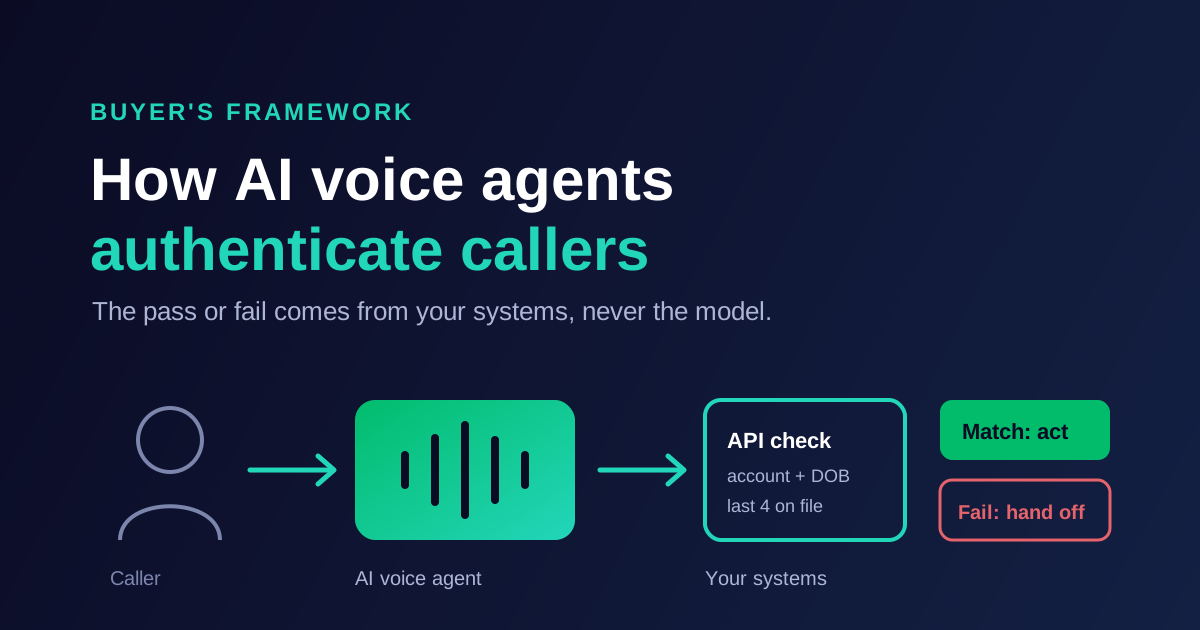
Ask the vendor to show a live ban appeal. A safe flow collects the account and enforcement ID, retrieves the enforcement reason your policy permits sharing, explains the appeal process, and routes the case to trust and safety with full context. It never decides the appeal and never reveals detection methods. Account recovery needs the same discipline: verify ownership through your account system, never by answers a hacker could look up.
Who is responsible for COPPA?
COPPA obligations sit with the operator of a service directed to children under 13, so a vendor badge does not make you compliant. The FTC's amended rule took effect in June 2025, with most provisions requiring compliance by April 22, 2026, and it prohibits keeping children's personal information indefinitely. If you have under-13 players, ask each vendor how support transcripts are retained and deleted, and whether they are used for model training. Then get the answer into your data processing agreement. Have counsel review it, because this is not legal advice.
For payments, the cleanest PCI answer is that card numbers never enter the conversation at all and refunds run through your payment provider or platform storefront.
Implementation checklist for AI player support
Before you buy
Export 90 days of tickets plus your last launch, then tag the top 20 intents.
Calculate your surge multiple from real launch data, and model cost at 10x and 50x.
Mark intents the AI may not resolve alone: ban decisions, chargeback disputes, safety threats, and minors' data requests.
List the systems the AI must reach: account, entitlement, purchase, and status page.
During evaluation
Run each finalist against the same 500 real tickets, including languages other than English.
Score resolved tickets by whether the player reopened, not by whether the bot closed them.
Red-team with false refund claims, policy-bending ban appeals, and account takeover attempts.
Check certifications in the vendor's trust center rather than a third-party listicle, including this one.
Rollout
Load patch notes, known issues, and policy, and assign an owner for keeping them current.
Start in assist mode, then turn on autonomous answers for low-risk intents.
Set escalation rules before go-live, and pass full context so players do not repeat themselves.
Load test the handoff path, since the AI may scale but your specialist queues will not.
After launch
Review resolution, reopen rate, and CSAT weekly by language and intent.
Audit a sample of ban appeal and account recovery conversations every week. AutoQA can score all of them automatically.
Feed unanswered questions back into the knowledge base.
Running a launch soon? Our game launch player support runbook turns this into a timeline.
Which AI player support platform should you choose?
Keep your help desk and want grounded AI with game-studio proof: start with IrisAgent. Want an in-game SDK and a single vendor for technology and human services: evaluate Helpshift. Want published per-outcome pricing and self-serve setup: test Fin or Fini. All-in on Zendesk: start with Zendesk AI. Running a large custom enterprise program: look at Ada or Decagon.
Whichever shortlist you build, test AI player support on your own tickets and model your worst launch month. Book an IrisAgent demo to run that test on your player data, or read how studios did it in the Larian Studios case study.
Frequently Asked Questions
What is the best AI player support platform for game studios?
For most studios already running a help desk, IrisAgent is the best fit because it layers grounded AI onto Zendesk, Salesforce, Intercom, or Freshdesk and has public game-studio proof: 60%+ of player queries auto-resolved and 45% lower support costs in its gaming case study. Studios wanting an in-game SDK and human services from one vendor should evaluate Helpshift.
What should a game studio look for in AI player support?
Look for launch-surge handling, safe ban appeal and account recovery flows, multilingual coverage, grounded answers from approved sources, fit with your help desk and backend, and clear COPPA, GDPR, and PCI answers. Test on your own tickets, because vendors define resolution, deflection, and automation differently.
Can AI handle ban appeals?
AI should handle the intake, not the decision. A safe flow collects the account and enforcement ID, shares only what your policy permits, explains the appeal process, and routes the case to trust and safety with full context. It should never decide the appeal or reveal how detection works.
How much does AI player support cost?
Published list prices as of November 2026 include Fini at $0.49 to $0.89 per resolved ticket, Fin at $0.99 per outcome, and Zendesk AI at $1.50 to $2.00 per automated resolution plus Suite seats. IrisAgent offers Free, Standard from $500 per month, and custom Enterprise plans, with usage-based or resolution-based options. Helpshift, Ada, and Decagon do not publish prices. Model your peak launch month, not your average month.
Do AI support vendors need to be COPPA compliant?
COPPA obligations sit with the operator of a service directed to children under 13, so a vendor badge does not make a studio compliant. If you have under-13 players, ask vendors how support transcripts are retained, deleted, and used for training, and put the answers in your data processing agreement. The FTC's amended rule had a general compliance date of April 22, 2026. Have counsel review your setup.


Loading the form. Prefer email? Reach us at info@irisagent.com or call +1 617 249 3312.