
Best Forethought Alternatives in 2026: 6 Tools Compared
Last updated: October 2026
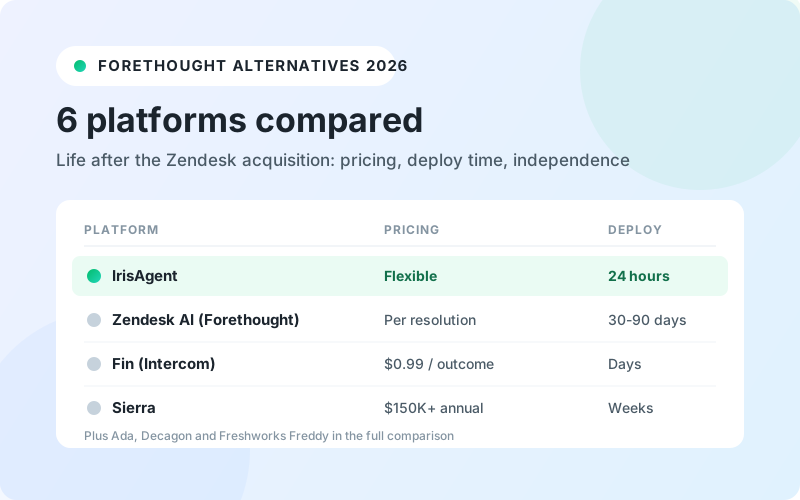
The leading Forethought alternatives in 2026 are IrisAgent, Intercom Fin, Ada, Decagon, Sierra, and Freshworks Freddy AI. Forethought built an established footprint in automated ticket handling, but support teams are actively re-evaluating the market after Zendesk acquired Forethought in March 2026. Support leaders now face decisions about roadmap continuity, contract terms, deployment speed, and whether to keep their AI layer independent of their primary helpdesk vendor.
IrisAgent leads this comparison for teams that want a helpdesk-agnostic AI platform with validated accuracy above 95%, same-day implementation, and continuous automated quality assurance across both AI and human conversations. The other alternatives fit distinct operating models: Intercom Fin and Freshworks Freddy AI work best inside their native helpdesk ecosystems, while Ada, Decagon, and Sierra serve large enterprises that want bespoke, highly customized conversational builds.
This guide gives a direct, evidence-based breakdown of the six best Forethought alternatives, comparing architecture, deployment timelines, pricing models, action capabilities, and ideal use cases. It also covers the trade-offs of staying on Forethought AI Agents by Zendesk, so you can choose the right path for your support stack.
Forethought Alternatives for AI-Powered Ticket Deflection and Resolution
Teams searching for Forethought alternatives are usually evaluating AI-powered ticket deflection and automated resolution. The goal is straightforward: resolve routine customer inquiries across chat, email, and voice without human intervention, and execute backend actions rather than just sending links to help center articles.
Forethought built its reputation on Solve for deflection, Triage for routing, Assist for agent copilots, and Discover for topic insights. The operational bar for customer support AI has since moved. Support teams now expect platforms that connect to existing ticketing systems without lengthy professional services, enforce strict accuracy checks to prevent hallucinations, and execute multi-step workflows.
For the broader landscape beyond Forethought, our guide to the best AI ticket deflection tools covers general deflection benchmarks. For a direct side-by-side, see our IrisAgent vs Forethought comparison.
What are the best Forethought alternatives for AI customer support?
The best Forethought alternatives in 2026 are:
IrisAgent: Best overall for helpdesk-agnostic support automation, with 95%+ validated accuracy, sub-24-hour deployment, and unified AutoQA across AI and human agents.
Intercom Fin: Best for teams centered on Intercom, or teams that want an out-of-the-box conversational agent with pay-per-resolution pricing.
Ada: Best for global consumer enterprises that need a visual, no-code workflow builder and coverage across 50+ languages.
Decagon: Best for well-funded consumer brands with dedicated engineering bandwidth for custom agentic operating procedures.
Sierra: Best for Fortune 500 organizations that want high-touch, custom-engineered conversational AI across customer journeys.
Freshworks Freddy AI: Best for small and midsize organizations already standardized on Freshdesk or Freshservice that want a low-cost, native assistant.
Why Teams Look for a Forethought Alternative
Forethought was an early mover in applying natural language understanding to support workflows. Four factors now drive current customers and new buyers to evaluate alternatives.
1. The Zendesk Acquisition and Helpdesk Independence
Zendesk announced its acquisition of Forethought on March 11, 2026, and closed the transaction on March 26, 2026. Since June 2026, the product has been sold through Zendesk sales as Forethought AI Agents by Zendesk.
Zendesk states that Forethought can operate independently of the Zendesk platform, and it remains available to non-Zendesk customers, including teams on Salesforce Service Cloud, Freshdesk, and custom systems. The ability to connect to non-Zendesk helpdesks has not been removed.
The commercial and strategic relationship has changed, though. If your support organization runs on Salesforce, Freshworks, or Intercom, your AI support layer is now owned and developed by a direct competitor to your primary helpdesk. Roadmap investment will naturally prioritize deep integration into the Zendesk platform, and support leaders on non-Zendesk stacks now hold renewal conversations with Zendesk sales. That is prompting many to move to a vendor-neutral AI platform. For a full breakdown of contract and operational considerations, see our guide on what Forethought customers should do after the Zendesk acquisition.
2. Implementation Overhead and Ticket Volume Thresholds
Forethought historically targeted large enterprise support organizations and typically needed a baseline of around 20,000 historical tickets to train its intent models. Implementations frequently took 30 to 90 days of onboarding, custom intent mapping, and supervised proof-of-value work.
Modern generative AI architectures no longer need months of model training or tens of thousands of past tickets. Support teams now expect solutions that ingest knowledge bases, documentation, and policies and go live in days or hours, without large professional services fees.
3. Pricing Predictability and Commercial Structure
Forethought has historically sold custom, quote-only enterprise contracts that combine an annual platform access fee with outcome-based resolution fees. After the acquisition, those contracts are negotiated through Zendesk sales.
When resolution-based pricing sits on top of a large platform commitment, forecasting the annual support budget gets complicated. If resolution definitions are ambiguous, you risk paying for partial interactions or abandoned sessions. Support leaders increasingly want pricing transparency, whether that means predictable usage tiers or clearly defined resolution criteria.
4. Action Execution vs. Passive FAQ Deflection
First-generation deflection engines mostly surfaced help center articles or triggered rigid decision-tree bots. When a customer inquiry requires interacting with a backend system (checking real-time order status, processing a refund, updating account details, or verifying a subscription tier), simple deflection falls short.
Teams now want agentic alternatives that execute actions directly in external APIs, CRMs, and payment systems while following the company's standard operating procedures (SOPs).
What to Look for in a Forethought Alternative
When evaluating alternatives to Forethought, support operations leaders should assess vendors against six criteria:
Helpdesk interoperability: Does the platform layer onto your current ticketing system (Zendesk, Salesforce, Intercom, Freshworks, HubSpot, Jira), or does it push you into a proprietary inbox?
Action execution via backend APIs: Can the AI agent securely call webhooks and internal APIs to complete operational tasks, rather than returning canned text?
Validated accuracy and hallucination controls: Does the vendor publish a verifiable accuracy figure, and are there automated safeguards that stop hallucinated answers from reaching customers?
Time to value: Can your team run a production pilot in days without dedicated engineering, or does setup require months of professional services?
Pricing transparency: Does the contract match your operating model? Know whether you pay per seat, per session, per resolution, or through usage-based tiers.
Unified quality oversight (AutoQA): Does the tool review 100% of interactions, both AI resolutions and human agent handoffs, to find knowledge gaps and track compliance?
The 6 Best Forethought Alternatives in 2026
1. IrisAgent
IrisAgent is an enterprise AI support platform that resolves customer conversations across chat, email, voice, and text while integrating natively with your existing helpdesk. Instead of forcing a move to a new ticketing system, IrisAgent works as an AI layer across Zendesk, Salesforce Service Cloud, Intercom, Freshworks, and Jira.
IrisAgent covers Forethought's functional footprint (automated ticket resolution, intelligent routing, and agent assistance) without long setup cycles, data minimums, or helpdesk lock-in.
Key strengths
Helpdesk-agnostic architecture: Works across major CRMs and helpdesks, so your AI layer stays independent of any single software vendor.
Hallucination Removal Engine: Holds validated accuracy above 95% across production enterprise deployments, including Dropbox, Zuora, and Teachmint, by checking generated answers against verified company knowledge before they are sent.
Rapid deployment: Goes live in under 24 hours, with no custom model fine-tuning and no 20,000-ticket historical minimum.
Full action execution: Smart Operating Procedures let AI agents securely query systems, trigger API actions (such as issuing refunds or modifying bookings), and update ticket fields automatically.
Built-in AutoQA and Analyst: Scores 100% of human and AI conversations against quality rubrics, and lets support leaders query ticket trends in natural language.
Agent Assist copilot: Surfaces suggested resolutions, macro recommendations, and conversation summaries directly inside the agent's helpdesk.
Limitations
Support-specific focus: Built for customer support, service operations, and IT service desks. It is not meant to be a general-purpose internal corporate assistant.
Sales-guided setup: Deployment takes less than 24 hours, but onboarding is guided to align enterprise security and backend integrations. It is not a self-serve, sign-up-and-go tool.
Pricing
IrisAgent offers flexible, predictable pricing with both usage-based and resolution-based plans, and no six-figure platform floor.
Best for
Mid-market and enterprise support teams on Zendesk, Salesforce, Freshworks, or Intercom that want a helpdesk-independent, multi-agent platform with validated 95%+ accuracy, fast deployment, and full QA coverage.
2. Intercom Fin
Intercom Fin is one of the most visible AI agents on the market. Fin resolves customer inquiries conversationally using help center content and structured workflows.
Key strengths
Turnkey inside Intercom: For teams already using Intercom, turning on Fin takes minimal technical effort.
Expanding helpdesk connectors: Fin can now run on third-party helpdesks such as Zendesk and Salesforce.
Simple outcome-based model: Fin charges $0.99 per resolution, which makes pilot budgeting straightforward.
Clean user experience: The admin interface and workflow builder are easy for non-technical support managers.
Limitations
Cost scaling at high volume: The $0.99 per-resolution fee comes on top of Intercom seat licenses (roughly $29 to $132+ per seat per month). For teams handling 50,000+ resolutions a month, costs climb quickly.
Complex multi-system actions: Fin handles informational inquiries well, but multi-system backend actions across legacy enterprise systems often require custom development.
Intercom gravity: External connectors exist, but the product is optimized for the Intercom workspace.
Pricing
$0.99 per resolution, plus an Intercom subscription and seat licenses.
Best for
Teams already anchored in Intercom, or mid-sized teams with moderate volume that prefer simple per-resolution pricing over deep multi-helpdesk interoperability.
3. Ada
Ada is an established enterprise customer service automation platform. Originally known for its rule-based bot, Ada has added generative AI to automate interactions across digital and voice channels.
Key strengths
Visual no-code builder: A full visual canvas for building conversational branches and routing logic without engineering resources.
Global multilingual support: Language understanding and translation across 50+ languages, a strong fit for multinational consumer brands.
Omnichannel coverage: Automates interactions across web chat, SMS, social messaging, and voice.
Limitations
Opaque enterprise pricing: Pricing is quote-only, with annual contracts reportedly ranging from $30,000 to $300,000+ depending on volume and packaging.
Knowledge ingestion limits: Teams often find ingesting unstructured internal documentation (raw PDFs, Notion workspaces, or large Confluence trees) more restrictive than on newer generative platforms.
Extended implementation: Enterprise rollouts commonly take several weeks of configuration, workflow mapping, and integration testing.
Pricing
Custom enterprise quotes based on conversation or resolution volume, platform features, and channel add-ons.
Best for
Large B2C enterprises with high global volume across many languages that want a mature visual flow builder and have an operations team to manage conversational logic.
4. Decagon
Decagon is an enterprise conversational AI vendor focused on large consumer brands with high ticket volumes. It positions its product around autonomous AI agents that handle routine support with minimal human involvement.
Key strengths
Agent Operating Procedures (AOPs): Combine natural language with custom business logic to execute multi-step workflows in consumer applications.
Strong high-volume B2C footprint: A roster of well-known consumer brands handling large spikes in digital support traffic.
Voice and messaging: Supports both conversational chat and telephony.
Limitations
High total cost of ownership: Platform fees reportedly start around $50,000 a year, with median enterprise contracts reported above $300,000 once per-conversation charges are included.
Longer implementation cycles: Deployments often take 4 to 8 weeks and need engineering collaboration to integrate proprietary backend systems.
Governance visibility: Complex autonomous agent configurations can behave like a black box, which makes root-cause analysis on bad responses harder for support operations teams.
Pricing
Custom enterprise pricing, typically an annual platform license plus per-conversation fees.
Best for
Well-funded consumer companies with high support volume and dedicated technical resources that want a custom agentic build.
5. Sierra
Co-founded by Bret Taylor and Clay Bavor, Sierra is a high-profile conversational AI platform built for large enterprises and the Fortune 500. Sierra builds agents that represent a company's brand voice while executing tasks across internal enterprise systems.
Key strengths
Enterprise governance and guardrails: Reasoning and supervision layers designed to keep agents on-brand and within compliance guidelines.
Deep enterprise system integration: Orchestrates workflows across custom data warehouses, ERPs, and legacy infrastructure.
Cross-functional scope: Covers use cases beyond support deflection, including commerce guidance and account management.
Limitations
Premium price point: Annual contract minimums reportedly start around $150,000, with implementation fees commonly between $50,000 and $200,000.
Lengthy white-glove deployment: Rollouts involve extensive consulting and engineering work, often spanning several months.
Overkill for standard helpdesk operations: For teams that mainly want to automate ticket queues, assist agents, and score QA on an existing helpdesk, Sierra's greenfield architecture adds substantial overhead.
Pricing
Custom enterprise pricing with six-figure annual commitments and bespoke implementation fees.
Best for
Fortune 500 enterprises with large AI budgets that want to rethink customer-facing conversations through a bespoke, white-glove engineering partnership.
6. Freshworks Freddy AI
Freddy AI is Freshworks' native AI suite, built into Freshdesk (customer support) and Freshservice (IT service management). It provides self-service bots, agent-assist suggestions, and manager insights.
Key strengths
Native Freshworks integration: Turns on quickly for teams already inside the Freshworks suite.
Accessible entry price: Session-based pricing starting around $100 per 1,000 Freddy AI sessions (roughly $0.10 per session).
Unified IT and customer support: A good fit for internal IT helpdesks on Freshservice running alongside customer-facing Freshdesk queues.
Limitations
Session-based cost inefficiency: Freddy bills per session whether or not the issue is resolved, which can produce unexpected costs on high-traffic, low-resolution queues.
Ecosystem lock-in: Freddy is built for Freshworks and cannot act as an independent AI layer across Salesforce, Zendesk, or Intercom.
Basic action depth: Less suited to complex, multi-system autonomous workflows than specialized agentic platforms.
Pricing
Session packs starting around $100 per 1,000 sessions, plus Freshdesk or Freshservice seat subscriptions.
Best for
Organizations committed to Freshworks that need an affordable, native bot for straightforward, high-volume deflection.
What About Staying on Forethought AI Agents by Zendesk?
If Zendesk is your primary ticketing system, staying on Forethought AI Agents by Zendesk (or moving to standard Zendesk AI capabilities) is a legitimate option.
When Staying Makes Sense
Standardized on Zendesk: If your support organization is fully committed to Zendesk, consolidating procurement, billing, and vendor management under one contract reduces administrative overhead.
First-party integration: Zendesk is integrating Forethought's technology into Zendesk workflows, views, and reporting, with native user management.
Low migration urgency: If your current Forethought setup is hitting resolution targets and your renewal is far off, migrating now may add unnecessary churn.
The Trade-Offs
Vendor lock-in: Tying your AI automation and agent-assist layer to your helpdesk vendor removes negotiating leverage at renewal.
Multi-helpdesk friction: If your business units run different platforms (for example, Salesforce for enterprise accounts and Zendesk for consumer tiers), a Zendesk-owned AI platform creates alignment friction.
Add-on packaging: Post-acquisition, Assist, Triage, Agent QA, AI QA, and Discover are sold as add-ons on top of the base product, which limits flexibility for teams that want one all-inclusive platform.
Forethought Alternatives Compared
The table below summarizes the key operational differences between the leading Forethought alternatives in 2026:
Platform | Helpdesk Architecture | Deployment Time | Pricing Structure | Backend Action Execution | Published Accuracy & QA |
|---|---|---|---|---|---|
IrisAgent | Helpdesk-agnostic (Zendesk, Salesforce, Intercom, Freshworks, Jira) | Under 24 hours | Flexible: usage-based or resolution-based | Full API execution via Smart Operating Procedures | 95%+ validated accuracy; AutoQA on 100% of conversations |
Intercom Fin | Native to Intercom; connectors for Zendesk and Salesforce | Days | $0.99 per resolution plus seat licenses | API actions and custom workflows | Accuracy not published |
Ada | Platform-agnostic overlay | Several weeks | Quote-only ($30K to $300K+ per year) | Webhook and API actions via visual builder | Accuracy not published |
Decagon | Platform-agnostic custom build | 4 to 8 weeks | Quote-only (~$50K+ base plus conversation fees) | Custom Agent Operating Procedures | Accuracy not published |
Sierra | Greenfield conversational architecture | Several months | Quote-only ($150K+ per year plus setup fees) | Custom enterprise API orchestration | Accuracy not published |
Freshworks Freddy AI | Native to Freshworks (Freshdesk, Freshservice) | Immediate to days | ~$0.10 per session (packs of 1,000) | Basic workflow automations | Accuracy not published |
Forethought (Zendesk) | Zendesk-owned; still supports external helpdesks | 30 to 90 days historically | Quote-only platform fee plus resolution fees | Autoflows and API integrations | Accuracy not published; AI QA and Agent QA sold as add-ons |
How to Choose the Right Forethought Alternative
Work through your operating constraints in order of priority.
If Helpdesk Independence Is Your Priority
If your team runs Salesforce Service Cloud, Freshdesk, or a mix of ticketing systems, keeping your AI layer neutral matters. IrisAgent and Ada both offer genuine multi-helpdesk interoperability. IrisAgent stands out for its sub-24-hour setup, pre-built integrations, and 95%+ validated accuracy, while Ada suits teams that prioritize visual conversation flow mapping.
If Fast Deployment and Minimal Data Requirements Matter
If you cannot absorb a 30-to-90-day implementation, or you do not meet Forethought's historical 20,000-ticket threshold, avoid platforms that depend on extensive custom model training. IrisAgent deploys in under 24 hours by indexing your existing documentation, and Intercom Fin offers fast out-of-the-box setup for Intercom users.
If You Need Real Action Execution Beyond Deflection
If your volume includes transactional requests (order lookups, returns, address updates, or subscription changes), look for platforms with a structured execution framework. IrisAgent executes backend API actions through natural-language Smart Operating Procedures, while Decagon offers custom-built procedures for high-volume consumer workflows.
If Cost Predictability Drives Your Decision
Model your monthly ticket volume against each pricing structure:
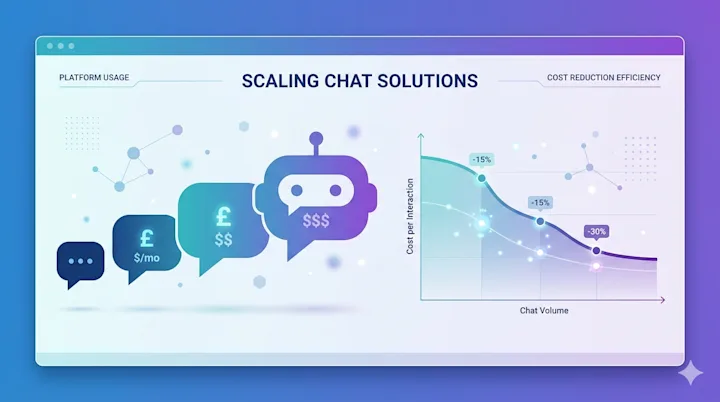
Per-resolution billing (for example, Fin at $0.99) is cost-effective at low volume, but cost scales linearly as volume grows.
Per-session billing (for example, Freddy at about $0.10) can produce surprise invoices when customers need several sessions for one problem.
Enterprise platform pricing (for example, Decagon, Sierra, and Ada) requires a large upfront commitment.
Flexible plans (for example, IrisAgent) let you choose between resolution-based and usage-based pricing to keep costs predictable.
Next Steps
Choosing a Forethought alternative comes down to three requirements:
Keeping flexibility across your helpdesk and software stack.
Delivering reliable, grounded answers with verifiable accuracy safeguards.
Reaching value quickly without months of professional services.
For most support teams, the right alternative delivers autonomous resolution, agent copilot assistance, and full QA coverage without a platform migration.
See how the AI for customer support platform resolves tickets across your existing channels, explore the IrisAgent vs alternatives overview, or read our companion guides on the best Decagon alternatives and best Sierra alternatives. When you are ready to measure real resolution rates on your own queues, book a personalized walkthrough with our team.
Frequently Asked Questions
What are the best Forethought alternatives for AI-powered ticket deflection?
The best Forethought alternatives for AI-powered ticket deflection in 2026 are IrisAgent, Intercom Fin, Ada, Decagon, Sierra, and Freshworks Freddy AI. IrisAgent leads for teams that want helpdesk-independent deflection with validated accuracy above 95%, sub-24-hour setup, and built-in AutoQA. Fin and Freddy are accessible options for Intercom and Freshworks users, while Ada, Decagon, and Sierra fit large custom enterprise builds.
What happened to Forethought?
Zendesk announced its acquisition of Forethought on March 11, 2026, and closed it on March 26, 2026. Since June 2026 the product has been sold through Zendesk sales as Forethought AI Agents by Zendesk, to both Zendesk and non-Zendesk customers. Capabilities such as Assist, Triage, Agent QA, AI QA, and Discover are now sold as add-ons, and renewals are negotiated with Zendesk.
Can Forethought AI agents still be used on helpdesks other than Zendesk?
Yes. Zendesk states that Forethought AI Agents by Zendesk can operate independently of the Zendesk platform and remain available to teams on Salesforce Service Cloud, Freshdesk, and other systems. However, because Forethought is now owned by Zendesk, teams on other helpdesks often move to a vendor-neutral platform so their AI roadmap stays aligned with their core helpdesk rather than a competitor's.
What Forethought alternatives can take actions rather than just answer questions?
IrisAgent, Decagon, and Sierra are the leading alternatives that execute multi-step backend actions. IrisAgent uses Smart Operating Procedures to securely call backend APIs, look up customer records, process refunds, and update ticket fields instead of only deflecting with help center links. Decagon and Sierra offer custom-built integrations for complex consumer transaction workflows.
What is the best Forethought alternative for fast implementation?
IrisAgent is the fastest enterprise alternative to deploy, going live in under 24 hours with no historical ticket minimum and no custom code. Forethought historically needed 30 to 90 days and roughly 20,000 past tickets, while enterprise platforms like Decagon, Sierra, and Ada typically take between 4 weeks and several months.
How does Forethought's pricing compare to alternatives?
Forethought uses quote-only enterprise pricing that blends platform access fees with outcome-based resolution charges, negotiated through Zendesk sales. Intercom Fin charges $0.99 per resolution on top of seat licenses, Freshworks Freddy AI charges about $100 per 1,000 sessions, Decagon and Sierra require annual commitments from roughly $50,000 to over $150,000, and IrisAgent offers flexible plans with both usage-based and resolution-based options.
Should Forethought customers switch after the Zendesk acquisition?
It depends on your helpdesk. If you run Zendesk and are committed to it, staying on Forethought AI Agents by Zendesk is a low-friction path. If you run Salesforce, Freshworks, Intercom, or a mix, switching deserves serious evaluation, because your AI vendor is now owned by a competing helpdesk. Evaluate alternatives during your remaining contract term so you can run a side-by-side pilot before renewal.
What is the difference between ticket deflection and ticket resolution?
Ticket deflection traditionally counts cases where a customer saw an automated answer or help article and did not file a ticket, whether or not the issue was actually solved. Ticket resolution confirms the customer's problem was fixed end to end, either with an accurate, grounded answer or by completing a backend action, verified through customer feedback or ticket closure.
Loading the form. Prefer email? Reach us at info@irisagent.comor call +1 617 249 3312.