
What Is Telephony? Cloud Telephony, VoIP & AI Voice Agents Explained
Telephony is the technology that carries voice conversations between people (or between a person and a machine) over a distance. In customer support, telephony is the layer that gets a customer's call from their phone to your team or your AI voice agent: the phone numbers, the carrier connections, the routing logic, and the systems that record and log every call. Every voice channel, from a single support line to a global contact center, runs on top of a telephony stack.
What Does Telephony Mean?
The word combines Greek roots for "far" and "sound." It originally described analog phone networks, but today it covers any system that transmits voice in real time, whether over copper lines, mobile networks, or the internet. In a business context, telephony usually means the business phone system as a whole: how calls come in, how they reach the right person, and how they connect to the rest of the software a support team uses.
How Telephony Evolved
PSTN and landlines: The public switched telephone network connected callers through copper lines and central exchanges. Each call reserved a dedicated circuit for its full duration, which made long distance calling expensive.
PBX: A private branch exchange gave a business its own internal switch. Many extensions shared a smaller pool of outside lines, and features like hold, transfer, and voicemail became standard. Early PBX systems were on-premises hardware that needed specialist maintenance.
VoIP: Voice over Internet Protocol converts speech into data packets and sends them over IP networks. It cut calling costs sharply and turned phone lines into software settings instead of physical wiring.
Cloud telephony: A provider hosts the switching, numbers, and call features, and teams manage everything through a browser and APIs. Adding a number or an agent takes minutes, and voice becomes programmable, so it can connect to a CRM, a helpdesk, and AI.
Key Telephony Building Blocks for Support Teams
SIP trunking: Session Initiation Protocol trunks are virtual phone lines that connect your phone system or contact center platform to a carrier over the internet. Capacity is bought by concurrent calls, so it scales up for peak season and back down afterward.
Phone numbers: Local, toll-free, and direct inward dial (DID) numbers are what customers actually call. Number porting lets you move existing numbers between providers without changing what is printed on your website and invoices.
IVR: Interactive voice response greets callers and captures their reason for calling through keypad presses or speech. Traditional IVR is a rigid menu tree; conversational IVR lets callers say what they need in their own words.
ACD routing: Automatic call distribution places callers in queues and sends each one to the right agent based on skills, language, priority, or availability.
CTI: Computer telephony integration links the phone system to the CRM or helpdesk. Agents get a screen pop with the caller's record, click-to-dial, and automatic call logging on the ticket.
Call recording and transcription: Recordings support quality assurance, compliance, and training, and transcripts feed QA scoring, analytics, and call monitoring software.
Telephony vs. CCaaS
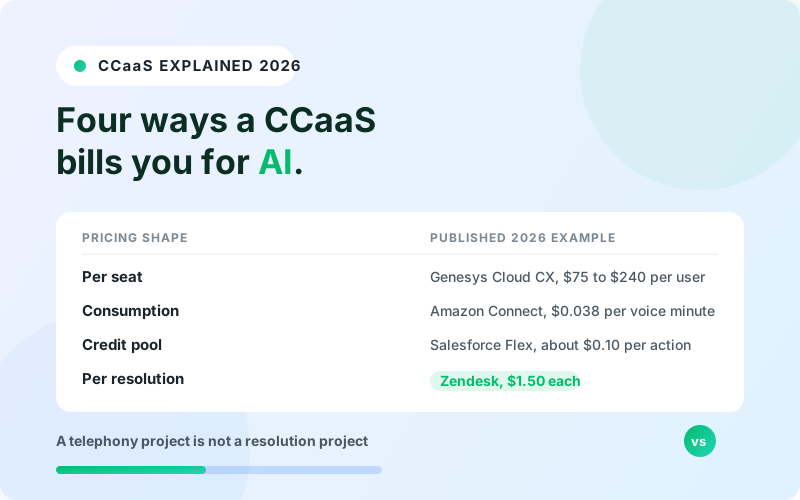
Telephony is the voice transport and switching layer. CCaaS (contact center as a service) is a cloud platform that bundles telephony with contact center workflows: omnichannel routing, an agent desktop, workforce management, quality management, and reporting. Some CCaaS vendors run their own carrier network, while others let you bring your own carrier (BYOC) over a SIP trunk. A simple way to think about it: telephony gets the call to you, and CCaaS manages what happens once it arrives. For a deeper look, see CCaaS Explained.
How AI Voice Agents Connect to a Telephony Stack
An AI voice agent answers calls, understands spoken requests, and resolves them. To do that it needs a path into the call. The common patterns are:
SIP integration: Your PBX or CCaaS forwards calls to the AI agent over a SIP trunk, so existing numbers, queues, and routing rules stay in place.
Carrier or number integration: A phone number from a cloud telephony provider points straight at the AI agent. This is the fastest route for a new line or after-hours coverage.
Contact center connectors: Many contact center platforms let you drop an AI agent into the call flow as a step, usually in front of or in place of the IVR.
Warm transfer to agents: When the AI cannot or should not resolve a call, it transfers to a human queue and passes along the transcript, caller identity, intent, and actions already taken. A cold transfer with no context forces the customer to repeat everything and erases most of the value of automation.
Voice is less forgiving than chat. Audio quality, response delay, handling of interruptions, keypad input, and caller ID data all depend on the telephony layer, so a strong AI model on a weak phone connection still sounds broken to the caller. Read What Is Voice AI for how the speech recognition, reasoning, and voice synthesis pieces work.
What to Look For in Telephony for an AI-Ready Contact Center
Open SIP and BYOC support: You should be able to route calls to any AI or contact center vendor without re-porting numbers or signing a new carrier contract.
Programmable call control: APIs and webhooks for transfer, hold, conference, and call events let AI and humans work the same call.
Context passing on transfer: SIP headers, user-to-user data, or CTI hooks that carry the AI's summary to the agent's screen.
Audio quality: Wideband codecs and media servers located near your callers keep speech clear and conversations natural.
Compliance controls: Recording consent prompts, pause and resume for card payments (PCI DSS), data residency, and retention settings.
Coverage and reliability: Numbers in every market you serve, geographic redundancy, failover routing, and a published uptime SLA.
How IrisAgent Fits Into Your Telephony Stack
IrisAgent's Voice AI works with the telephony you already have instead of replacing it. It connects through SIP or your carrier and contact center platform, so your numbers, queues, and routing rules stay as they are. On every call, answers are grounded: the voice agent responds only from verified knowledge and live system data such as order status, account details, and ticket history, so it does not invent policies or promises. When a call needs a person, a warm transfer hands the agent the transcript, the detected intent, and the actions already taken.
Because voice runs on the same platform as IrisAgent's chat, email, and ticket automation, phone calls share the same knowledge, tagging, routing, and analytics as every other channel. The result is a full CX operating system, not a standalone phone bot.
Learn More
See how grounded voice automation works on the IrisAgent Voice AI page, or read What Is Voice AI and CCaaS Explained: Costs, Features & AI Resolution.
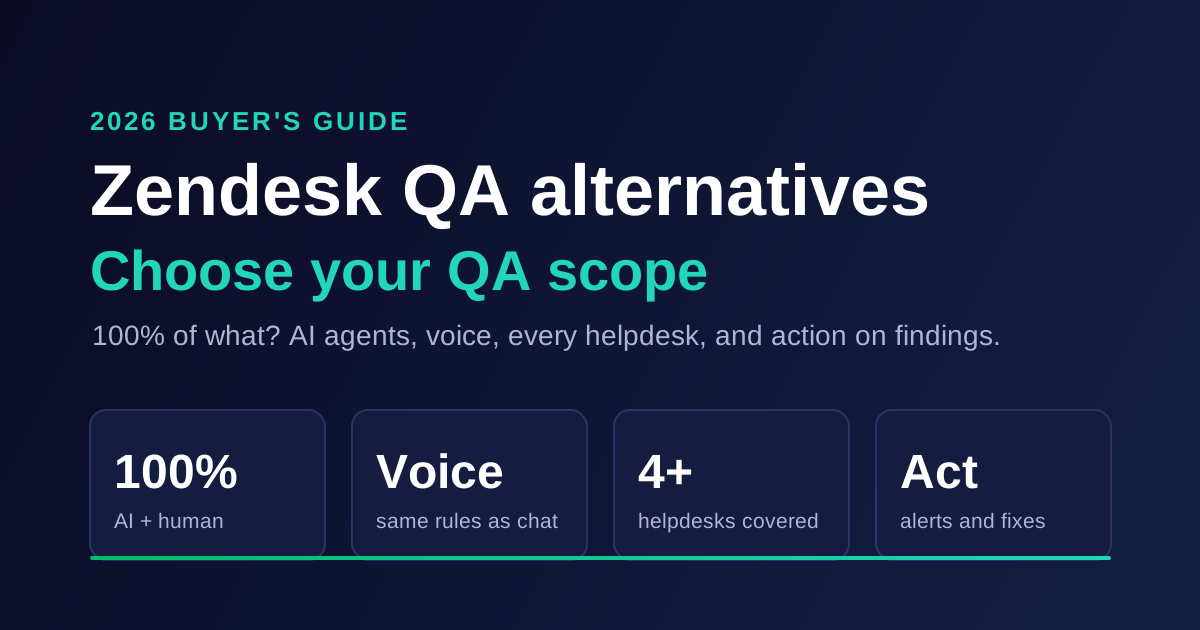
Comparing vendors? Start with Best AI Voice Bots for Customer Service and Best AI Phone Answering Services.
Frequently Asked Questions
What is telephony?
Telephony is the technology that carries voice conversations over a distance. In customer support, it is the layer that gets a customer's call to your team or AI voice agent: the phone numbers, carrier connections, routing logic, and the systems that record and log every call.
What is the difference between VoIP and cloud telephony?
VoIP (Voice over Internet Protocol) converts speech into data packets and sends them over IP networks instead of dedicated phone circuits. Cloud telephony builds on VoIP: a provider hosts the switching, numbers, and call features, and teams manage everything through a browser and APIs, so voice can connect to a CRM, helpdesk, and AI.
How is telephony different from CCaaS?
Telephony is the voice transport and switching layer. CCaaS (contact center as a service) bundles telephony with contact center workflows such as omnichannel routing, an agent desktop, workforce management, quality management, and reporting. Telephony gets the call to you, and CCaaS manages what happens once it arrives.
How do AI voice agents connect to a phone system?
AI voice agents usually connect through a SIP trunk from your existing PBX or CCaaS, through a phone number from a cloud telephony provider that points straight at the agent, or through a contact center connector that adds the AI as a step in the call flow. When a call needs a human, a warm transfer passes the transcript, caller identity, intent, and actions taken so the customer does not repeat themselves.
Loading the form. Prefer email? Reach us at info@irisagent.com or call +1 617 249 3312.